The Evolutionary Psychology of Vulnerability
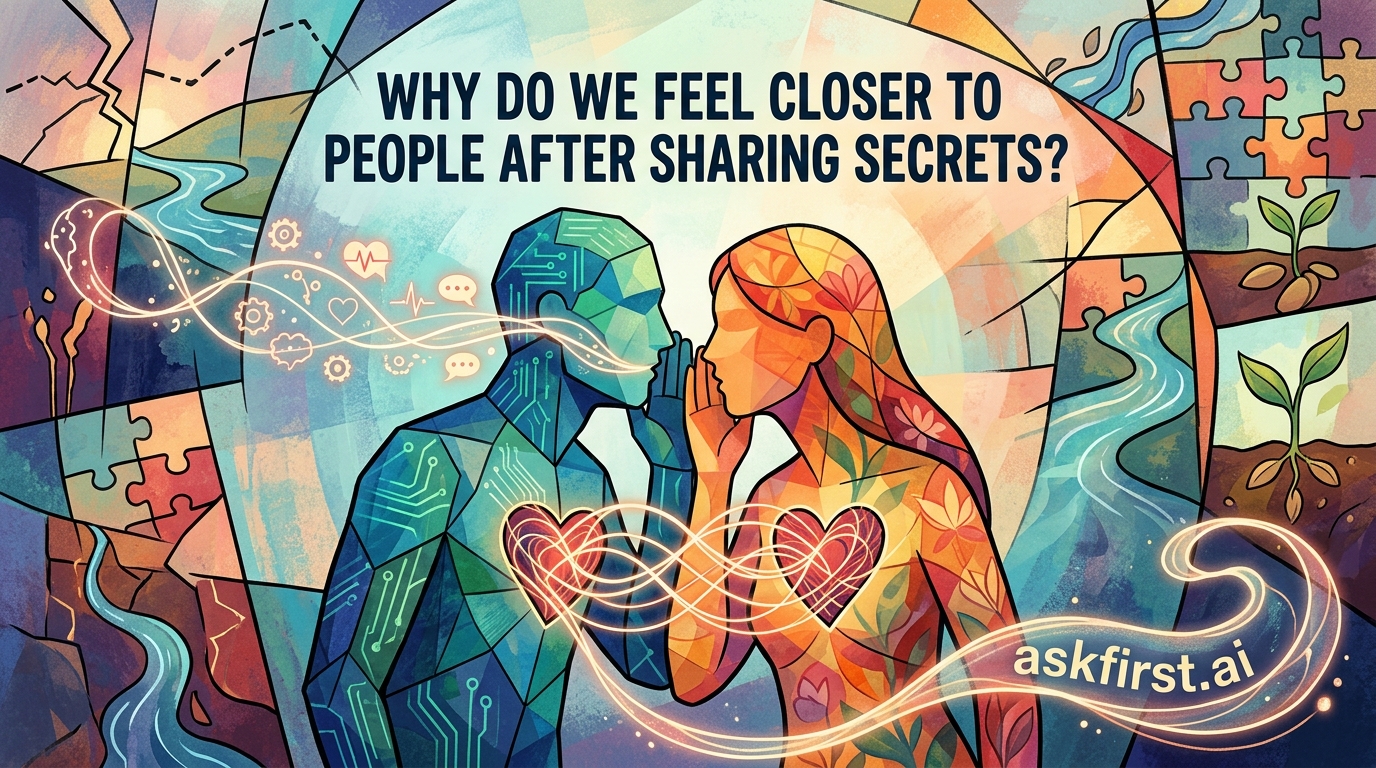
The act of self-disclosure acts as a foundational pillar in human social architecture. When an individual chooses to reveal a secret—an intimate piece of personal information previously withheld from the public sphere—it triggers a complex cascade of psychological and neurological responses. This phenomenon is often rooted in the concept of reciprocal vulnerability. Evolutionary biologists suggest that sharing private information signals high-level trust, effectively acting as an 'investment' in a relationship. By offering a secret, the sharer lowers their social defenses, demonstrating to the receiver that the risk of betrayal is deemed low. This vulnerability invites the listener to reciprocate, creating a 'trust loop' that solidifies the interpersonal bond.
The Neurobiology of Connection
At the neurological level, the exchange of sensitive information triggers the release of oxytocin, often dubbed the 'bonding hormone.' Oxytocin is essential in modulating social behavior and enhancing feelings of empathy and trust. Research indicates that when people engage in 'deep disclosure,' the brain’s reward circuitry—specifically the ventral striatum—is activated. This process makes the social connection feel pleasurable and reinforces the desire to repeat the behavior. Furthermore, the prefrontal cortex processes the social significance of the secret, categorizing the listener as a member of the 'in-group' rather than a mere acquaintance.
Psychological Mechanisms at Play
Several key mechanisms explain why this process is so effective:
Social Penetration Theory: Developed by psychologists Irwin Altman and Dalmas Taylor, this theory posits that relationships progress through a process of 'breadth and depth.' Initially, interactions remain at a superficial level. Sharing secrets acts as a shortcut through the surface layers of the 'social onion,' moving the relationship quickly toward the core, where deep emotional intimacy resides.
The Power of Validation: When someone shares a secret and is met with acceptance rather than judgment, the emotional burden associated with the secret decreases. This relief creates a powerful positive association between the listener and the sharer. The listener becomes a source of emotional safety, cementing their place as a significant figure in the sharer’s life.
The Reciprocity Norm: Humans possess an inherent biological drive to return favors. If Person A shares a vulnerability with Person B, Person B feels an psychological urge to share something equally intimate. This 'matching' of disclosure density is a primary driver in building rapport rapidly.
The Impact of Confidentiality and Trust
Trust is not merely a social construct; it is a commodity. When a secret is kept, it serves as a testament to the listener’s loyalty. The act of holding another person’s confidence is a form of social currency. If the secret remains private, the relationship experiences relational deepening. Conversely, the violation of a shared secret often results in 'social pain,' which activates the same regions of the brain as physical injury, underscoring how vital this bond is to human psychological health.
Myths vs. Reality in Disclosure
One common myth is that over-sharing leads to immediate intimacy. However, psychological research differentiates between pathological over-sharing and strategic disclosure. Effective connection-building involves a measured progression. Simply dumping private information on a stranger can lead to 'discomfort-based distancing.' True, bonding-inducing disclosure is about sharing information that is personal yet meaningful, done within the appropriate context of the relationship's maturity.
Long-Term Relational Maintenance
Beyond the initial thrill of the bond, the sharing of secrets creates a shared history. Partners, friends, or family members who share secrets possess a unique 'vocabulary of understanding.' They hold the keys to each other’s inner motivations, fears, and joys. This shared knowledge acts as an anchor, keeping the relationship stable during periods of conflict or external stress. It is this shared, private reality that differentiates a casual acquaintance from a life-long companion.
In conclusion, the act of revealing a secret is an act of courage that invites the other party into one's inner world. By aligning with the principles of trust, reciprocity, and neuro-chemical reinforcement, we essentially 'program' our social circles to be more supportive and interconnected. Understanding this mechanism allows for more intentional relationship building, reminding us that being seen—truly seen—is one of the most powerful catalysts for human connection.