The Paradox of Reality Television: Judgment versus Empathy
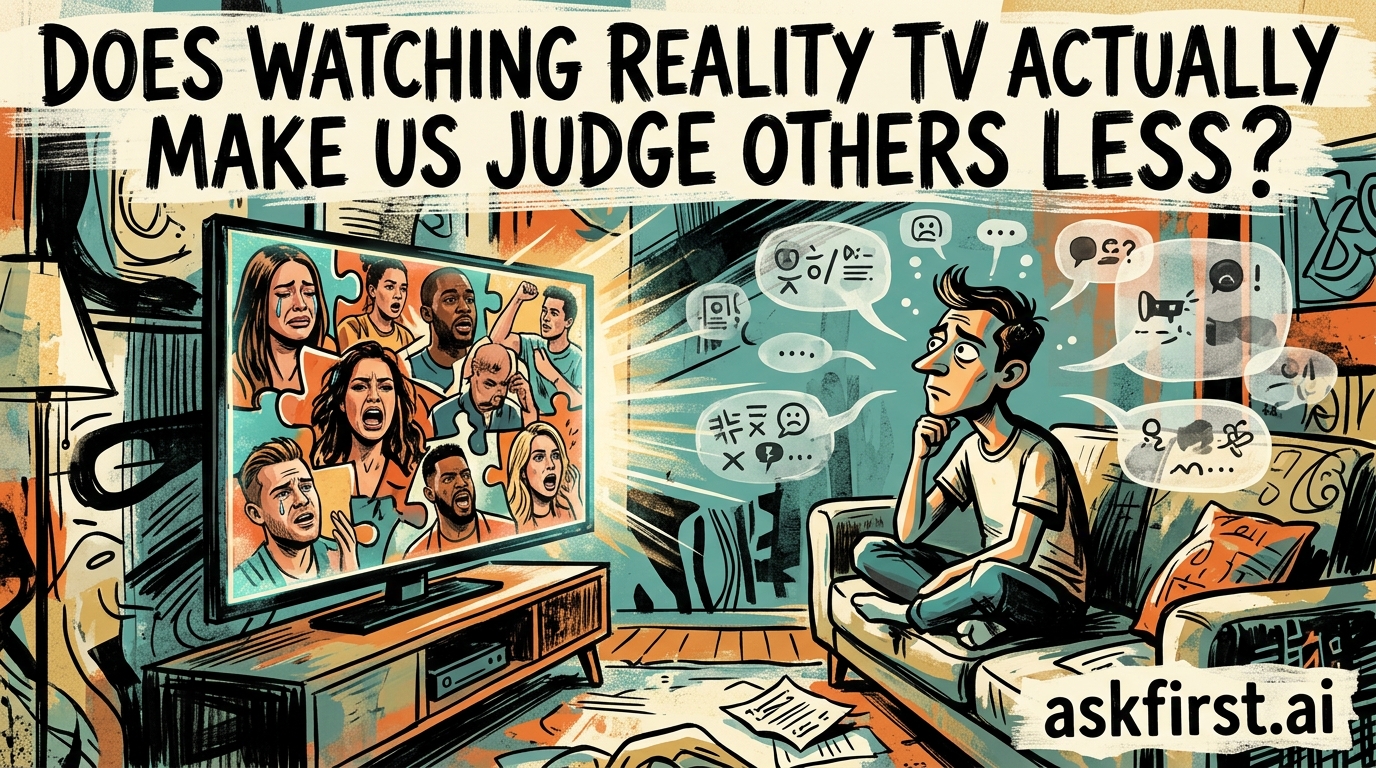
Reality television has long been a subject of intense sociological and psychological debate. Critics often dismiss the genre as 'trash television,' focusing on the superficiality, manufactured conflict, and staged drama that seem to permeate programs ranging from dating shows to talent competitions. However, beneath the surface of these high-octane productions lies a complex social phenomenon. The question of whether watching reality television makes viewers more or less judgmental is not a simple binary; it is a nuanced exploration of human psychology, perspective-taking, and the mechanics of social comparison.
The Mechanism of Social Comparison Theory
At the core of how we interact with reality TV is Social Comparison Theory, proposed by Leon Festinger in 1954. Humans have an innate drive to evaluate their own abilities and opinions by comparing themselves to others. When watching reality TV, viewers often engage in two distinct types of comparison:
- Upward Social Comparison: We compare ourselves to someone perceived as 'better' or more successful. This can lead to feelings of inadequacy or envy but also serve as motivation.
- Downward Social Comparison: We compare ourselves to someone perceived as 'worse' or less fortunate. This often provides a sense of self-enhancement or relief, leading to the phenomenon often described as 'schadenfreude'—finding joy in the misfortune of others.
By witnessing characters in reality shows endure awkward social interactions or embarrassing mistakes, viewers often engage in downward social comparison. This can initially seem to increase judgment, as we criticize the choices of the participants. Yet, the long-term engagement with these individuals can trigger a different psychological mechanism: parasocial interaction.
Parasocial Relationships and the Humanization Effect
While we might initially judge a reality TV participant for their impulsive behavior or poor decision-making, longitudinal viewing allows for a deeper narrative arc to unfold. Over weeks or months, the audience gains insights into a participant's background, their motivations, and their vulnerabilities. This is the Parasocial Interaction effect. As viewers feel like they 'know' the participants, they stop viewing them as caricatures and begin to see them as complex human beings.
Research suggests that this process can actually reduce the inclination to judge. Once a viewer understands the context of an action—such as past trauma, cultural conditioning, or immense interpersonal stress—they are far more likely to offer empathy rather than condemnation. This transition from 'The Judgmental Critic' to 'The Empathetic Observer' is the primary mechanism through which reality TV may actually lower societal levels of judgment.
The 'Authenticity' Hook and Moral Lessons
Reality television acts as a modern-day morality play. Viewers often watch these programs to analyze how different people handle ethical dilemmas. When a participant is caught in a lie or displays unkind behavior, the audience becomes a collective judge, discussing the morality of the action. While this appears to be judgment, it is actually a form of moral rehearsal. Viewers are testing their own internal compasses against the actions of others in a safe, risk-free environment.
Key psychological takeaways from this exposure include:
- Cognitive Empathy: Understanding why someone thinks or acts the way they do.
- Affective Empathy: Sharing the emotional state of a character, which bridges the gap between 'us' and 'them.'
- Perspective-Taking: Developing the mental capacity to step out of one's own ego and consider a situation through another's lens.
Busting the Myth: Are We Becoming More Superficial?
It is a common myth that reality television turns viewers into shallow, judgmental beings. However, recent media psychology suggests the opposite may be true for habitual viewers. Because reality TV frequently forces audiences to confront people from vastly different socioeconomic, cultural, and political backgrounds, it acts as a tool for exposure.
Exposure to diverse personality types and lifestyles can erode the barriers of prejudice. When viewers see someone from a 'different world' experiencing the same fundamental human struggles—love, betrayal, failure, and growth—it diminishes the "othering" that characterizes heavy judgment. We stop judging people as 'types' and start recognizing them as individuals. Consequently, the genre, while flawed, often serves as a catalyst for a broader, more inclusive worldview.
Conclusion: The Mirror Effect
In summary, watching reality TV does not necessarily make us judge others less in the immediate moment, but it provides the psychological framework to move past superficial judgment. By inviting viewers to spend time with people they would never otherwise meet, the genre invites a level of humanization that is vital in an increasingly fragmented world.
If we engage with these shows as opportunities to learn about human motivation rather than merely to mock behavior, we utilize them as tools for social understanding. The ultimate lesson of reality television is not found in the scripted drama or the edits, but in the realization that every individual is the protagonist of their own messy, complex, and deeply relatable story.