The Neurobiology of Musical Resonance
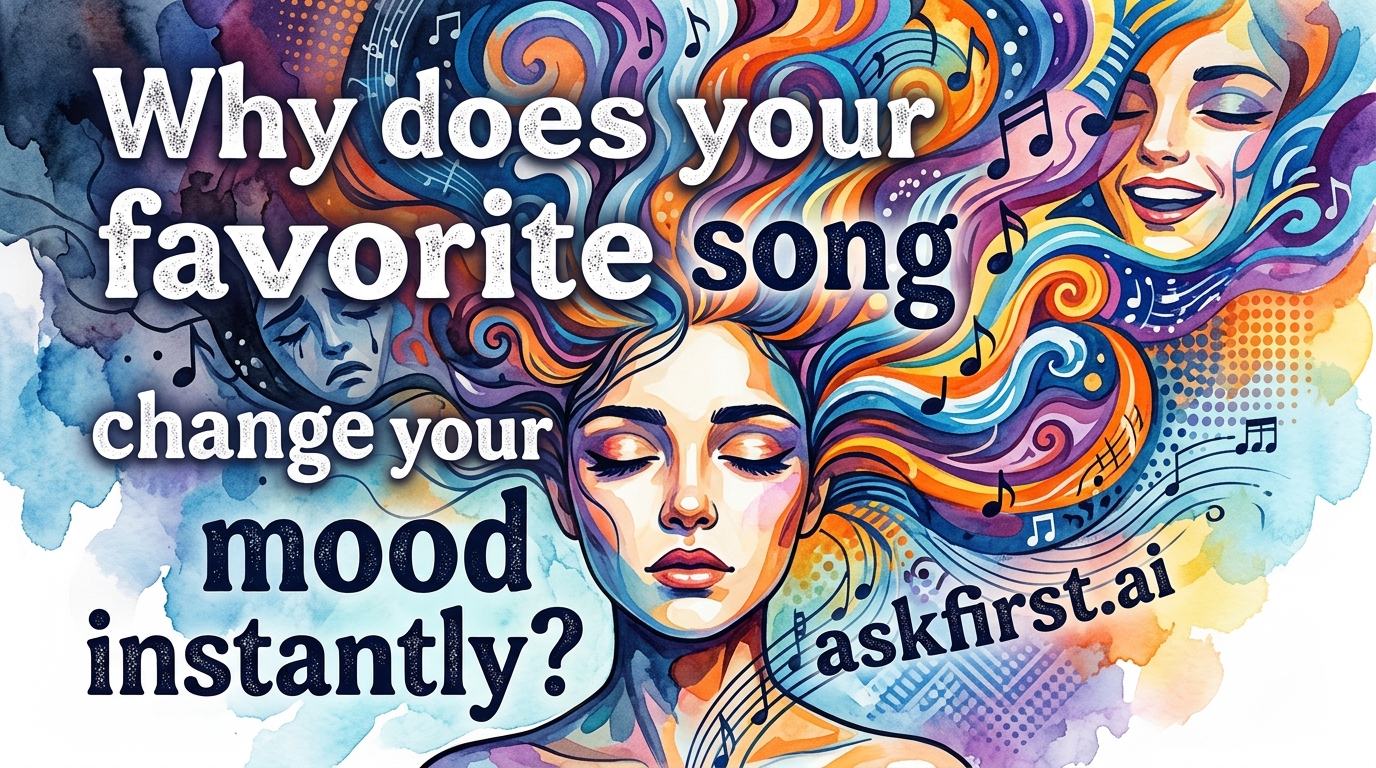
Music possesses a unique, almost supernatural ability to bypass the rational mind and strike directly at the core of human emotional processing. When a favorite song begins to play, the brain does not merely 'hear' frequencies; it initiates a complex cascade of neurological and physiological reactions that effectively rewrite the current emotional state. This phenomenon, often referred to as the 'mood-matching' or 'mood-regulation' effect, is rooted in the deep integration of the auditory cortex with the limbic system, the seat of human emotion.
The Limbic System and Dopamine Pathways
At the center of this instant shift is the release of dopamine, the brain's primary neurotransmitter for reward and pleasure. Scientific research, most notably studies using PET scans and fMRI, demonstrates that listening to highly preferred music activates the striatum, specifically the nucleus accumbens. This area is identical to the one triggered by food, social reward, and even narcotics.
When a familiar melody reaches the brain, it triggers a prediction loop. The brain learns the structure of a favorite song—every crescendo, every bridge, and every resolution. When the music meets or exceeds these expectations, the brain releases a 'reward hit' of dopamine. This reaction occurs in fractions of a second, which is why the shift in mood feels instantaneous.
Psychological Association and Episodic Memory
Beyond mere neurochemistry, music acts as a powerful anchor for episodic memory. This is known as the 'Reminiscence Bump.' Because music is often present during pivotal life moments, songs become hardwired to specific emotional timestamps.
- Conditioned Responses: A favorite song may be tethered to a period of success, a romantic connection, or a time of deep personal growth. Upon hearing the opening notes, the brain retrieves the associated emotional state automatically, a process known as 'state-dependent memory.'
- Emotional Regulation: Music serves as a tool for affect regulation. When individuals listen to music they enjoy, they are actively choosing to modulate their internal environment. It is a form of self-directed neurofeedback.
The Entrainment Factor
Biological entrainment is another critical mechanism. The human body naturally seeks to synchronize its internal rhythms—heart rate, respiration, and brain waves—with external auditory rhythms. If a song has a tempo of 60 to 80 beats per minute, it naturally mimics the resting heart rate. This physical resonance forces the autonomic nervous system to shift from a state of stress (sympathetic dominance) to one of relaxation (parasympathetic dominance).
Why the 'Favorite' Song Matters
Why does a random song not work as well as a favorite one? The secret lies in predictive coding. The brain is a prediction machine. When listening to a song that is known intimately, the brain is rarely surprised, but it is deeply engaged in the anticipation of the next beat. This state of 'flow' minimizes the brain's processing load. The ease of processing the information (fluency) translates into a feeling of comfort and pleasure.
Key Components of Musical Mood Shifting
- The Auditory Cortex: Acts as the primary decoder of pitch, rhythm, and timbre.
- The Hippocampus: Links musical patterns to emotional memories from the past.
- The Amygdala: Processes the affective 'charge' of the music, deciding whether the sound is 'happy,' 'sad,' or 'intense.'
- Prefrontal Cortex: Mediates the conscious experience of the aesthetic appreciation of the music.
Practical Implications for Well-being
Understanding that music is a regulatory tool allows for more intentional use of auditory stimuli. Instead of letting music play randomly, one can curate 'emotional playlists' designed to facilitate specific states, such as focus, calm, or high-energy motivation.
In conclusion, the instant mood change elicited by a favorite song is not a mere accident; it is the result of millions of years of evolutionary refinement in auditory processing, memory storage, and reward systems. It remains one of the most effective and accessible ways to influence the internal landscape of the human experience, proving that even a three-minute melody can act as a profound psychological intervention.