The Psychology of Social Replay
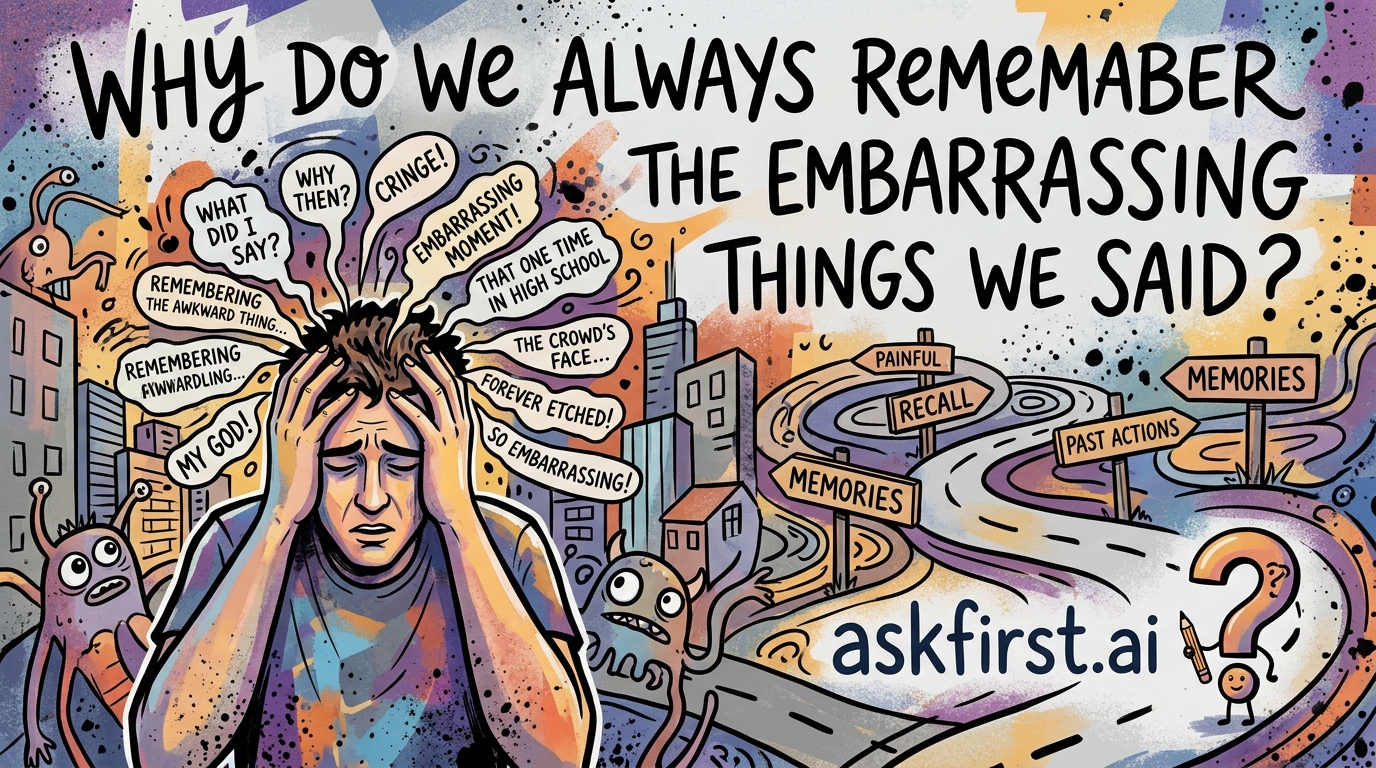
The phenomenon of ruminating on past social blunders is a deeply ingrained cognitive process. Known in psychological circles as the 'spotlight effect' combined with 'negativity bias,' this experience serves a fundamental, albeit frustrating, evolutionary purpose. Humans are inherently social creatures, and for most of human history, social standing determined survival. Being ostracized from a group meant vulnerability to environmental threats and hunger. Consequently, the brain developed an advanced alert system to monitor social performance, ensuring that errors are flagged and analyzed to prevent future reputational damage.
The Negativity Bias: Why Painful Memories Stick
Negativity bias refers to the human propensity to weigh negative experiences more heavily than positive or neutral ones. From an evolutionary standpoint, forgetting a pleasant lunch is harmless, but forgetting a social faux pas that led to group rejection could be lethal. The brain prioritizes the encoding of emotional distress because that distress signals an important lesson. When a memory is tied to shame, the amygdala—the brain's emotional processing center—increases neural activity. This 'emotional tagging' ensures that the memory remains vivid and accessible, creating an intrusive loop designed to force the mind to learn from the perceived mistake.
The Spotlight Effect: Misinterpreting External Perceptions
Often, the intensity of embarrassment stems from the 'spotlight effect.' This is a cognitive bias where individuals believe they are being noticed more than they actually are. Because we are at the center of our own subjective experience, it is natural to assume that others are equally focused on our words and actions. In reality, most observers are preoccupied with their own lives, insecurities, and social performance. Scientific research suggests that while an individual might feel a memory of a stutter or a slip of the tongue is etched into the minds of everyone present, in most cases, observers have likely forgotten the event within minutes.
The Anatomy of Ruminative Loops
When a memory of embarrassment surfaces, it often triggers a feedback loop. This occurs when the brain attempts to 'solve' the discomfort by replaying the scene. Unfortunately, the more a specific neural pathway is activated, the stronger that connection becomes. This is a process known as long-term potentiation. Each time the brain accesses the memory of an awkward comment, it solidifies the pathway, making it easier to trigger again.
- The Trigger: A specific situation, smell, or person acts as a sensory cue.
- The Retrieval: The amygdala flares, inducing a physical response (heat in the face, heart racing).
- The Analysis: The prefrontal cortex attempts to critique the behavior, often harshly.
- The Reinforcement: By repeatedly cycling through the memory, the neural path is deepened.
Strategies for Managing Social Rumination
Understanding the mechanism behind this cognitive habit is the first step toward mitigation. Applying evidence-based psychological strategies can help disrupt the loop:
Cognitive Reframing: Rather than focusing on the mistake, objectively analyze the situation. Ask: 'Is this memory serving a constructive purpose?' If the error was minor, acknowledge it and consciously decide to move on.
Self-Compassion Practices: Research indicates that treating oneself with the same kindness one would offer a friend reduces the physiological stress response. Recognizing that everyone experiences social awkwardness fosters a sense of shared humanity.
Mindfulness and Grounding: Using sensory grounding techniques, such as focusing on immediate environmental details, can interrupt the retrieval of intrusive memories. When the mind starts to drift into past embarrassment, redirecting focus to the present moment prevents the cycle from gaining momentum.
Acceptance: Accepting that occasional social slips are an inevitable part of the human experience diminishes the power of the shame associated with them. The goal is not to have a perfect memory, but to build a healthy relationship with the memories that do occur.
Why This Remains Relevant
Even as societal norms evolve, the neurological foundations of human memory and social interaction remain constant. The drive to improve social efficacy is a permanent feature of the human condition. While technology changes how we interact, the biological hardware that governs our perception of social errors does not change. By mastering these mental processes, individuals can transform persistent, nagging memories into opportunities for emotional intelligence, resilience, and personal growth. Understanding this cycle is not merely about comfort; it is about reclaiming mental clarity from the automatic responses of the brain's survival machinery.