The Physiological Impact of Secret Crushes
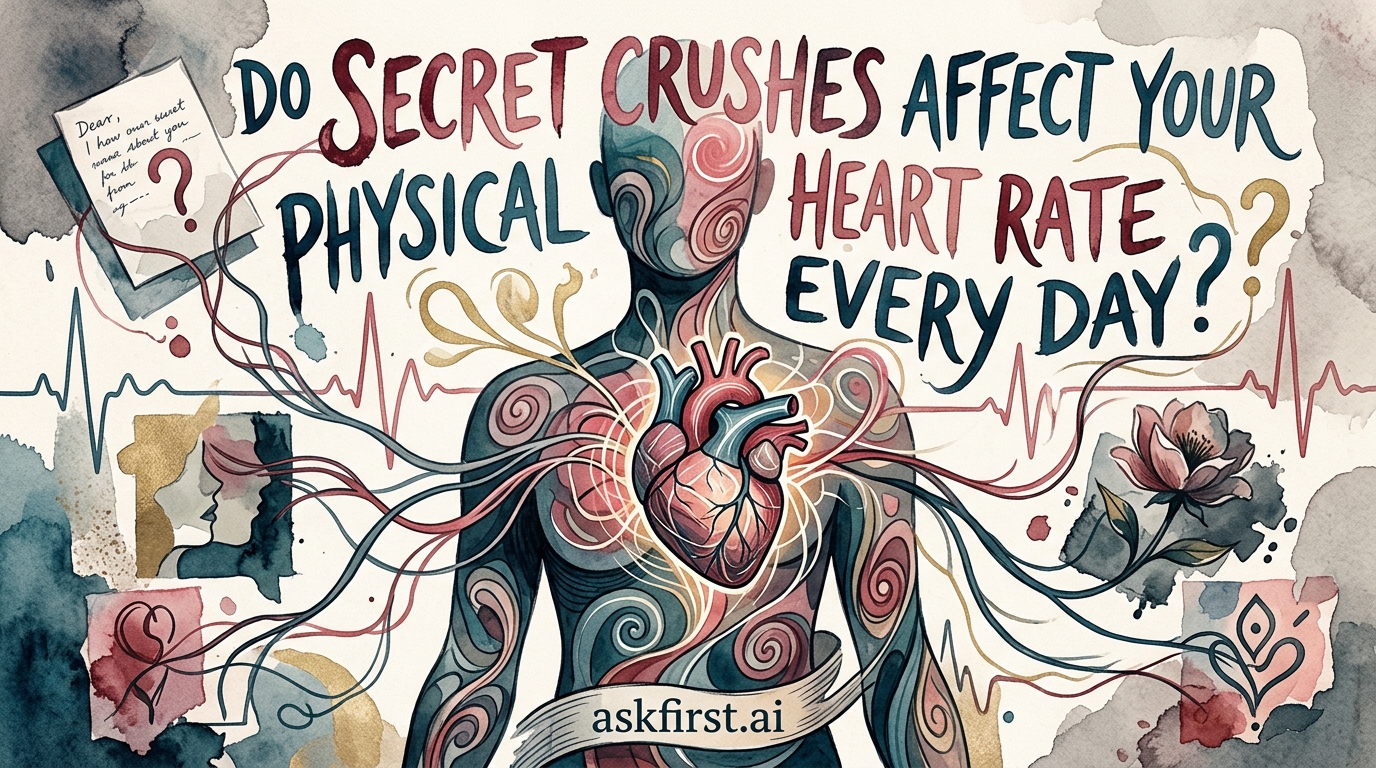
Human biology is intricately tied to emotional states. While many perceive secret crushes as purely psychological experiences, scientific evidence demonstrates that these feelings trigger tangible, measurable physical reactions within the cardiovascular system. Every day, the simple act of contemplating an individual for whom one harbors hidden feelings can initiate a cascade of neurochemical events, culminating in fluctuations in heart rate.
The Neurobiology of Anticipation
When a person experiences a secret crush, the brain enters a state of heightened anticipation. The amygdala, the center responsible for processing emotions, becomes highly active. Simultaneously, the ventral tegmental area (VTA) begins to release dopamine, the primary neurotransmitter associated with reward, motivation, and goal-directed behavior. This is not merely a mental exercise; it acts as a physiological "pre-stress" response. Even in the absence of face-to-face interaction, the mere visualization of the crush triggers the sympathetic nervous system.
The Fight-or-Flight Connection
The sympathetic nervous system is responsible for the classic "fight-or-flight" response. When a secret crush is suddenly spotted, or even when an unexpected notification appears on a mobile device from them, the body undergoes a rapid physiological shift. This includes:
- Adrenaline Surge: The adrenal glands release epinephrine (adrenaline) into the bloodstream.
- Tachycardia: Heart rate increases significantly to prepare the body for perceived physical activity.
- Peripheral Vasoconstriction: Blood flow is redirected toward major muscle groups, often leading to the sensation of "butterflies" in the stomach as digestive blood flow is temporarily reduced.
Research indicates that even without a direct encounter, the internal narrative of a secret crush serves as a cognitive stimulant. This is often referred to as the arousal misattribution hypothesis, where the body registers internal excitement and interprets it through the lens of romantic interest.
Chronic Daily Elevation: Is it Real?
One common inquiry is whether the secret nature of the crush keeps the heart rate elevated throughout the day. While spikes are common during active thinking, the cardiovascular impact of a secret crush acts much like a background task on a computer. The nervous system maintains a state of "high alert" or latent arousal. Studies in social psychology suggest that the uncertainty of a "secret" status—the ambiguity of not knowing if feelings are reciprocated—contributes to higher baseline levels of cortisol. Chronic, low-level cortisol presence is known to keep the heart rate slightly elevated compared to states of complete emotional neutrality.
Debunking the Myth: It Is Not Just Passion
It is a common myth that increased heart rate is solely a indicator of intense "love." In reality, cardiovascular changes associated with secret crushes are deeply intertwined with anxiety and uncertainty. The brain is attempting to predict the outcome of a social interaction. If the interaction remains secret, the cycle of prediction-anticipation-reward-fear repeats itself, keeping the cardiovascular system in a cycle of subtle activation.
Key Physiological Indicators:
- Heart Rate Variability (HRV): High levels of secret crush anticipation may actually lower HRV, which is a marker of stress recovery. A lower HRV suggests that the autonomic nervous system is less flexible.
- Blood Pressure Fluctuations: Sustained emotional engagement with an imagined scenario can lead to temporary, minor increases in systemic blood pressure.
The Role of Oxytocin and Bonding
While adrenaline causes the initial spike, the human body is also designed for attachment. If the secret crush begins to manifest in real-world interactions, oxytocin, often called the "cuddle hormone," may eventually modulate these heart rate spikes. Over time, the physiological response shifts from the "anxiety of the unknown" to the "stability of familiarity."
Scientific Perspective on Emotional Regulation
Experts emphasize that while these changes are measurable, they are rarely dangerous in healthy individuals. The heart is a robust organ designed to handle fluctuations in response to emotional stimuli. The key takeaway for anyone experiencing these daily heart rate fluctuations is that the brain and the heart are in a constant, dynamic dialogue. The body is essentially "practicing" for a social connection that exists primarily in the mind.
In conclusion, the daily physical toll of a secret crush is real but nuanced. It is a testament to the fact that human emotions are not confined to the mind but are integrated into every fiber of our cardiovascular health. Whether through the silent anticipation of an encounter or the reflective daydreaming that defines the secret admirer experience, the heart remains an active participant in our most hidden emotional chapters.