The Origin of the Computer Bug
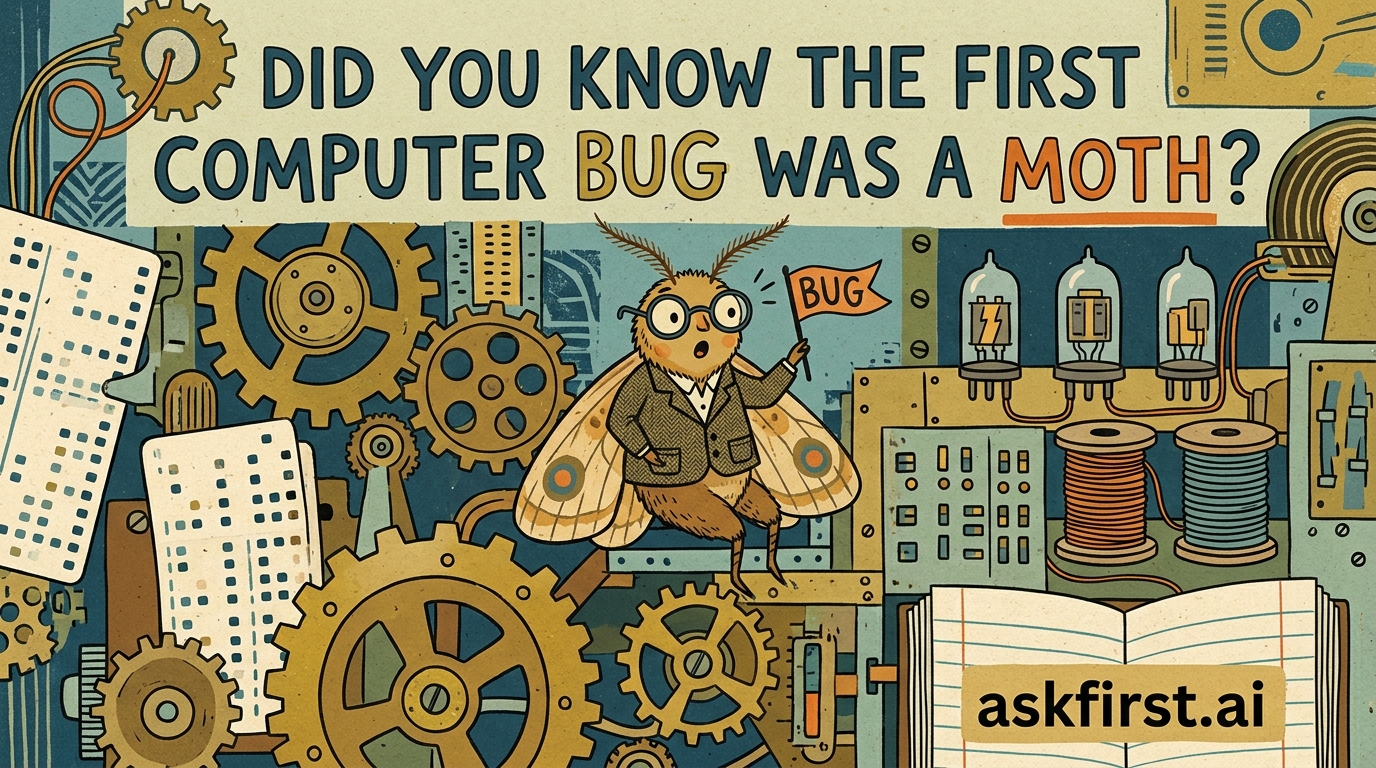
Many people believe that the term 'computer bug' is a modern metaphor for software glitches. However, the reality is rooted in physical reality. On September 9, 1947, engineers working on the Harvard Mark II computer—a massive, room-sized electromechanical machine—encountered a significant operational failure. Upon investigation, operators discovered a moth trapped within the delicate machinery of Relay #70. This physical intrusion disrupted the flow of electricity, effectively stalling the computer's logic operations. The engineers extracted the moth, taped it into their logbook with the notation, 'First actual case of bug being found,' and unwittingly cemented a term into the annals of technological history.
The Historical Context
While the 1947 incident is the most famous, the term 'bug' actually predates the Harvard Mark II. Historical documents reveal that inventors, including Thomas Edison, used the word 'bug' as early as the 1870s to describe technical errors or defects in engineering designs. To Edison, a bug was a 'little difficulty' that caused a project to falter. By the time the moth was discovered in 1947, the term was already part of the jargon for engineers, which makes the discovery of the moth a poetic, serendipitous confirmation of existing nomenclature rather than the literal invention of the word.
Why the Moth Matters
This specific event is celebrated because it perfectly illustrates the transition between physical and digital engineering. Early computers were not comprised of invisible software; they were comprised of thousands of mechanical relays, vacuum tubes, and switches. If a physical object—a moth, a speck of dust, or even a slight vibration—interfered with these components, the logic of the machine failed. The moth is the ultimate symbol of the fragility of early computational systems. It reminds us that computing was once a tactile, messy, and physical endeavor.
Modern Evolution of the Term
Today, a 'bug' is defined as an unintended behavior in software code. These issues arise from logic errors, syntax mistakes, or architectural flaws rather than physical insects. However, the legacy persists through:
- Debugging: The process of identifying and removing errors from a computer system.
- Bug Reports: Documentation that developers use to track and resolve software issues.
- Bug Bounties: Incentives provided by companies to ethical hackers who discover security vulnerabilities.
Common Misconceptions
One common myth is that the moth was found inside the ENIAC, the famous U.S. computer. In reality, it was the Harvard Mark II. This distinction is crucial for historians of technology because it highlights that the moth was an issue in electromechanical computing, not necessarily the vacuum-tube-based electronic computing that defined the later generation. Furthermore, many assume the moth caused a 'crash' in the way a modern computer crashes. In truth, the moth caused a short circuit, preventing the mechanical relay from triggering, essentially 'halting' the calculation process.
The Lesson of the Moth
What can we learn from this winged pioneer? Firstly, it teaches the importance of systematic testing. Even in our world of abstract code, the systems we build are subject to external pressures and unforeseen circumstances. Just as the engineers in 1947 had to manually inspect their hardware, modern developers perform 'unit testing' and 'stress testing' to predict where a system might fail. Secondly, it highlights the importance of documentation. Without that meticulous entry in the Harvard logbook, this anecdote might have been lost to time. Documenting errors—often called 'post-mortems' in software development—is a core practice for preventing the recurrence of similar issues.
Conclusion
The story of the first computer bug is more than a trivial curiosity; it is a bridge between the physical and the virtual. It bridges the gap between the mechanical gears of the 19th-century Industrial Revolution and the high-speed processing of the 21st century. Whether we are writing lines of complex JavaScript or training deep learning algorithms, we are essentially trying to outsmart our own 'moths'—those invisible, creeping errors that threaten to disrupt the logic of our creation. As technology advances, the nature of these bugs will change, but the impulse to find, isolate, and remove them remains the fundamental pulse of the engineering discipline. The moth, preserved in a logbook for over seventy-five years, stands as a reminder that even the most complex digital worlds are built upon the messy, unpredictable substrate of the real world.