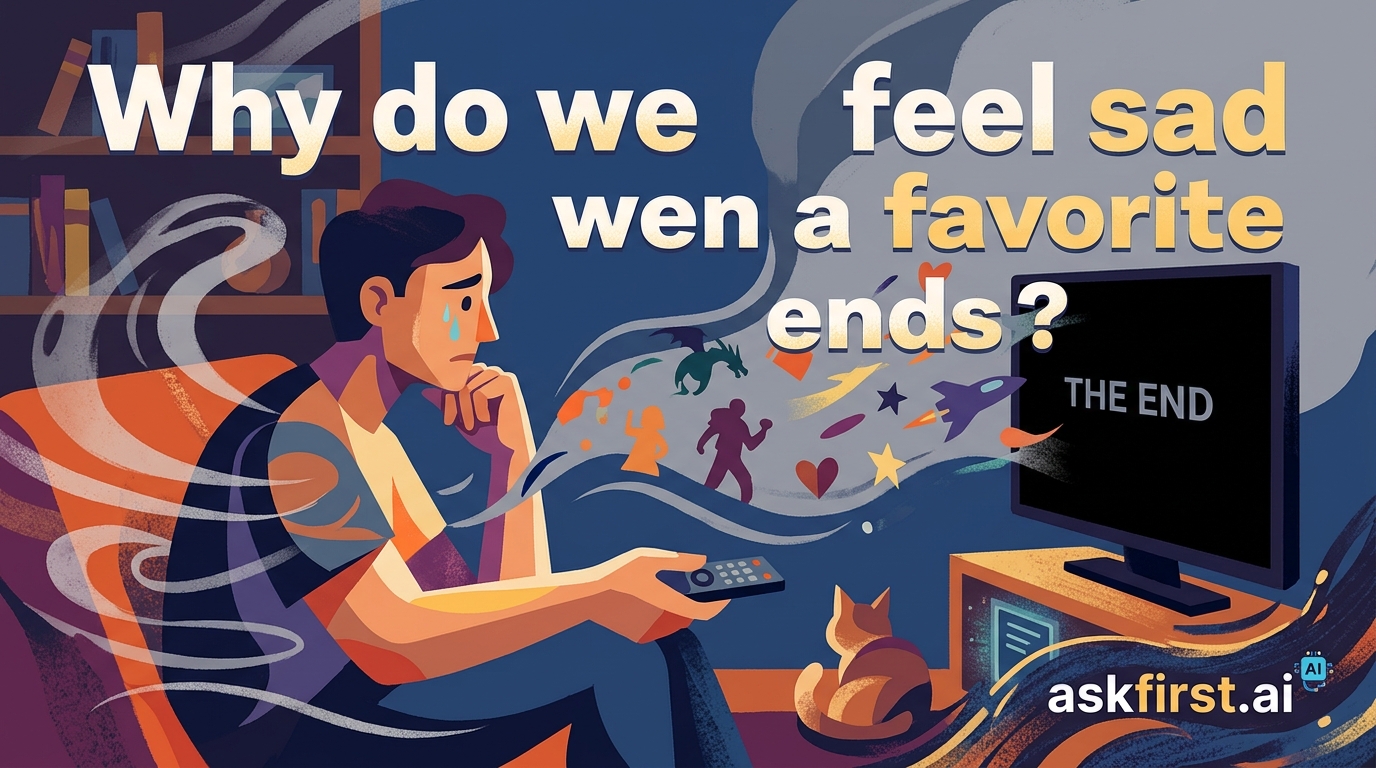
The Phenomenon of Post-Series Melancholy
Experiencing a profound sense of emptiness or sadness after concluding a long-running television series is a common psychological occurrence often referred to as 'Post-Series Depression'. While not a clinical diagnosis, this emotional state is a legitimate response to the loss of a significant source of parasocial interaction and cognitive stimulation. When individuals invest hundreds of hours into fictional worlds, the brain begins to treat these characters and environments as a stable part of one's social landscape.
The Psychology of Parasocial Relationships
At the core of this sadness lies the concept of parasocial relationships. These are one-sided interpersonal relationships where media consumers develop a sense of intimacy and connection with media figures, such as actors or fictional characters. Research in the field of media psychology indicates that human brains are not biologically wired to distinguish deeply between face-to-face interactions and high-quality digital portrayals. When a show ends, the brain experiences this as a social exclusion or a loss of a friend. The neural reward systems—primarily those involving dopamine—that are activated by anticipation and emotional engagement with the narrative suddenly experience a deficit.
Cognitive Dissonance and Narrative Closure
Human beings are naturally 'meaning-making' creatures. From an evolutionary perspective, the ability to follow narratives and predict outcomes is linked to social survival. When a narrative comes to a close, it forces a cognitive transition. For months or years, the show provided a rhythmic, structured escape that regulated stress and offered predictable social cues. Abruptly losing this structure leads to a sense of existential drift. Furthermore, viewers often project their own identities onto characters; when the character's journey concludes, the viewer may feel as though a part of their own ongoing life experiment has been severed.
The Role of Immersion and Escapism
High-quality modern storytelling utilizes narrative transportation, a psychological state where the viewer becomes so immersed in a story that they lose awareness of their immediate surroundings. This immersion acts as a psychological buffer against external life stressors. When the show ends, this 'mental sanctuary' disappears, forcing the individual back into their daily reality without the emotional resource that previously helped them manage work or personal fatigue. The contrast between the excitement of the fictional world and the mundanity of routine is often what triggers the feeling of being 'let down.'
Managing the Transition: Scientific Strategies
Understanding the biology of this sadness helps in processing it. Experts recommend several strategies to mitigate the impact of concluding a favorite series:
- The 'Cool-Down' Period: Instead of immediately starting a new show, engage in active physical activities that release endorphins, which can help bridge the gap left by the loss of narrative dopamine.
- Community Engagement: Discussing the show on forums or with friends can extend the life of the parasocial experience in a social, two-way format, allowing for a gradual detachment.
- Creative Reflection: Journaling about why specific character arcs resonated personally can help integrate the lessons learned from the show into the viewer's actual life, transforming the ending into a positive realization rather than a loss.
- Reframing the Narrative: Viewers are encouraged to think of the ending as a complete 'archival' of a beautiful journey rather than a termination. The story remains permanently available, and its completion is what preserves its structural integrity.
Why This Matters in the Modern Era
In a digital age, serialized television has become our modern equivalent of tribal storytelling. Just as ancient civilizations gathered around fires to hear epic sagas, modern audiences find community and identity through episodic content. The sadness felt upon the conclusion of a series is actually a testament to the power of human empathy. It proves that even in a digital medium, our capacity to care for 'others'—even those existing only as projections on a screen—is vast and enduring. Recognizing this allows viewers to appreciate their own emotional depth, turning a momentary feeling of sadness into a rewarding celebration of the medium of art itself.