The Genesis of the South African Presidency: Nelson Mandela’s Historic Transition
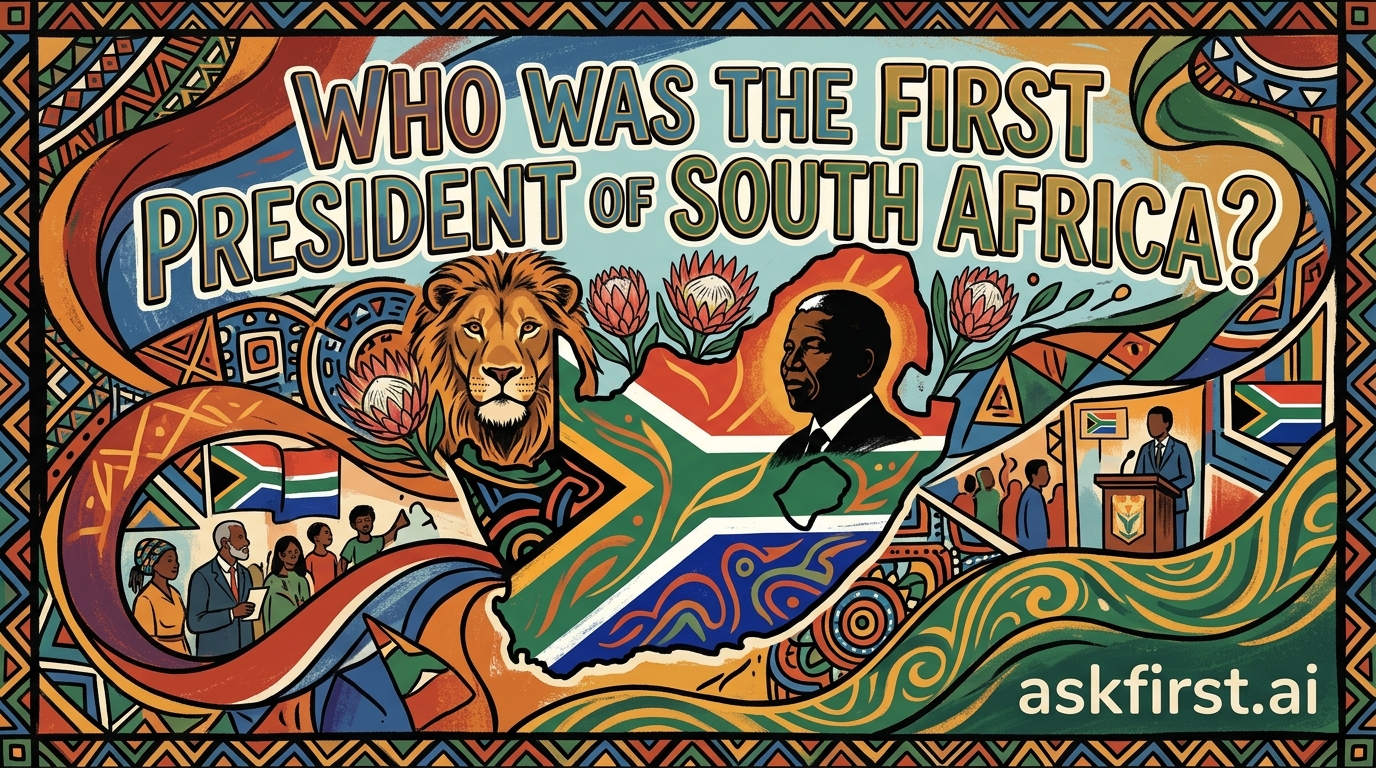
The transition of South Africa from a fractured, racially segregated state under the apartheid regime to a multiracial democracy is one of the most significant political milestones of the 20th century. While the Union of South Africa had governors-general and state presidents prior to 1994, the first president of a truly democratic, post-apartheid South Africa was Nelson Rolihlahla Mandela. His inauguration on May 10, 1994, at the Union Buildings in Pretoria, marked the end of over three centuries of colonial and minority rule, signaling the birth of the "Rainbow Nation."
The Long Walk to the Presidency
To understand the significance of Mandela’s presidency, one must recognize the decades of systemic oppression that preceded it. Under the system of apartheid, institutionalized by the National Party in 1948, the Black majority was disenfranchised and subjected to brutal segregation. Nelson Mandela, a lawyer and activist, became a central figure in the African National Congress (ANC). His commitment to dismantling apartheid led to his arrest and subsequent 27-year imprisonment on Robben Island, Pollsmoor Prison, and Victor Verster Prison.
In his seminal autobiography, Long Walk to Freedom (published by Little, Brown and Company, 1994), Mandela chronicles the internal struggle of balancing revolutionary fervor with the eventual necessity of peaceful negotiation. His release in February 1990 by President F.W. de Klerk initiated a period of intense, often volatile, transition. The negotiations—primarily conducted at the Convention for a Democratic South Africa (CODESA)—were fraught with violence and distrust, yet they ultimately paved the way for the country's first multiracial general election held in April 1994.
The 1994 Election and the Government of National Unity
The 1994 election was a watershed moment. For the first time in South African history, citizens of all races were permitted to vote. The ANC secured a landslide victory, winning 62.65% of the vote. In accordance with the interim constitution, a Government of National Unity (GNU) was formed to ensure stability, bringing together the ANC, the National Party, and the Inkatha Freedom Party.
As the leader of the ANC, Mandela was elected by the newly formed National Assembly to serve as the President of the Republic. His presidency was defined by a philosophy of reconciliation. Rather than seeking retribution against those who had enforced apartheid, Mandela prioritized the healing of the nation. A concrete example of this was his support for the Truth and Reconciliation Commission (TRC), chaired by Archbishop Desmond Tutu. As detailed in Antjie Krog’s Country of My Skull (Random House, 1998), the TRC sought to uncover the truth about human rights violations during the apartheid era, offering amnesty to perpetrators in exchange for full disclosure. This process, while painful, was essential for the country to confront its past without descending into a civil war of revenge.
Legislative Reforms and Socio-Economic Challenges
Mandela’s administration faced the daunting task of dismantling the legal infrastructure of apartheid while simultaneously building a modern state. His government focused on several key areas:
- The Constitution of 1996: Widely regarded as one of the most progressive documents in the world, it enshrined fundamental human rights and established an independent judiciary.
- Reconstruction and Development Programme (RDP): This initiative aimed to address the massive socio-economic disparities left by apartheid. It prioritized the delivery of basic services—housing, clean water, electricity, and healthcare—to impoverished areas that had been neglected for generations.
- International Reintegration: Under Mandela, South Africa rejoined the international community, becoming a member of the Commonwealth and playing a leading role in regional African politics.
Despite these successes, Mandela’s presidency was not without its challenges. The legacy of apartheid-era economic inequality remained deep-seated. Critics, such as journalist Allister Sparks in Tomorrow is Another Country (University of Chicago Press, 1995), noted that while political liberation had been achieved, the economic liberation of the Black majority remained an unfinished project, a sentiment that continues to dominate South African political discourse today.
Legacy and Conclusion
Nelson Mandela served only one term as president, stepping down in 1999 in favor of his deputy, Thabo Mbeki. His decision to relinquish power voluntarily was a testament to his commitment to democratic principles, setting a standard for leadership in a continent often plagued by life-long presidencies and authoritarianism.
Mandela’s tenure as the first president of democratic South Africa remains a global benchmark for statesmanship. By choosing reconciliation over vengeance, he prevented a potential racial bloodbath and laid the foundational legal and moral framework for a modern, constitutional democracy. While contemporary South Africa continues to grapple with the echoes of its past—including high unemployment and systemic corruption—the presidency of Nelson Mandela stands as a testament to the power of forgiveness and the possibility of radical social transformation through democratic dialogue. He proved that a nation defined by division could, through deliberate effort and shared vision, begin the arduous process of becoming one.