The Neurobiology of Romantic Attachment
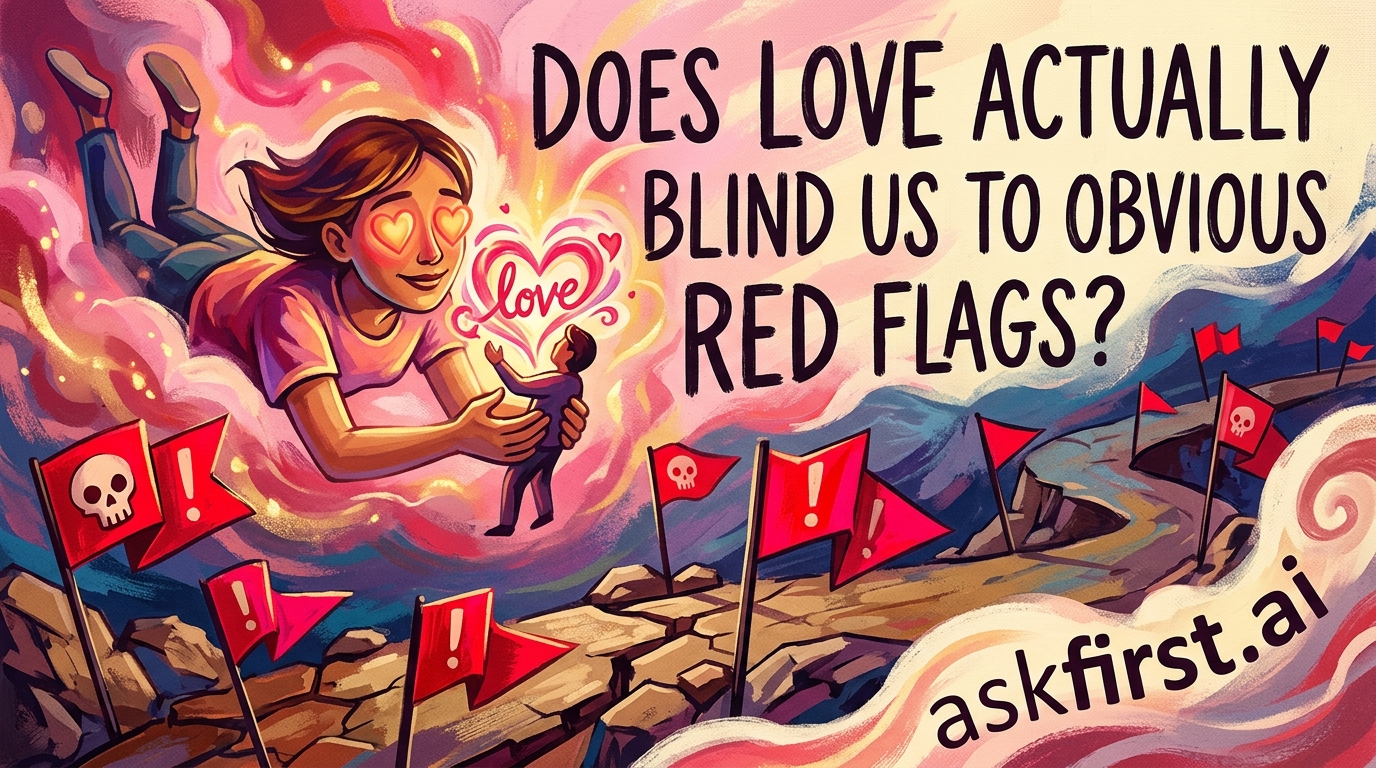
Love, in its initial stages, acts as a powerful neurological cocktail that fundamentally alters human perception. Research in cognitive neuroscience suggests that when an individual enters the state of romantic infatuation, the brain’s reward system, particularly the ventral tegmental area and the caudate nucleus, becomes hyper-activated. This activation is associated with the release of dopamine, the neurotransmitter responsible for motivation and pleasure. Simultaneously, studies utilizing fMRI imaging have shown a reduction in activity within the prefrontal cortex—the region responsible for executive function, critical thinking, and social judgment. Consequently, the brain effectively downregulates the capacity to perform complex risk assessments, such as identifying antisocial behavior or emotional volatility in a new partner.
The Mechanism of Idealization
Beyond the neurochemical surge, psychological mechanisms such as 'positive illusions' play a significant role. Humans are predisposed to maintain a positive self-image, and by extension, a positive image of those they choose to associate with. According to the Attachment Theory framework, individuals may inadvertently project their idealized qualities onto a partner, a phenomenon known as 'projection'. This serves as a psychological buffer, allowing the individual to bypass the scrutiny that might otherwise reveal incompatibility. Instead of viewing a 'red flag' as a warning sign, the brain often reframes it as a 'quirk' or an 'exotic trait' to preserve the sanctity of the burgeoning bond.
Why Red Flags Go Unnoticed
There are several reasons why warning signs are frequently overlooked during the honeymoon phase:
- The Sunk Cost Fallacy: As emotional investment deepens, the internal pressure to justify the relationship grows. Admitting to a red flag would require acknowledging a mistake, which is cognitively dissonant and uncomfortable.
- Attachment Style Priming: Individuals with anxious attachment styles may prioritize intimacy over safety, unconsciously choosing to ignore problematic behavior to prevent the potential pain of abandonment.
- Cultural Conditioning: Society often promotes narratives that suggest true love requires overcoming obstacles, leading some to perceive toxic behavior as a 'challenge' to be solved rather than a clear indication of a poor match.
Cognitive Biases at Play
Several cognitive biases further exacerbate the blinding effect of love. The Confirmation Bias ensures that individuals focus exclusively on evidence that supports their attraction to a partner, while simultaneously discounting or rationalizing any information that contradicts that favorable view. If a partner exhibits signs of inconsistency, the enamored mind will search for an external excuse—'they are just under a lot of stress at work'—rather than examining the internal pattern of behavior. This effectively blinds the person to the objective reality of the situation.
The Role of Evolutionary Psychology
From an evolutionary perspective, the blinding nature of love served a functional purpose: it fostered a deep, unbreakable bond long enough to facilitate reproduction and early cooperative child-rearing. By silencing the analytical brain, evolution essentially prioritized the continuation of the species over the short-term emotional comfort or long-term compatibility of the individuals. While this was useful in an ancestral environment, it often leads to conflict in modern social structures, where compatibility and emotional regulation are paramount for successful long-term partnerships.
Strategies for Maintaining Clarity
While the biological drive of love is powerful, maintaining an objective perspective is possible through the implementation of external systems of accountability. Here are several methods to keep a balanced view:
- Seek Outsider Perspectives: Trusted friends and family members, who are not influenced by the dopamine surges of infatuation, can often spot red flags that are invisible to the parties involved. Maintaining an open dialogue with a objective third party acts as a 'reality check' mechanism.
- Document Patterns, Not Incidents: Because the brain is wired to forgive and forget, maintaining a mental (or private physical) record of repeated problematic behaviors can highlight a consistent pattern that a single incident might mask.
- Engage in 'Pre-commitment' Reflection: Prior to becoming deeply attached, defining non-negotiable personal values and boundaries is essential. When these values are written down when the mind is calm and analytical, they serve as a benchmark to compare against the partner’s actual behavior later.
- Practice 'Slow Love': Intentional pacing allows the initial hormonal cascade to subside. By extending the duration of the dating phase, the prefrontal cortex has more time to resume its analytical functions, naturally allowing for a clearer assessment of long-term compatibility and behavioral consistency.
Ultimately, love does not necessarily make us blind by choice; it makes us blind by biological design. Recognizing this phenomenon is the first step toward reclaiming agency. By acknowledging that romantic passion creates a temporary cognitive impairment, individuals can consciously introduce critical thinking into their relationships, ensuring that they move from a state of blind infatuation to one of informed, healthy commitment.