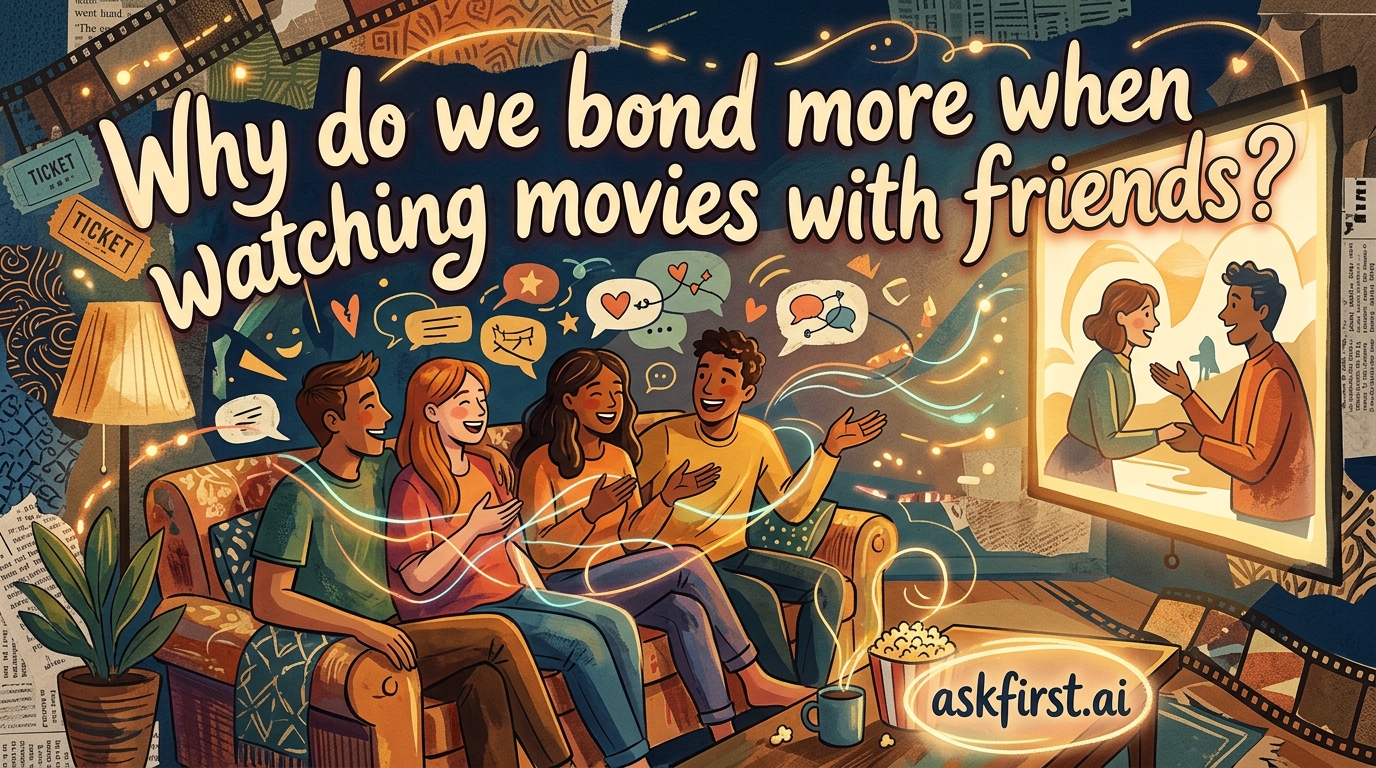
The Neurobiology of Shared Cinematic Experiences
Watching a film in the company of others is far more than a simple leisure activity; it is a profound psychological event that synchronizes human brains and emotional states. When a group of friends gathers to watch a movie, they are engaging in a phenomenon that researchers call neural coupling. This process involves the alignment of brain activity across multiple individuals, which serves as a powerful mechanism for social bonding and collective empathy.
The Science of Synchronicity
Research has shown that during emotionally charged scenes, the brain activity of viewers often mirrors one another. When individuals watch a film together, their heart rates, respiration, and even autonomic nervous system responses can become synchronized. This alignment creates a 'social glue' that bridges the gap between disparate individuals. According to studies published in the field of affective neuroscience, the brain's default mode network becomes highly active during shared experiences, fostering a sense of 'we-ness' that transcends the individual ego. By experiencing the same narrative arc, dramatic peaks, and comedic moments simultaneously, friends effectively calibrate their emotional responses to the outside world.
The Role of Mirror Neurons
At the core of this bonding process is the mirror neuron system. Mirror neurons fire both when an individual performs an action and when they observe that same action performed by someone else. When a group watches a protagonist endure hardship or experience joy, the collective activation of mirror neurons allows each friend to vicariously 'live' the scene. Because this activation happens within the group, the collective experience intensifies the individual emotional impact. This is often why a movie that feels lackluster alone might be described as 'hilarious' or 'heart-wrenching' when watched with a group—the presence of others amplifies the signal of the film’s intended emotions.
Psychological Anchoring and Shared Memories
Beyond neurobiology, watching movies acts as a form of social anchoring. A film provides a structured, contained environment—a narrative container—where friends can safely navigate complex emotions like fear, excitement, or sorrow without the consequences of real-world interactions. This creates a shared historical landmark. Years later, referencing a specific plot twist or a character’s line acts as a 'shorthand' for the bond shared during that screening. This collective memory serves as a foundational building block for long-term relationships.
- Safe Vulnerability: Films often tap into universal truths or archetypal conflicts. When friends watch these together, they gain insight into each other's moral frameworks and sensitivities based on how they react to the onscreen content.
- Reduced Inhibition: The darkened environment of a movie setting lowers social barriers, allowing for more authentic laughter and expressive body language that might otherwise be stifled in a professional or formal setting.
The Influence of Parasocial Interaction
While parasocial interaction usually refers to the one-sided relationship between viewers and media figures, it also plays a role in social bonding. When a group of friends admires a hero or despises a villain on screen, they are engaging in the co-construction of values. Discussing the movie afterward—analyzing the 'why' and 'how' of the plot—solidifies the group's internal culture. This post-movie discussion is often more important than the screening itself, as it forces the group to synthesize the experience into a cohesive narrative, thereby strengthening communication and mutual understanding.
Cultural Context and Ritual
Throughout history, humans have gathered to listen to stories around fires. The modern movie night is simply an evolution of this ancestral ritual. The consistency of these gatherings builds a sense of stability and predictability, which is vital for maintaining deep, healthy friendships. By prioritizing time for shared cinematic narrative, friends are unconsciously reinforcing their commitment to one another, proving that their social bond is robust enough to withstand the passage of time and the complexities of life.
In conclusion, the bonding experienced during a movie night is a multifaceted phenomenon involving neural synchronization, the activation of mirror neurons, and the creation of shared, resonant memories. The movie provides the stage, but the friendship provides the depth, transforming a two-hour visual stream into a lasting investment in communal well-being. By engaging with art collectively, we are not just consuming media; we are constructing a shared reality.