The Psychology of Persistent Embarrassment: An Analytical Overview
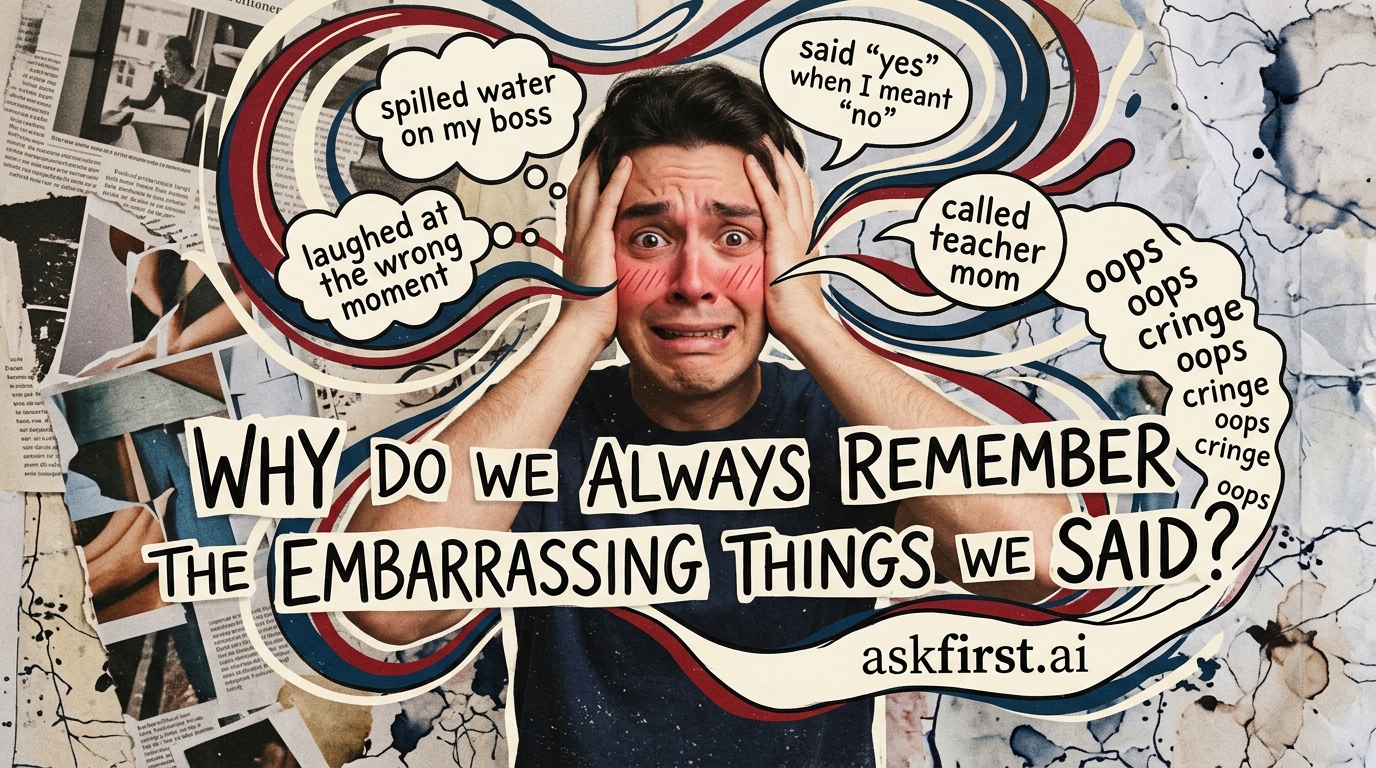
The phenomenon of ruminating on past social blunders is a common, albeit deeply uncomfortable, human experience. Psychologically termed as the 'spotlight effect' combined with 'negativity bias,' this tendency to fixate on embarrassing moments is not a design flaw but rather an evolutionary byproduct of our social nature. Humans are hardwired to prioritize social acceptance, making memory a tool for survival within a tribe.
The Evolutionary Basis of Social Shame
From an anthropological perspective, being cast out of a social group in ancient history could have been fatal. Consequently, our brains developed an alarm system for social infractions. Embarrassment acts as a 'social skin,' a physiological reaction that signals to others that one recognizes a mistake, thereby encouraging forgiveness and reconciliation. When a memory of an embarrassing event surfaces, the brain is effectively performing a post-mortem analysis to ensure such a transgression never repeats, protecting the individual from social ostracization.
The Spotlight Effect and Cognitive Distortion
One of the primary drivers of this fixation is the spotlight effect. This cognitive bias leads individuals to believe they are being observed more closely than they actually are. Because we are the protagonists of our own lives, we assume that others are as focused on our mishaps as we are. In reality, most observers are preoccupied with their own internal thoughts and anxieties. Studies by Thomas Gilovich at Cornell University demonstrate that individuals consistently overestimate the degree to which their appearance and actions are noticed by others, creating a distorted narrative of personal failure.
The Role of Negativity Bias
Humans are evolutionarily predisposed to pay more attention to negative experiences than positive ones—a phenomenon known as the negativity bias. From a survival standpoint, ignoring a threat is far more dangerous than failing to notice a pleasant opportunity. Our memories of embarrassing interactions are prioritized because the brain categorizes them as warnings. While this served us well on the African savannah, it is maladaptive in a modern social landscape where our social circles are significantly wider and our 'threats' are merely verbal missteps.
Psychological Mechanisms at Play
- Episodic Memory Enhancement: The surge of adrenaline and cortisol associated with shame acts as a 'memory glue.' Emotional events are etched more deeply into the hippocampus than neutral events.
- Rumination Cycles: Chronic rumination is a recursive thought pattern where the brain re-plays an event to find a 'fix.' Unfortunately, because the past cannot be changed, the brain enters a loop, reinforcing the memory every time it is accessed.
- Self-Concept Discrepancy: This occurs when a person's behavior contradicts their idealized self-image. The embarrassment arises from the conflict between how we want to be perceived and the reality of the blunder.
Strategies to Mitigate the Impact of Embarrassment
Understanding the mechanics of these thoughts is the first step toward reclaiming cognitive peace. Here are several scientifically backed approaches to managing intrusive memories of embarrassment:
- Perspective Taking: Practice 'de-centering' by imagining the event from the perspective of an objective observer. Would a neutral third party find the moment nearly as significant as the internal narrator does?
- The 5-5-5 Rule: If a situation is bothering you, ask yourself: Will this matter in 5 minutes? In 5 months? In 5 years? Most embarrassing moments rarely survive the 5-week mark in the memories of others.
- Mindfulness and Self-Compassion: Research by Dr. Kristin Neff highlights that treating oneself with the same kindness one would show a friend reduces the neurological intensity of shame. Acknowledging that 'to err is human' shifts the focus from personal failure to universal experience.
- Acceptance and Commitment: Recognize that the memory is just a thought, not an objective reality. By observing the thought without judgment, the emotional charge diminishes over time, eventually leading to a process known as habituation.
Conclusion
The persistence of embarrassing memories is a testament to the sophistication of our social brain. While it feels like a burden, it is fundamentally a manifestation of our desire for connection and improvement. By shifting from self-criticism to an understanding of these evolutionary biases, individuals can transform these intrusive thoughts from sources of pain into reminders of their inherent humanity. Once the spotlight effect is understood and the negativity bias is countered, the power these moments hold begins to dissipate, leaving more room for genuine present-moment engagement.