The Auditory Trigger: How Sound Unlocks Hidden Memory
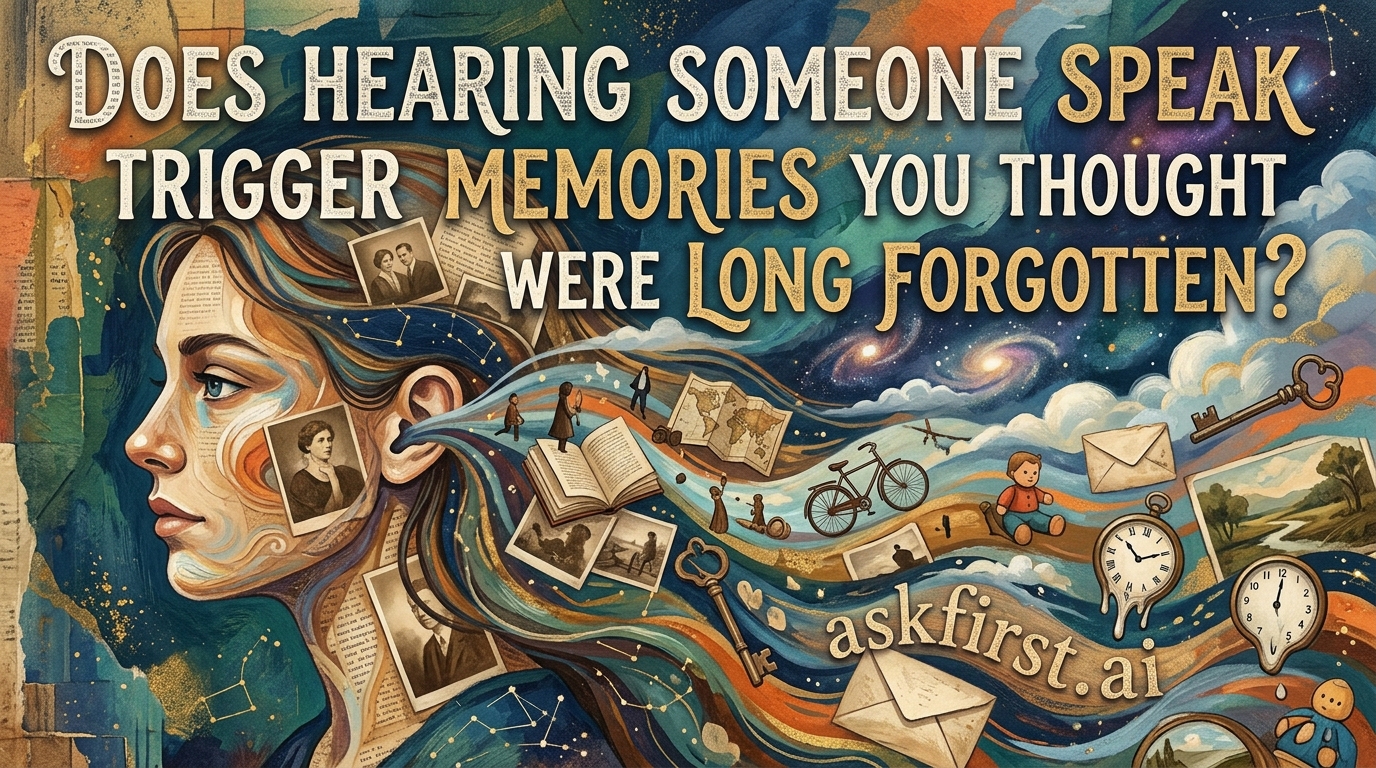
Human memory is not a linear filing cabinet but a complex, associative web. Among all sensory inputs, the auditory system—specifically the recognition of human speech—acts as an incredibly potent retrieval cue. When someone hears a specific vocal timbre, an accent, or a cadence that mimics a figure from their past, the brain often experiences an involuntary, vivid reactivation of episodic memory. This phenomenon is rooted in the architecture of the brain, particularly the interaction between the auditory cortex and the hippocampus, the seat of memory consolidation.
The Neurobiology of Voice and Recall
The auditory cortex does not merely process sound waves; it encodes the 'identity' of a voice. Research in cognitive neuroscience suggests that voice recognition is distinct from language processing. When a voice is identified as significant, it bypasses standard semantic analysis and links directly to the limbic system, which governs emotional response. Consequently, the moment a familiar tone enters the auditory stream, the brain initiates a cascade of neuronal activity. If the voice is associated with intense past experiences, the hippocampus can pull seemingly forgotten memories into conscious awareness with surprising clarity.
- The Priming Effect: Prior associations create 'neural pathways' that remain dormant until triggered.
- Emotional Salience: Voices linked to high-arousal events (joy, excitement, or profound learning) are stored more effectively.
- Syntactic Echoes: It is not always the words themselves, but the rhythm of speech that triggers the recognition.
Why Voices Act as 'Time Machines'
Unlike visual stimuli, which often require conscious focus to interpret, sound is omnipresent. The brain is constantly scanning the environment for familiar acoustic patterns. This phenomenon is often referred to as 'involuntary autobiographical memory.' A person might be going about their day, completely removed from the context of their youth, only to be transported back by a specific laugh or a cadence of speech. This occurs because the human brain prioritizes social stimuli. Throughout evolutionary history, identifying the voice of an ally or a family member was critical for survival. This biological imperative ensures that vocal profiles are etched into the long-term memory with higher resolution than many other sensory details.
The Persistence of Linguistic Fingerprints
Even if the explicit memory—the specific facts of an event—has faded, the implicit memory of the person’s speech style remains. This is why a stranger with a similar speaking pattern can evoke a feeling of nostalgia or unease before the conscious mind realizes why. The brain performs a pattern-matching exercise at a subconscious level. When the neural signature of a new voice aligns with the saved file of an old one, the brain creates a 'bridge' across decades. This explains the 'Déjà Vu' sensation often reported when encountering individuals who share vocal mannerisms with long-lost friends or mentors.
Practical Implications and Memory Enhancement
Understanding this mechanism offers fascinating insights for personal development and educational science. If auditory cues are such powerful keys to memory, they can be utilized as intentional mnemonic devices:
- Acoustic Anchoring: Associating complex information with a specific narrative voice or rhythmic cadence can significantly improve long-term retention.
- The Power of Storytelling: Teaching concepts through character-driven dialogue leverages the brain's innate tendency to associate vocal cues with deeper comprehension.
- Cognitive Preservation: Maintaining diverse social interactions and exposure to varied speech patterns keeps the auditory-mnemonic networks flexible and robust.
Conclusion: The Resonance of the Past
Hearing a voice from the past is not merely a nostalgic experience; it is a profound testament to the complexity of the human nervous system. The brain effectively archives 'auditory identities,' which remain accessible throughout a lifetime, waiting for a specific frequency or inflection to awaken them. By recognizing these triggers, individuals can better appreciate the depth of their own cognitive architecture. The next time a stranger’s voice causes a sudden wave of memory, recognize it as a marvel of neural engineering—the brain’s way of ensuring that the past is never truly lost, but simply waiting for the right signal to resonate again.