The Psychology of Memory Persistence
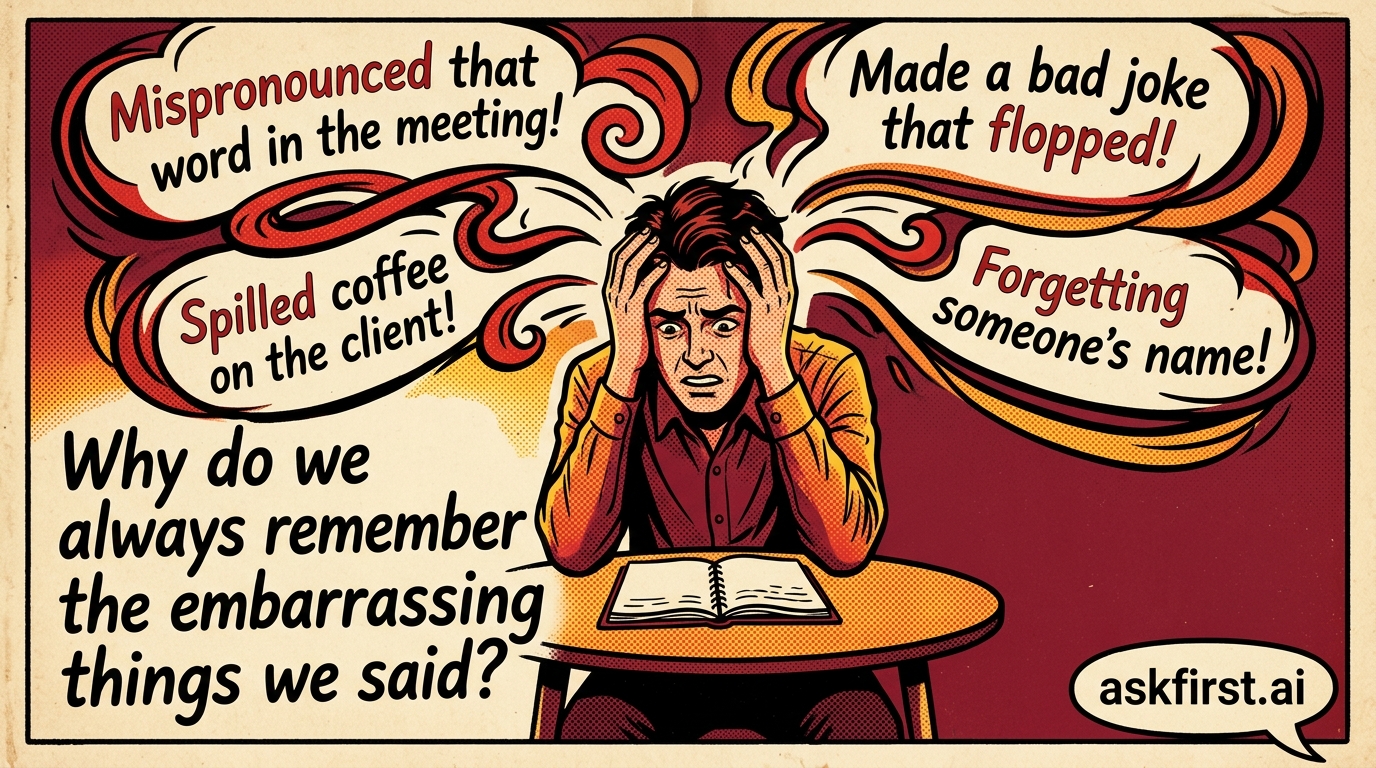
The phenomenon of ruminating on past social blunders is a deeply ingrained facet of human psychology, driven by the brain's innate need for social survival. When an individual experiences an embarrassing moment, the brain does not merely record the event; it flags it as a high-priority 'learning' signal. This process is rooted in evolutionary psychology, where maintaining status within a group was once a matter of life or death. Being excluded from a tribe could lead to catastrophe, so the brain developed a heightened sensitivity to social feedback.
The Role of the Negativity Bias
Humans possess an inherent negativity bias, a cognitive tendency to pay more attention to negative experiences than positive or neutral ones. This survival mechanism ensured that early humans remained alert to threats in their environment. In the modern context, an embarrassing comment acts as a perceived 'threat' to social identity. Because the brain prioritizes potential dangers, these memories are etched more deeply into the neural circuitry than the hundreds of successful, mundane conversations that occur daily.
Cognitive Mechanisms: Why Memory Gets Stuck
- The Zeigarnik Effect: This psychological principle suggests that people remember uncompleted or interrupted tasks better than completed ones. In this case, an embarrassing moment is often viewed by the ego as an 'unresolved' social failure. The mind keeps 'looping' the memory, attempting to find a resolution or a way to rewrite the outcome.
- Hyper-Self-Focus: When individuals feel embarrassment, they often enter a state of extreme self-consciousness. This narrows the cognitive focus, making the memory of the mistake feel more vivid and 'real' than the broader context of the situation, which actually suggests that observers likely forgot the incident long ago.
The Spotlight Effect
One of the most profound reasons this memory persists is the Spotlight Effect. This cognitive bias causes people to overestimate how much others notice their appearance or behavior. In reality, while an individual is obsessing over a minor stutter or an awkward joke from three years ago, the other people present have long moved on. The brain erroneously believes that the world is watching closely, which keeps the memory alive through the fear of judgment.
Neural Pathways and Emotional Intensity
Embarrassment triggers the amygdala, the emotional processing center of the brain. When a memory is tied to a strong emotional surge—such as shame or anxiety—the hippocampus records the event with higher fidelity. This emotional 'tagging' is nature's way of ensuring the brain remembers what to avoid in the future to maintain social harmony.
Strategies to Move Past Rumination
Understanding the mechanics of these memories is the first step toward silencing them. Cognitive reframing and mindfulness-based approaches can break the cycle of rumination:
- Perspective Taking: Consciously shift the view from the 'actor' to the 'observer.' Ask oneself: 'Would I remember if someone else said this five years ago?' The answer is almost always a resounding no.
- Self-Compassion: Recognize that embarrassment is a universal human experience. It is a sign of social awareness, not a character flaw.
- Mindfulness: Instead of fighting the thought, observe it neutrally. Acknowledging that the memory is merely a neural habit rather than a reflection of present reality can reduce its emotional intensity.
The Silver Lining of Social Memory
While the urge to fixate on blunders can be uncomfortable, it serves a functional purpose. It drives the constant calibration of social behavior. It is essentially an internal 'quality control' system that promotes empathy and caution. When redirected from shame to personal growth, these memories remind humans of their fallibility, which fosters humility and relatability. Embracing these memories as evidence of a social, learning brain transforms them from 'failures' into the markers of a life lived in interaction with others. Ultimately, the fact that these moments linger is a testament to the high value the human mind places on connection and the desire to belong.