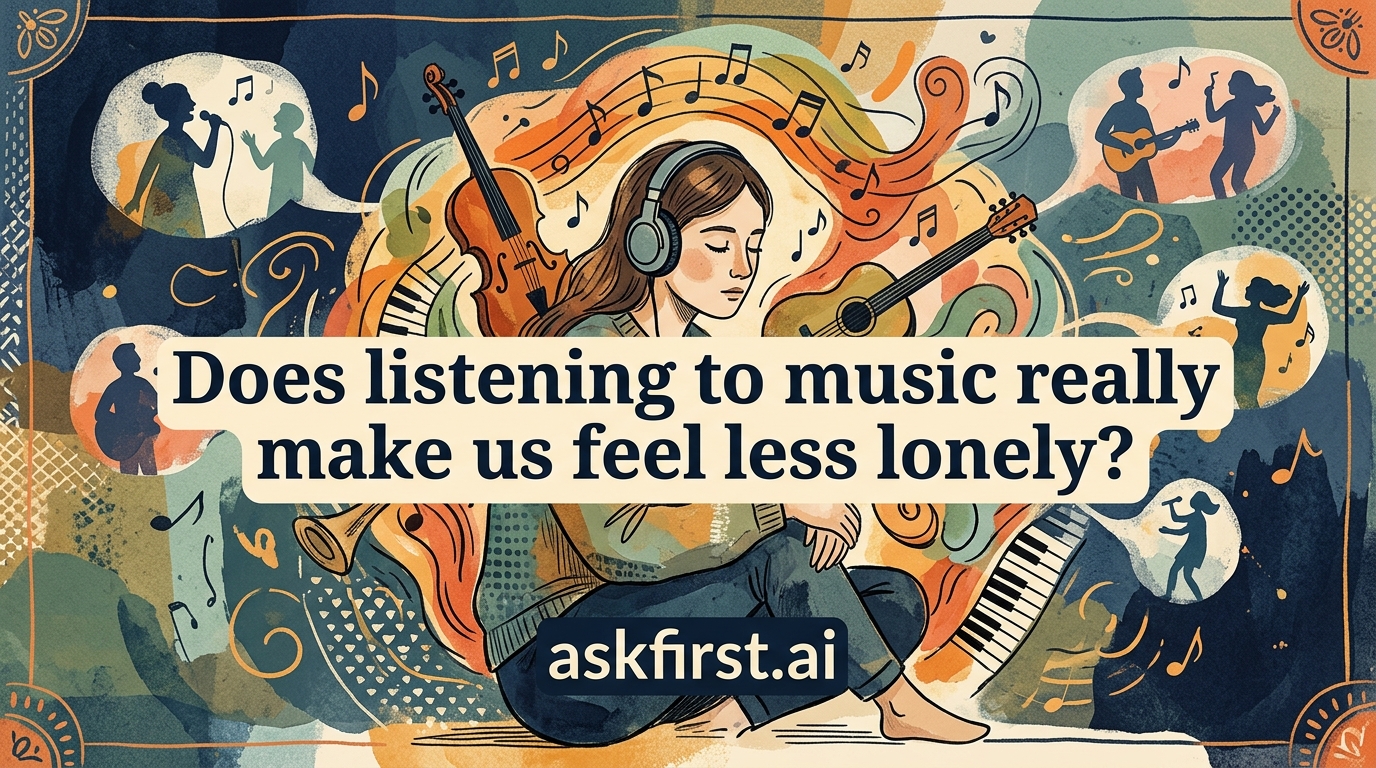
The Auditory Connection: Decoding the Loneliness-Music Link
Music is a universal language, a pervasive cultural phenomenon that threads through every society on Earth. For decades, psychologists, neurologists, and sociologists have investigated a compelling proposition: can soundscapes serve as a substitute for human companionship? The short answer is yes. Research suggests that music functions as a powerful social surrogate, effectively mitigating feelings of isolation by activating specific neural pathways associated with bonding and attachment.
The Parasocial Mechanism of Sound
At the core of this phenomenon lies the concept of parasocial interaction. When an individual engages deeply with a piece of music, they often form a psychological connection with the performer or the narrator of the song. This is particularly evident when listening to lyrical compositions. The brain processes the intimacy of the artist's voice—often transmitted in a frequency range similar to human conversation—as a proximity-based social signal.
- Neural Resonance: Neuroimaging studies show that listening to familiar music activates the reward centers of the brain, specifically the ventral striatum and the nucleus accumbens. These are the same regions triggered by successful social interactions.
- Hormonal Regulation: Engaging with music has been shown to modulate cortisol and oxytocin levels. Oxytocin, famously dubbed the 'bonding hormone,' is naturally released during human touch and social connection, reinforcing the feeling of belonging.
Why Music Beats Silence in Solitude
Silence in a void of solitude can be heavy. The brain, hardwired for pattern recognition and social survival, experiences a 'threat alert' during extended periods of isolation. Music disrupts this cycle. It provides an 'auditory presence' that fills the silence with human energy.
1. Rhythmic Entrainment and Shared Pulse
Music imposes a rhythmic structure on the environment. The process of 'entrainment' occurs when physiological processes—such as heart rate and respiration—synchronize with the beat of the music. This creates an embodied sense of coordination that mimics the feeling of moving in step with a friend or a partner.
2. Self-Reflection vs. Social Surrogate
Music serves two distinct psychological functions in solitude:
- The Introspective Function: Using music to understand oneself and process emotions (Self-Concept).
- The Surrogate Function: Using music as a companion to fill the gap of absent physical interaction (Social Surrogate).
Empirical Evidence and Psychological Studies
A pivotal study published in the Journal of Social and Personal Relationships indicated that individuals often turn to music specifically during times of perceived social exclusion. The participants reported that music functioned as a "friend," providing comfort and validating their emotional states. Unlike movies or television, music is often perceived as more intimate because it allows the listener to fill in the blanks with their own memories, effectively co-creating the experience with the artist.
The Role of Nostalgia and Autobiographical Memory
Music is one of the strongest triggers for autobiographical memory. When a person feels lonely, they often reach for music that anchors them to past experiences, particularly those linked to social inclusion. By listening to a song from a graduation ceremony, a wedding, or a childhood summer, the individual is transported back to a time of high social density. This acts as a protective buffer against current feelings of isolation, effectively 'reminding' the brain that the individual is part of a broader social fabric.
Practical Applications for Daily Well-being
Understanding this mechanism allows individuals to curate their environment intentionally.
- Curating 'Companion' Playlists: Create lists that feature podcasts or music with vocal elements, as the human voice is a potent social cue.
- The Power of Shared Music: Even if physically alone, listening to the same music as others—whether via digital streaming or synchronized playback—creates a psychological state of shared identity.
Conclusion: The Sonic Bridge
While music cannot entirely replace the nuanced complexity of face-to-face human interaction, it undeniably functions as a sophisticated emotional prosthetic. By leveraging the brain's tendency to anthropomorphize sound and its innate biological need for rhythmic consistency, music provides an effective, accessible, and profound tool for alleviating the sting of loneliness. It does not just fill the air; it fills the space between ourselves and the world, proving that we are rarely as alone as our circumstances might suggest.