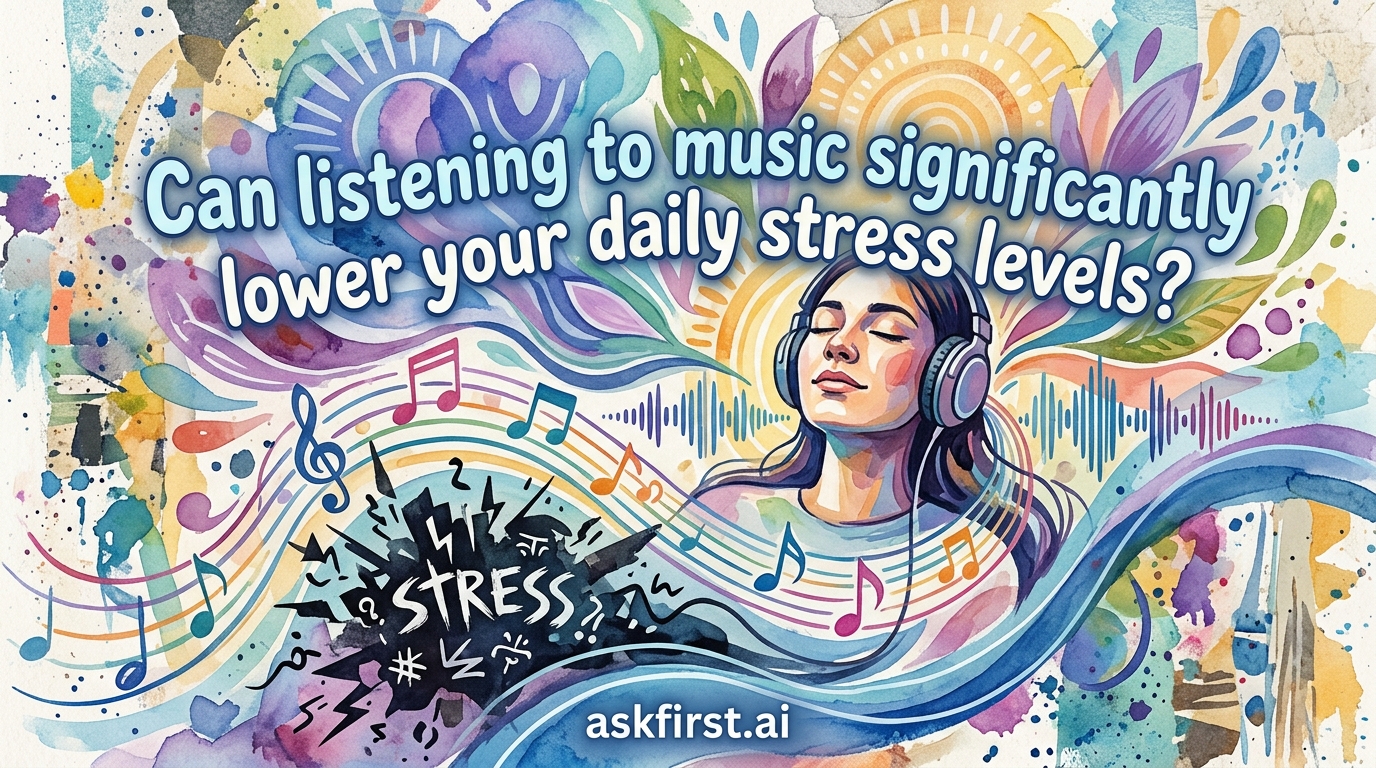
The Harmonic Antidote to Modern Stress
Scientific research has increasingly focused on the intersection of auditory stimuli and the human nervous system. The question of whether music can act as a legitimate physiological buffer against daily stress is not merely anecdotal; it is a subject of rigorous empirical investigation. Music serves as a potent tool for modulating the autonomic nervous system, effectively shifting the body from a 'fight-or-flight' sympathetic state to a 'rest-and-digest' parasympathetic state.
The Physiological Mechanism: How Sound Heals
When sound waves enter the human ear, they are converted into electrical signals that travel through the auditory nerve to the brain. This pathway does not just engage the auditory cortex; it stimulates the limbic system, the region responsible for emotion, memory, and hormone regulation.
- Cortisol Regulation: Studies consistently show that listening to calming music can lower salivary cortisol levels, the primary marker of physical stress. When cortisol levels drop, the body stops reacting to stressors as if they were life-threatening emergencies.
- Heart Rate Variability (HRV): Music with a steady, slow rhythm—typically around 60 to 80 beats per minute—can synchronize the heart rate. This phenomenon, known as entrainment, encourages the heart to beat in rhythm with the external auditory stimulus, promoting relaxation.
- Neurochemical Release: Engaging with music triggers the release of dopamine, the neurotransmitter associated with reward and pleasure. Simultaneously, it may suppress the release of norepinephrine, the 'stress hormone' that keeps the brain in a state of high alert.
Psychological Benefits: Beyond Biology
Beyond simple physiology, music acts as a cognitive distractor. Daily stress often stems from rumination—the repetitive cycle of thinking about past mistakes or future worries. Music forces the brain to process temporal information and rhythmic patterns, effectively interrupting the neural loops that sustain anxious thoughts.
The Optimal Listening Strategy
Not all music produces the same stress-relieving results. To maximize the impact of music on stress reduction, consider the following parameters:
- Tempo and Rhythm: Focus on compositions that mimic the resting human heart rate. Classical pieces, ambient soundscapes, or slow-tempo acoustic tracks are historically the most effective for lowering arousal levels.
- Personal Preference: While the 'Mozart Effect' is a popular concept, current research suggests that familiarity matters. If a specific genre or piece provides the listener with personal comfort or nostalgia, the subjective stress-reduction benefit is often superior to listening to 'relaxation' music that one dislikes.
- Active Engagement vs. Background Sound: While background listening can lower baseline stress, active listening—where one focuses entirely on the melodies, harmonies, and instruments—can lead to a 'flow state.' This state of deep focus acts as a powerful barrier against intrusive, stressful thoughts.
Myths About Music and Stress
It is vital to distinguish between myth and reality. A common misconception is that 'any' music works for everyone. However, fast-paced, high-intensity music can actually increase heart rate and induce an arousal state that mimics anxiety. Furthermore, some studies indicate that 'lyrical' music can sometimes distract the brain more than instrumental music if the lyrics are emotionally complex, as the language centers of the brain begin to process the narrative rather than resting in a state of sensory receptivity. For maximum reduction in daily stress, prioritize instrumental tracks.
Building a Sustainable Habit
To effectively lower daily stress using music, one does not need to listen for hours at a time. The 'micro-dose' approach is highly effective. Incorporating five to ten minutes of intentional listening during a commute or a short afternoon break can reset the nervous system. By consciously selecting sound environments, individuals can exert control over their internal emotional state, regardless of the chaotic nature of the external world.
Conclusion
In an age characterized by constant digital connectivity and information overload, music remains one of the most accessible and effective tools for stress management. By leveraging the body's natural response to rhythm and melody, anyone can cultivate a personalized sanctuary of calm. Whether through the symphonies of the past or the lo-fi beats of the present, sound provides a constant, reliable mechanism for restoring homeostasis. The science is clear: music is not just a form of entertainment; it is a fundamental pillar of human well-being and a highly effective, non-pharmacological intervention for the modern, stressed mind.