The Paradox of Solomon: Why Advice Fails the Giver
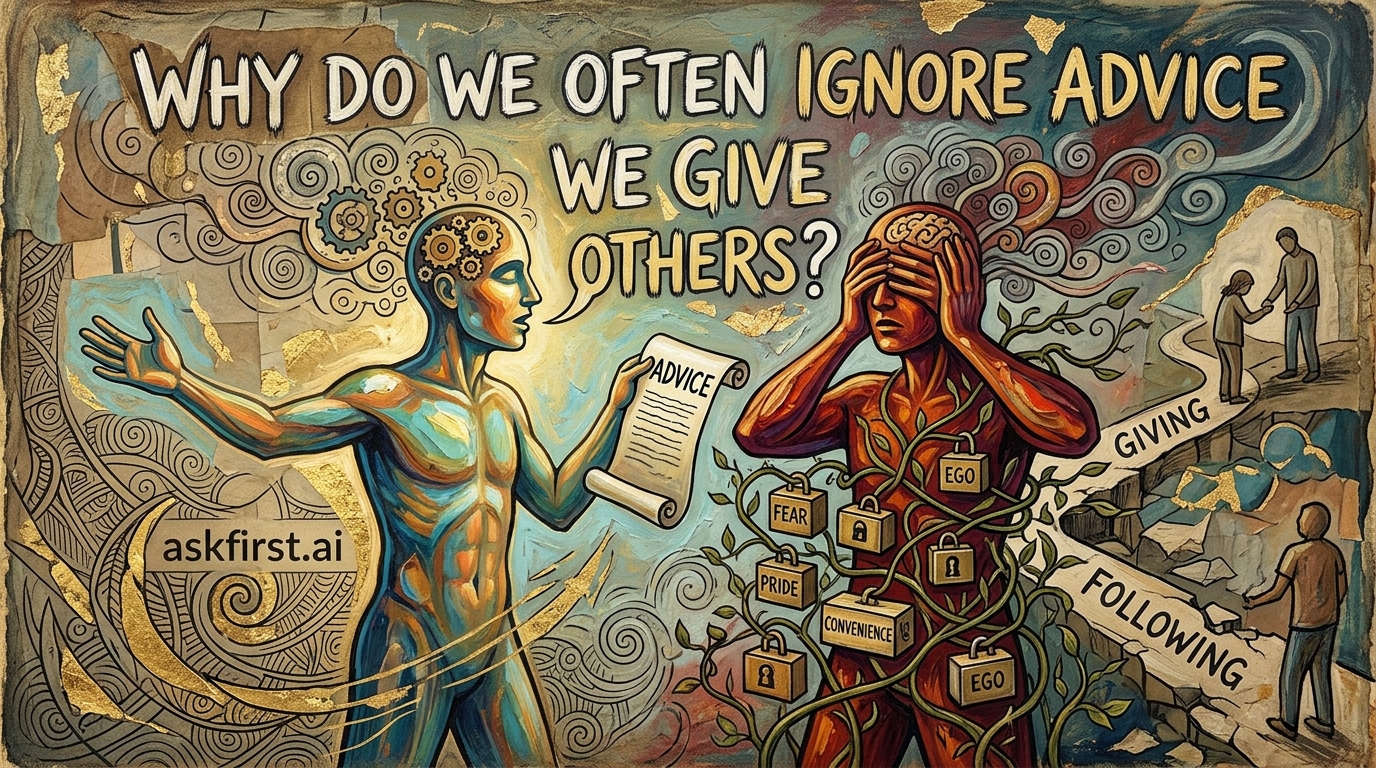
It is a universal human experience to act as a brilliant mentor to a friend while simultaneously failing to apply that same wisdom to personal struggles. This phenomenon, often referred to by psychologists as the Solomon Paradox, highlights a fundamental disconnect between how the brain processes information for oneself versus for others. While humans are remarkably adept at providing objective, balanced, and strategic guidance to peers, this cognitive clarity often evaporates when facing personal dilemmas.
The Cognitive Mechanics of Perspective
At the heart of this behavior is Self-Distancing. When advising a friend, the human brain operates from a third-person perspective. This distance allows for a broader, more objective viewpoint. One can identify patterns, consequences, and alternative strategies without the interference of intense personal emotions. Conversely, when dealing with personal matters, the brain shifts to a first-person perspective, which is deeply rooted in emotional attachment, ego, and immediate internal pressure. This proximity triggers the amygdala, which prioritizes survival and comfort over the long-term logical advice that one might otherwise provide to a third party.
- Cognitive Load: Personal problems are burdened with subjective baggage, whereas the advice provided to others is viewed as a theoretical puzzle.
- Emotional Regulation: The brain seeks to soothe the 'self' during personal crisis, often leading to impulsive choices that contradict the logic applied to others.
- Fear of Failure: Taking risks for someone else carries minimal personal cost, but applying risky advice to oneself feels like a threat to one's own status or well-being.
Theoretical Frameworks: Why the Gap Exists
1. Construal Level Theory (CLT)
This theory posits that psychological distance—whether social, temporal, or spatial—determines how individuals think. By advising another person, the distance increases, forcing the brain to look at the 'big picture.' This creates an abstract, high-level understanding of the problem. When thinking of oneself, the focus remains on low-level details: the immediate pain, the short-term inconvenience, and the fear of social repercussion.
2. The Illusion of Insight
Humans often fall into the trap of believing they have deeper psychological insight into others than they do into themselves. This is known as the Introspection Illusion. Even if one knows the 'right' thing to do, the lack of objective distance makes that action seem impossible or ill-suited for the specific constraints of one's own life.
Practical Strategies for Bridging the Gap
To overcome this paradoxical gap, individuals can adopt specific psychological techniques to artificially induce distance:
- The Fly-on-the-Wall Technique: When faced with a difficult decision, consciously visualize the situation from the perspective of an outside observer. Ask: 'What would I tell a close friend to do in this exact situation?'
- Journaling in the Third Person: Writing about personal struggles using one's own name or 'he/she' instead of 'I' creates immediate emotional detachment, facilitating more rational decision-making.
- The Time-Travel Method: Shift the temporal frame. Consider how this problem will be viewed in one year or five years. This shift usually de-escalates the emotional intensity of the current moment, allowing the mind to treat the issue as a solved historical puzzle rather than a chaotic present disaster.
The Evolutionary Benefit of Emotional Proximity
While this paradox may seem like a flaw, it is, in some ways, an evolutionary byproduct. Our primary concern is the survival of the 'self.' Therefore, the brain is programmed to protect the self from pain, rejection, and loss of resource. Sometimes, taking 'logical' advice—such as leaving a job or ending a relationship—is perceived by the primal brain as a massive threat to current security. Providing advice to others does not threaten our own security, so our logical brain is allowed to function unimpeded.
Conclusion: Mastering the Self-Mentor
Recognizing the Solomon Paradox is the first step toward self-mastery. By understanding that the brain is naturally biased against the self, one can learn to 'outsmart' these internal limitations. The key is not to reject the advice given to others, but to embrace it as a legitimate blueprint for one's own life. Developing the discipline to treat one's own challenges with the same cold, rational, and compassionate objective as one treats the challenges of others is the ultimate hallmark of high-level emotional intelligence and decision-making capacity. Next time advice is given to a friend, document it, and treat that document as a letter to the future self.