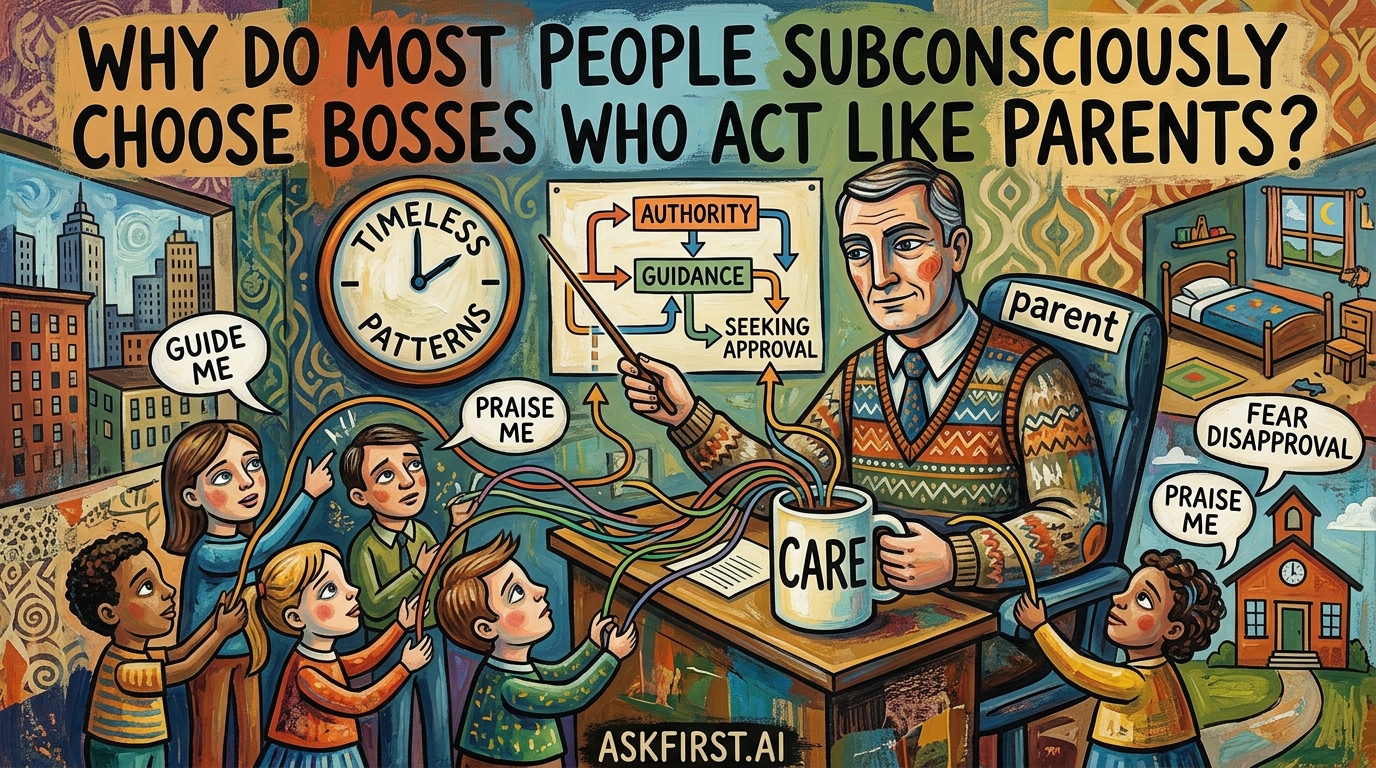
The Psychology of Authority and Parental Projection
The phenomenon of selecting a manager who mirrors parental behavior is a well-documented aspect of organizational psychology, often referred to as transference. This process involves individuals unconsciously projecting feelings, expectations, and behavioral patterns from their early upbringing onto authority figures in their professional lives. When a child matures, their internal working models of caregiving and authority are established based on the primary caregiver's interaction style. These cognitive schemas persist into adulthood, acting as a blueprint for how individuals navigate hierarchical relationships in the workplace.
The Mechanisms of Subconscious Selection
1. Familiarity and Comfort
Human brains are wired to prioritize consistency. Even if a parental relationship was strained or difficult, the familiar dynamics offer a psychological 'map' that the individual knows how to navigate. A manager who replicates a parental style provides a sense of predictability. The brain perceives this familiarity as safe, even if the underlying dynamic is dysfunctional, because it minimizes the anxiety of the unknown.
2. The Search for Validation
Many employees enter the workforce with an unresolved desire for parental approval. If a manager exhibits qualities like praise-giving, criticism, or micro-management, an employee may find themselves working harder to earn validation or rebel against these traits in ways that mirror adolescent defiance. This cycle effectively repeats the family drama on a professional stage, as noted by organizational psychologists like Michael Maccoby.
3. Cognitive Schemas and Expectations
Cognitive psychology explains that people categorize incoming information based on pre-existing mental frameworks. If an individual grew up with a 'directive' parent, they subconsciously look for a 'directive' leader because their mental software is optimized to interpret that style of communication. Conversely, a leader with a 'laissez-faire' approach might feel confusing or neglectful to someone who expects firm guidance.
Types of Parental Projection in Management
- The 'Helicopter' Boss: Similar to an overprotective parent, this manager micromanages every detail. Employees who had intrusive parents often find this style oddly comforting, as it mimics their childhood experience of being closely watched.
- The 'Strict Disciplinarian' Boss: This style attracts those who grew up under rigid rules. These employees often excel in high-compliance environments, viewing the boss's sternness as an essential component of professional security.
- The 'Benevolent Mentor' Boss: This aligns with a nurturing parent. Employees seek this out to continue their development, looking for a figure who provides not just instructions, but moral and professional guidance.
The Impact on Workplace Dynamics
This subconscious selection has profound implications for team health and professional growth. When an employee perceives their boss as a parent, the stakes of every interaction feel heightened. A critical performance review is no longer just a business discussion; it is perceived as a judgment of the individual’s worth. This heightens the emotional reactivity of the workforce and can lead to burnout or toxic dynamics if the boss-employee relationship becomes overly personalized.
Breaking the Cycle: Strategies for Professional Autonomy
Recognizing the parental projection pattern is the first step toward achieving emotional maturity in the workplace. Experts suggest several strategies for shifting these dynamics:
- Self-Awareness: Employees must ask themselves if their emotional response to a manager is proportional to the situation or if they are overreacting based on past baggage.
- External Benchmarking: Actively seek mentorship from peers or mentors outside the direct line of command to gain perspective on what a professional, non-parental relationship looks like.
- Objective Communication: Focus on professional objectives and KPIs (Key Performance Indicators). By centering conversations on data, output, and goal alignment, the emotional temperature of the relationship remains professional.
- Boundaries: Recognize that the office is not a family system. Establishing clear boundaries helps strip away the subconscious need to 'please' or 'defy' the boss, allowing for a more productive, contractual relationship between professional peers.
Conclusion
The tendency to seek parental surrogates in leadership is a testament to the lasting impact of early development. While the subconscious mind seeks the familiar, modern career success depends on the ability to differentiate the workplace from the family unit. By cultivating awareness, employees can move from reactive, subconscious behaviors to deliberate, high-value professional collaborations. Understanding this psychological architecture does not just improve productivity; it frees the individual to define their career based on their own ambitions, rather than the expectations of an internal child seeking approval.