The Evolutionary Paradox of Embarrassment
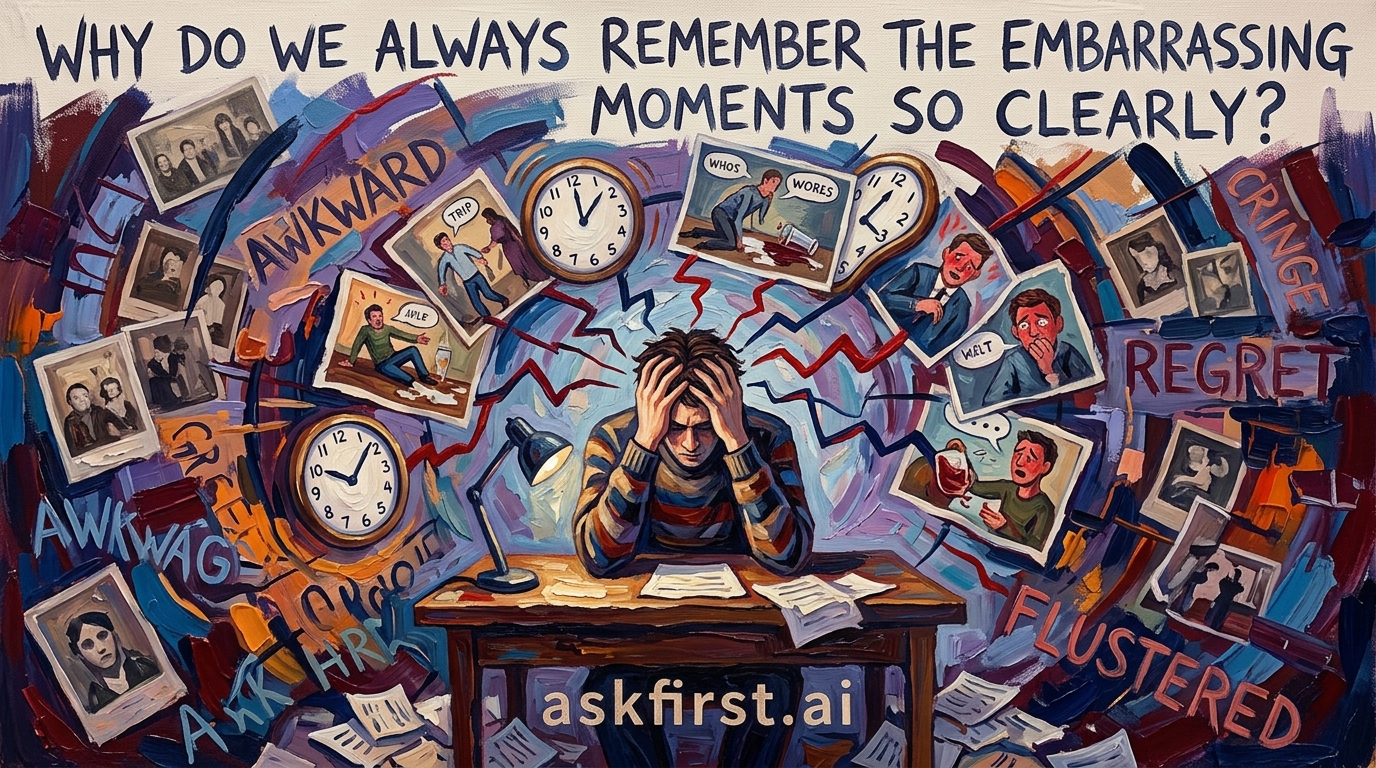
Human memory is not a perfect recording device; rather, it is a highly selective survival tool. While mundane events often fade into the background of daily existence, social faux pas and embarrassing moments are seared into the cerebral cortex with laser-like precision. This phenomenon, often referred to as the 'spotlight effect' or 'ruminative memory,' serves a specific, albeit uncomfortable, evolutionary function. Understanding this mechanism requires a deep dive into the architecture of the human brain and the social dynamics that defined our ancestors.
The Neurobiology of Social Pain
Scientific research, particularly studies using functional MRI (fMRI) imaging, has revealed that the brain processes social rejection and embarrassment in regions surprisingly similar to those that process physical pain. The anterior cingulate cortex, a region involved in the modulation of emotional and physical discomfort, lights up when individuals recall moments where they felt humiliated or socially excluded. Evolutionarily, this connection exists because, for early humans, being ostracized from the tribe was equivalent to a death sentence. Consequently, the brain developed a 'super-detector' for social errors. By archiving these mistakes with high emotional intensity, the brain creates a mental blueprint of 'what not to do,' theoretically increasing the chances of group acceptance in the future.
The Role of the Amygdala and Hippocampus
When an embarrassing event occurs, the amygdala—the brain's emotional command center—is triggered by the intense feeling of social shame. This activation prompts the hippocampus to encode the event with high priority. In essence, the emotional 'weight' of the embarrassment acts as a chemical marker. The brain essentially says, 'This was painful and dangerous for our social standing, so make sure this memory is impossible to ignore.' This is why a simple comment made at a dinner party years ago can feel as vivid today as it did when it first happened.
The Spotlight Effect and Cognitive Bias
Human beings suffer from a persistent cognitive bias known as the 'spotlight effect.' This is the psychological tendency to overestimate how much others notice our appearance, behavior, and mistakes. When one remembers an embarrassing moment, the brain erroneously assumes that the rest of the world has maintained a equally detailed, long-term mental recording of that same error. In reality, most observers are far too preoccupied with their own lives and their own internal 'spotlight' to dwell on the minor social missteps of others. Despite the logical evidence, the brain clings to the memory as a protective measure against future repetition.
Strategies for Emotional Resilience
Understanding why these memories persist is the first step toward reducing their power. Incorporating the following mental frameworks can help manage the 'embarrassment loop':
- Cognitive Reframing: View embarrassing moments not as character flaws, but as data points for learning. When the memory surfaces, mentally note the 'lesson' and consciously label the event as 'old information' that no longer serves a current purpose.
- Perspective Taking: Practice radical empathy for the self. If a friend told a story about a similar mistake, would you judge them harshly for years, or would you likely forget it within minutes? Applying this external view to the self can significantly diminish the intensity of the memory.
- The Power of Humility: Accepting that human fallibility is universal can dismantle the sting of social embarrassment. Every human experiences these moments; it is part of the shared social fabric rather than a singular defect.
The Evolutionary Benefit
While the lingering nature of embarrassing memories can feel like a psychological burden, it is vital to acknowledge the utility. It is this exact mechanism that fosters social intelligence. Those who felt the sting of a social blunder were historically more likely to navigate group dynamics with caution, ensuring their survival and potential for reproductive success. In the modern world, this mechanism remains hyper-active, often misfiring in low-stakes situations like a misinterpreted email or a clumsy public comment. By realizing that this discomfort is simply an ancient survival instinct at work, one can transform the memory from a source of shame into a reminder of the complex social wiring that defines the human experience. Mastery of this awareness allows for a more confident, grounded approach to social interactions, shifting the focus from the fear of error to the joy of authentic connection.