The Illusion of Sleeping Perception
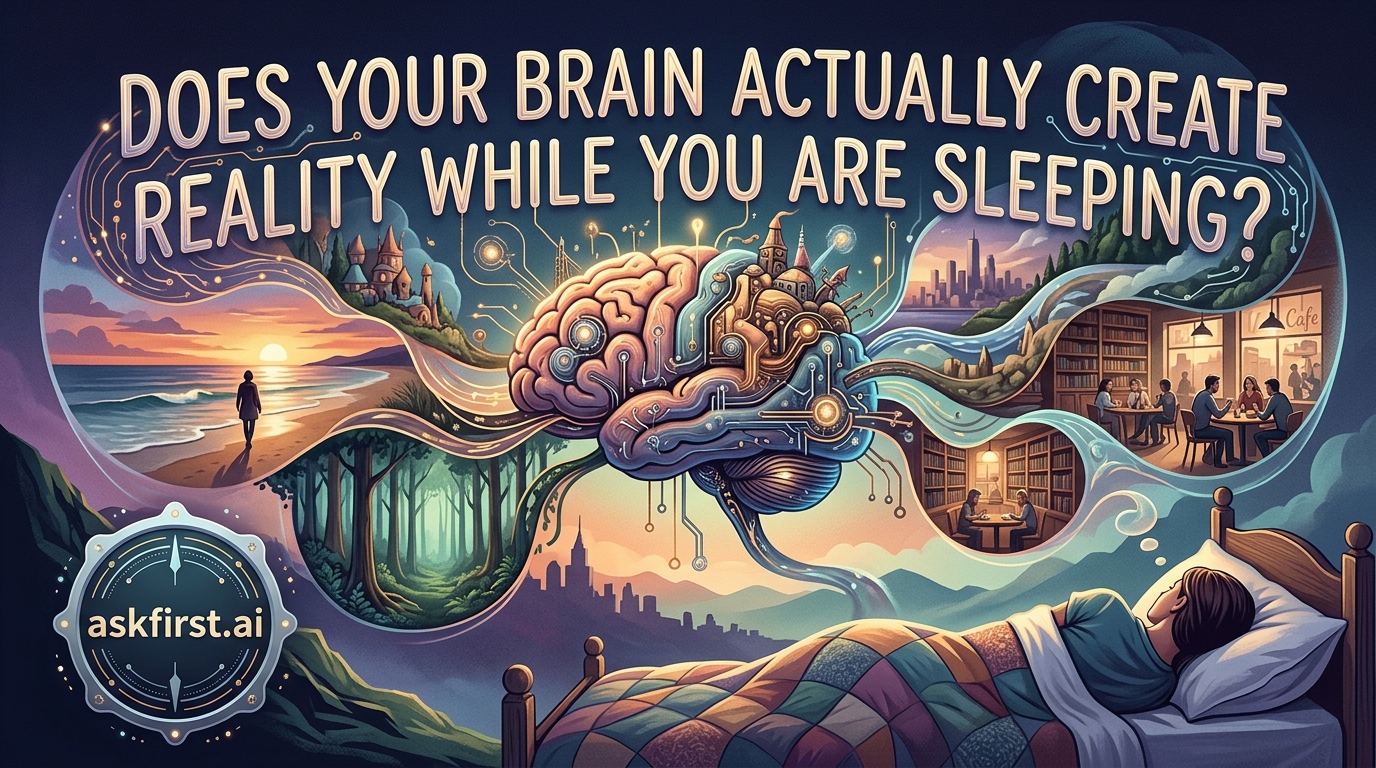
When the body enters the state of sleep, the human brain does not simply 'turn off' like a light switch. Instead, it transitions into a complex, self-contained simulation engine. While the sensory input from the external world is largely disconnected—a process known as sensory gating—the brain becomes a master architect of a subjective, entirely internal reality. This phenomenon suggests that the brain is not a passive receiver of truth but an active generator of experience.
The Neurobiology of Dreamscapes
During Rapid Eye Movement (REM) sleep, the brain exhibits electrical activity remarkably similar to wakefulness. However, the prefrontal cortex—the region responsible for logical reasoning and self-awareness—remains largely inhibited. Meanwhile, the limbic system, which governs emotions and instinctual drives, becomes hyper-active. This chemical imbalance allows for the creation of vivid, often illogical realities. Because the sensory cortex can be activated by internal stimuli rather than external data, the brain perceives these generated images with the same level of belief as it accords to real-world objects.
Sensory Substitution and Virtual Reality
Scientific research into sleep suggests that the brain uses a process called 'top-down processing' to construct these environments. In this framework, the brain takes stored memories, abstract concepts, and emotional templates and stitches them together into a coherent, albeit strange, narrative. Studies have shown that when a dreamer interacts with an object in a dream, the neural firing patterns mirror the physical act of grasping or touching in the waking state. This means that, to the neurons involved, there is no technical difference between interacting with a physical table and a dream-generated one.
- Memory Integration: During sleep, the hippocampus replays daily events, weaving them into the fabric of the dream to solidify neural pathways.
- Predictive Processing: The brain constantly predicts what comes next, even while sleeping, which is why dream plots can feel so immersive and reactive.
Busting the Myth of Objective Truth
The perception of reality in the waking state is also a form of hallucination—a 'controlled hallucination' constrained by sensory feedback. When we sleep, the constraints (the sensory feedback) are removed, but the machinery of hallucination remains. Thus, the dream state is perhaps more 'honest' about the nature of the brain: it reveals that the brain is always creating a story, not just mirroring the outside world.
Psychological and Evolutionary Purpose
Why does the brain invest so much metabolic energy into creating these intricate realities? Current theories propose several fascinating functions:
- Emotional Regulation: By simulating stressful scenarios in a safe, controlled environment, the brain helps discharge emotional tension, allowing individuals to wake up with a more stable psychological foundation.
- Creative Problem-Solving: The removal of linear logic during sleep allows the brain to make unusual connections between disparate concepts. This is why many scientists and artists report having their best ideas immediately after waking up.
- Threat Simulation: From an evolutionary standpoint, the ability to rehearse escape scenarios or social navigation in a dream-reality served as a form of 'practice' that enhanced survival rates for early humans.
The Boundaries of Perception
The reality created while sleeping serves as a testament to the power of the human mind. The fact that the brain can generate vivid landscapes, social encounters, and complex scenarios without a single photon entering the eye or a single sound wave striking the eardrum proves that reality, as we experience it, is entirely an internal construct.
In conclusion, the brain is an autonomous reality-generator that never truly sleeps. Whether through the direct sensory input of the waking world or the memory-based simulation of a dream, the conscious experience is a proprietary creation of the brain itself. We are, in every sense of the word, the creators of our own perceptual universe.