The Evolutionary Bias: Understanding Negativity
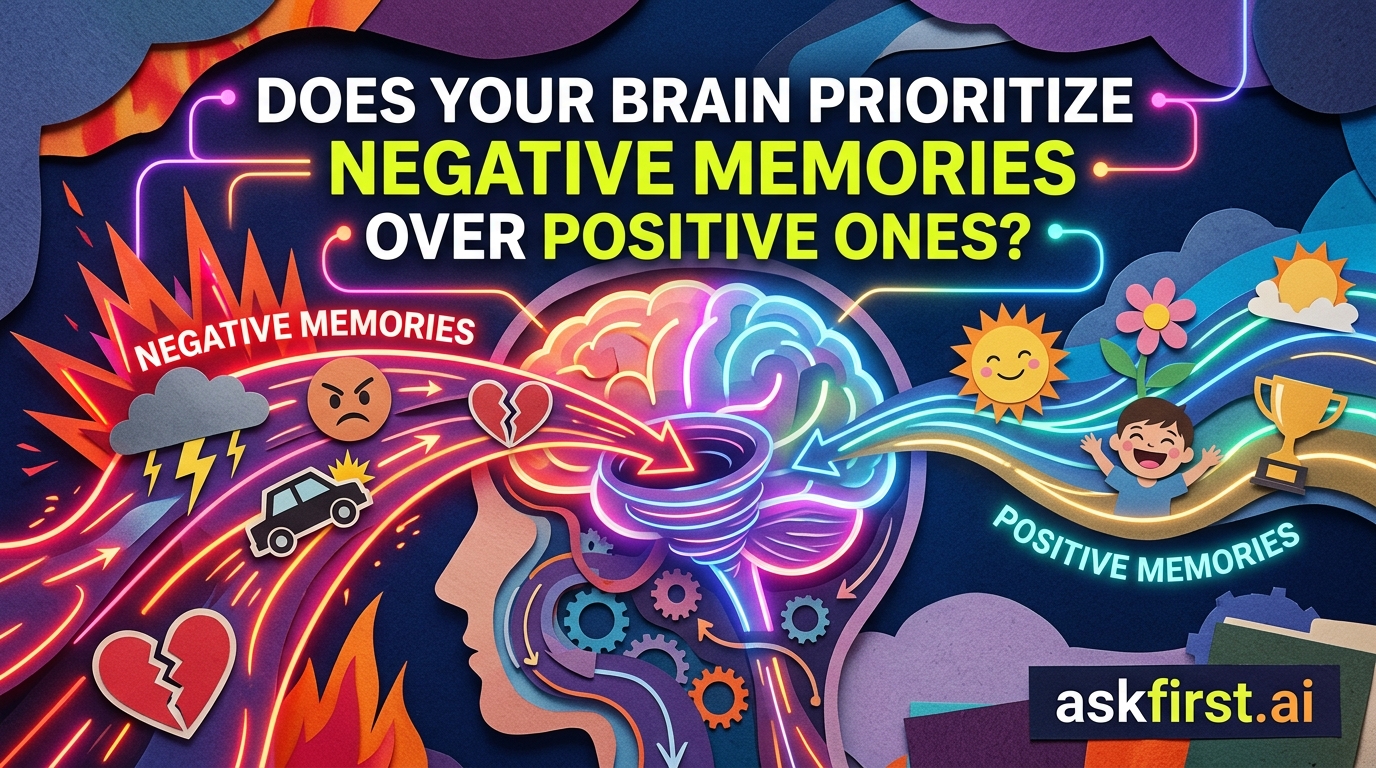
Human memory is not a perfect archival recording of life events; rather, it is a highly selective reconstruction. Research consistently confirms that the human brain exhibits a profound 'negativity bias.' This cognitive tendency means that individuals are significantly more likely to recall, ruminate on, and be influenced by negative experiences compared to neutral or positive ones of equal intensity. This phenomenon is not a personal failure or a defect; it is a fundamental survival mechanism etched into the architecture of the human mind.
The Survival Mandate: Why We Remember Threats
From an evolutionary perspective, the brain was optimized for survival rather than happiness. Thousands of years ago, a human ancestor who failed to recall the exact location of a cluster of berries might have felt hungry, but a human who failed to remember the location of a predator's den faced immediate life-threatening consequences. Consequently, the brain developed a 'better safe than sorry' strategy. The amygdala, a deep-seated region of the brain responsible for processing emotional information, shows higher activation levels when encountering negative stimuli. This 'threat detection' system ensures that lessons learned from danger are stored with higher priority and stronger emotional tagging to prevent future harm.
Neurobiological Mechanisms: How Memories Are Locked
Memory consolidation is deeply intertwined with arousal levels. When an event is emotionally significant, the brain releases neurotransmitters such as norepinephrine and cortisol, which act as a 'save' button. These chemicals strengthen the synapses associated with the event in the hippocampus, the brain's center for learning and memory. Because negative events often involve higher arousal—fear, surprise, or physical stress—the body releases more of these neurochemicals, effectively 'etching' the negative memory into the neural circuitry more deeply than mundane or pleasant daily occurrences.
The Impact on Daily Cognition and Perception
- Social Interaction Bias: In interpersonal relationships, individuals often weigh one critical remark far more heavily than five compliments. This asymmetry suggests that the brain prioritizes social feedback that indicates potential 'exclusion' or 'danger' to group status, reinforcing the evolutionary need to maintain strong social bonds.
- Decision Making: When weighing risks, humans frequently focus on the potential loss (the negative outcome) rather than the potential gain (the positive outcome). This loss aversion, a concept popularized by behavioral economists, demonstrates how memory prioritization dictates modern financial and personal decisions.
- Ruminative Cycles: The brain often replays negative events in an attempt to 'solve' the problem or find a different outcome, a process known as cognitive rumination. While this serves to prepare the mind for future challenges, it can also trap the individual in a loop of focusing on negative past events.
Strategies for Balancing the Scale
While the negativity bias is ingrained, the human brain possesses a remarkable quality known as neuroplasticity, which allows for the rewiring of habitual thought patterns. Understanding how to counteract this biological predisposition is essential for mental clarity and emotional well-being:
- Intentional Savouring: To offset the bias, one must actively practice 'taking in the good.' Because the brain treats neutral positive experiences as routine, one must consciously focus on positive moments for at least 15 to 30 seconds to allow the brain to fully encode them in long-term memory.
- Cognitive Reframing: When a negative memory persists, the technique of reframing involves examining the event from a different perspective to reduce its emotional charge. By transforming the memory from a 'threat' to a 'learning experience,' the brain's threat-detection systems can be effectively quieted.
- Gratitude Practice: Systematic gratitude practices force the brain to search for positive evidence, which acts as a neurochemical counterweight to the naturally occurring flood of negativity. Over time, this shifts the baseline of memory retrieval, making it easier to access positive information.
Conclusion: Beyond the Bias
It is clear that the brain does indeed prioritize negative memories as a protective measure, stemming from a world where survival demanded constant vigilance. However, modern life rarely involves the same physical threats that forged these neurological pathways. By recognizing this inherent bias, individuals can move from being passive recipients of their own cognitive architecture to active curators of their inner lives. By acknowledging the brain’s evolutionary focus on threats and intentionally practicing gratitude and positive reinforcement, one can effectively bridge the gap between ancient survival instincts and the modern human desire for fulfillment and happiness.