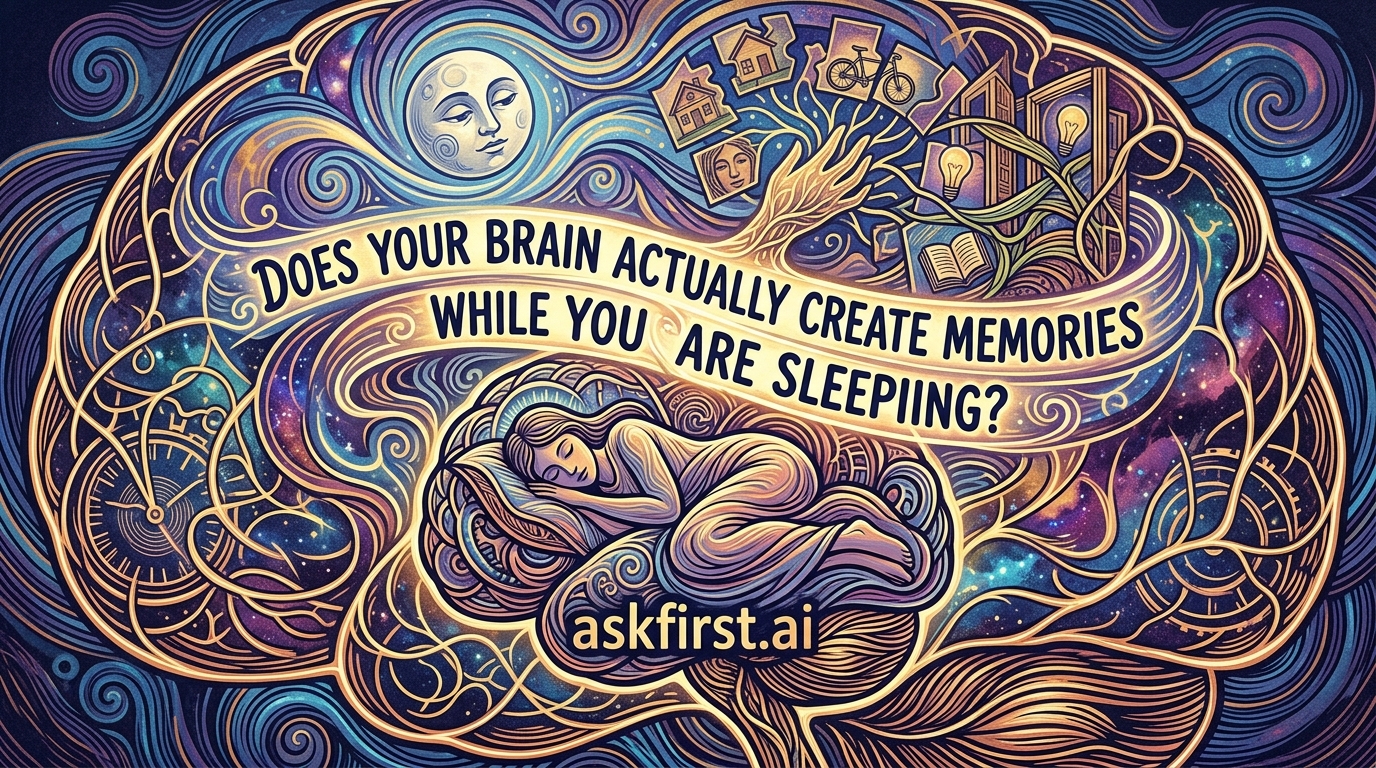
The Sleeping Architect: How Memories Form Overnight
For centuries, sleep was perceived as a passive state, a period of rest where the mind went dark. Modern neuroscience, however, has unveiled a far more dynamic reality: sleep is a high-octane period of architectural reconstruction for the human brain. While the body remains still, the mind is busy sorting, scrubbing, and cementing the experiences of the day into permanent neural pathways. This process, known as Memory Consolidation, is the bedrock of learning.
The Mechanisms of Consolidation
Memory is not a single entity; it is a complex process categorized into stages: encoding, storage, and retrieval. During the waking hours, the brain's hippocampus—the gateway for new information—serves as a temporary notebook, capturing brief flashes of events, sounds, and data. However, the hippocampus has a finite capacity. If we relied solely on this temporary storage, we would quickly run out of mental space.
Sleep acts as a migration period. During deep Non-REM (NREM) sleep, specifically slow-wave sleep, the brain begins a systematic transfer.
- Information Transfer: Data held in the short-term hippocampus is "replayed" at high speeds, effectively broadcasting these signals to the neocortex, the brain’s outer layer responsible for long-term storage and complex processing.
- Synaptic Downscaling: This is perhaps the most fascinating aspect of sleep. Throughout the day, the synapses (connections between neurons) grow stronger and larger as we learn. If this continued indefinitely, the brain would suffer from an energy crisis. Sleep triggers a global downscaling, pruning away the noise of trivial information and reinforcing the essential neural connections.
The Role of Rapid Eye Movement (REM) Sleep
While NREM sleep focuses on the strengthening of declarative memory (facts and events), REM sleep is the master of synthesis and emotional processing. REM is characterized by intense brain activity, closely resembling waking states. During this phase, the brain excels at associative learning—connecting disparate ideas, problem-solving, and creative insight.
Research suggests that during REM, the brain integrates new memories into the vast existing library of previous knowledge. This is why individuals often report waking up with a solution to a problem that seemed insurmountable the night before. The brain is effectively "connecting the dots" while the conscious mind is offline.
Busting the Myth: Is Sleep Just Passive Rest?
It is a common misconception that reading a book under your pillow or listening to audio while unconscious will result in effortless learning. This is scientifically inaccurate. True memory consolidation requires active engagement during the wake phase followed by high-quality sleep cycles. Sleep does not create memories from nothing; it validates and solidifies the information the brain deemed important enough to retain.
Evidence and Clinical Observations
Neuroscientific studies, such as those conducted via electroencephalography (EEG), have consistently observed hippocampal-neocortical "dialogues" during sleep. Researchers have trained laboratory animals on specific tasks and monitored their neural firing patterns. Strikingly, the exact same sequence of neuronal firing occurred during sleep, essentially "replaying" the task. This evidence is a cornerstone in understanding that memory is not merely stored; it is practiced during sleep.
How to Optimize Your Brain's Nightly Architecture
Because sleep is essential for the stabilization of memories, deprivation can lead to significant cognitive deficits. The following principles are vital for anyone looking to sharpen their recall:
- Consistency is Key: The brain follows circadian rhythms; irregular sleep patterns disrupt the timing of REM and NREM cycles, potentially truncating the window needed for full consolidation.
- The Power of Naps: Even short, 20-minute power naps have been shown to boost cognitive performance. They provide a brief "off-loading" window for the hippocampus, freeing up space for new afternoon learning.
- Emotional Regulation: Because sleep helps process emotional content, a good night’s rest helps separate the factual event of a memory from the intense emotional distress that may accompany it, allowing for healthier memory integration.
Conclusion
To answer the burning question: Yes, your brain is fundamentally a creator of long-term memory while you sleep. Without this process, human intellect would remain fragmented and fragile. Sleep is not a departure from intelligence; it is the stage where intelligence is manufactured. By respecting the biological necessity of rest, we allow our brains to function as they were evolved to: learning, adapting, and refining the vast database of who we are every single night.