The Evolutionary Origins of the Gaze Detection Phenomenon
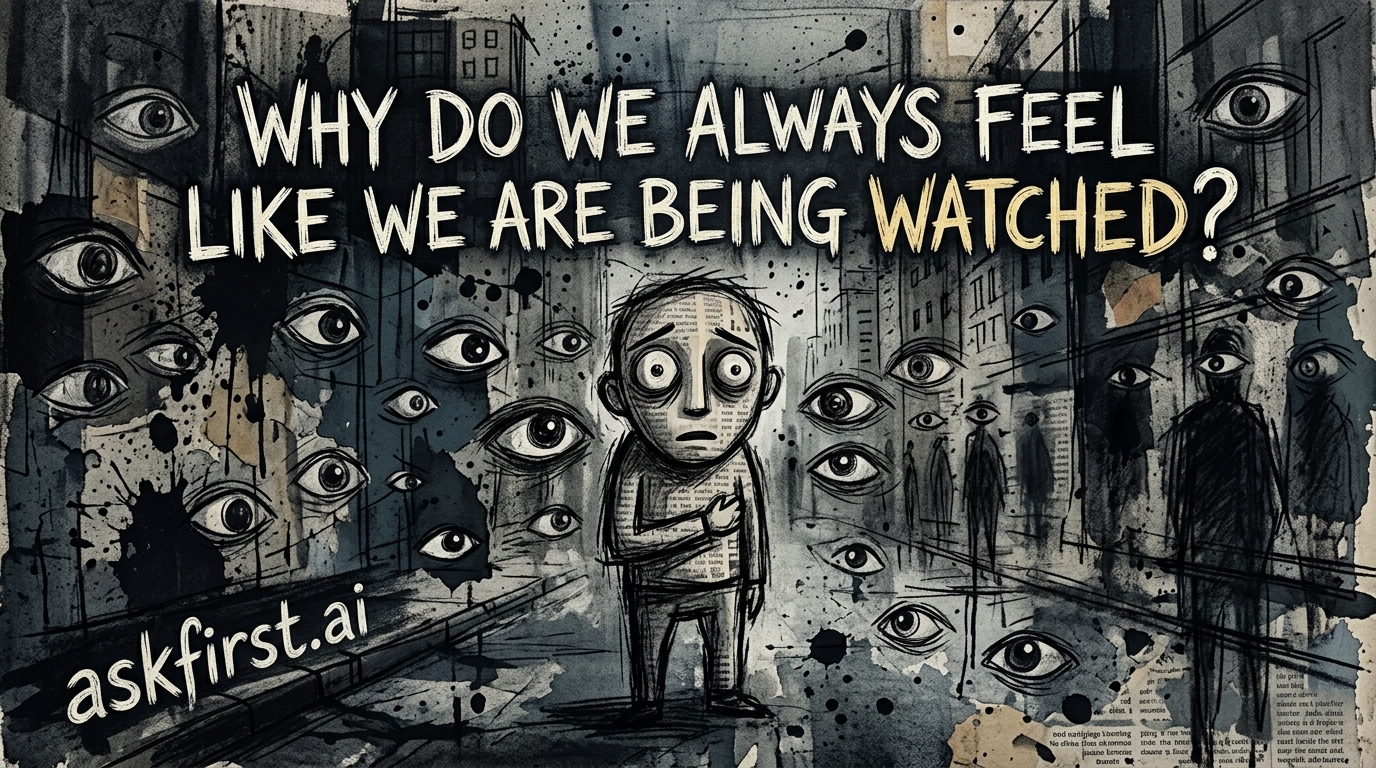
The sensation of being watched—often termed the 'scopaesthesia' or the 'psychic staring effect'—is a profound psychological experience that transcends cultures and centuries. At its core, this feeling is deeply rooted in the architecture of the human brain, specifically within the neural circuits dedicated to social perception and survival. From an evolutionary perspective, the ability to detect when one is being observed is a high-stakes survival mechanism. In the ancestral environment, being watched often served as a precursor to an ambush by a predator or a rival member of another group. Consequently, those individuals who were hypersensitive to the gaze of others were more likely to survive, reproduce, and pass on these vigilant genetic traits.
The Neural Architecture of Attention
Modern neuroscience suggests that the sensation of being stared at relies on a specialized network of brain structures, most notably the amygdala and the superior temporal sulcus (STS). The STS is uniquely tuned to process social stimuli, particularly the direction of others' eyes. When the brain detects a stimulus that resembles a gaze, even if it is peripheral or ambiguous, the amygdala—the brain's emotional processing center—is triggered. This creates a state of heightened arousal before the conscious mind has even processed the visual evidence. This 'pre-attentive' processing allows humans to respond to environmental changes rapidly, often leading to the feeling of being observed even when the observer is not present or is looking in a different direction.
Psychological Projection and Hyper-Vigilance
Beyond basic biology, psychology plays a significant role. Humans are 'social animals' who spend a vast amount of time analyzing the mental states of those around them, a phenomenon known as 'Theory of Mind.' Because we are so adept at projecting our own perspectives onto others, we often imagine that we are the center of attention in any given social space—a cognitive bias known as the 'spotlight effect.' When this inherent need for social validation meets a state of uncertainty, the mind may erroneously construct the feeling of being watched to fill the gap in its environmental awareness.
- The Spotlight Effect: The tendency for individuals to overestimate how much others notice about them.
- Cognitive Filtering: The brain's tendency to prioritize potential threats or social scrutiny over neutral visual information.
- Uncertainty Reduction: The human drive to resolve ambiguity in the environment by creating a 'likely' narrative, such as 'someone is watching me.'
The Role of Paranormal and Cultural Myths
For generations, the feeling of being watched has been tethered to various esoterical or supernatural beliefs. Throughout folklore, the sensation has been interpreted as the presence of ghosts, guardian spirits, or the 'evil eye.' While science provides biological explanations, these cultural narratives persist because they offer a comfortable framework for understanding an uncomfortable sensory experience. These myths persist because they tap into the human brain's natural inclination to find agency and intention in random patterns—a process called 'apophenia.'
Busting the Common Myths
Many people believe that the sensation of being watched is a form of extrasensory perception (ESP) or a telepathic signal that someone has turned their eyes toward them. However, experimental studies, such as those conducted by psychologist John Lobach and others, have largely failed to produce replicable, empirical evidence for a 'psychic' stare. When controlled for variables like lighting, positioning, and peripheral vision, the results consistently show that the sensation is subjective. The perception of being watched is almost always a result of Confirmation Bias: we notice and remember the times we felt watched and looked back to find someone looking, while ignoring the hundreds of times we felt watched and found no one.
Managing the Sensation in the Modern Era
In our digital age, the feeling of being watched has migrated from physical observation to a metaphorical one—the fear of surveillance. Understanding that the feeling is an evolutionary leftover can help alleviate anxiety. Recognizing that the sensation is often a biological byproduct of a brain designed for survival, rather than a genuine indicator of a looming threat, can empower individuals to reframe their experiences. By maintaining situational awareness and acknowledging the brain's natural bias toward self-consciousness, one can move through public spaces with greater confidence and less psychological burden.
In conclusion, the feeling of being watched is not a glitch; it is a feature of a highly evolved brain constantly scanning for social information. It is a testament to the fact that we are profoundly social beings, hardwired to care deeply about the gaze of our peers, whether that gaze is real, imagined, or merely a projection of our own innate caution.