The Phenomenon of Compressed Time
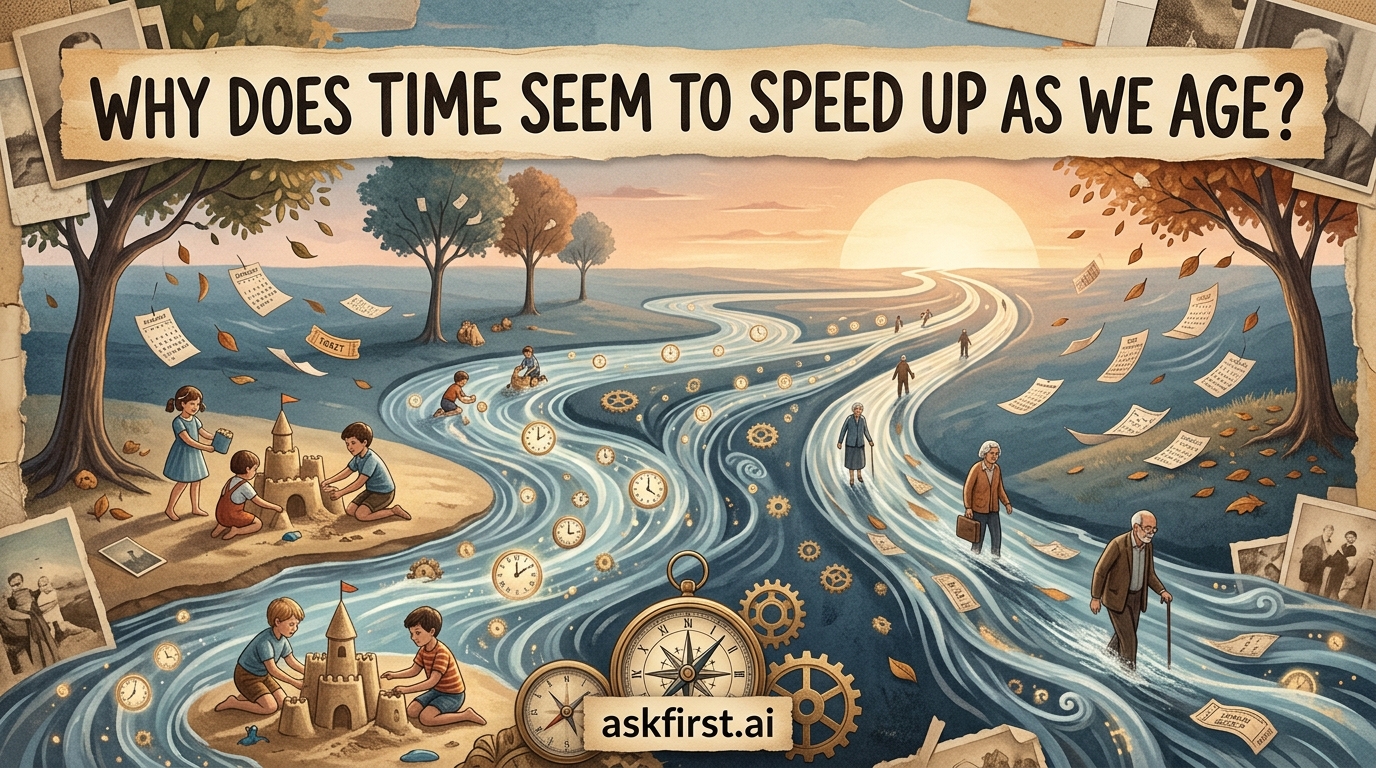
The perception that time accelerates as humans advance in years is a widely documented psychological phenomenon. While the physical clock ticks at a consistent rhythm, the subjective experience of duration undergoes significant transformation. This sensation, often described as 'time flying,' is rooted in the intersection of neuroscience, memory encoding, and cognitive processing speed.
The Proportional Theory
One of the most persistent explanations for this phenomenon is the Proportional Theory, first proposed by French philosopher Paul Janet in 1877. This theory posits that our perception of a period of time is relative to the total length of the life we have already lived. For a five-year-old, one year represents twenty percent of their entire existence—a massive, transformative span. By contrast, for a fifty-year-old, one year represents a mere two percent of their life. Because each subsequent year constitutes a smaller slice of one’s total biography, it feels inherently briefer.
Memory Encoding and Novelty
Beyond simple proportions, the way the brain archives memories plays a critical role. Neuroscientists suggest that the brain measures time based on the volume of new information being processed.
- Novelty as a Metric: During childhood and adolescence, life is filled with 'firsts'—first days of school, first bicycle rides, and new academic milestones. These unique experiences force the brain to capture and store highly detailed sensory information. This high volume of 'data' creates a rich, dense timeline of memories.
- The Routine Trap: In adulthood, daily life often shifts toward routine and efficiency. The brain relies on 'procedural memory' to navigate familiar patterns. Because there is less new information to encode, the brain essentially skips the heavy processing, resulting in a perceived loss of time. If a month contains few distinct, memorable events, the brain looks back at that period and struggles to find mental landmarks, making the entire month feel like a fleeting blur.
Cognitive Processing Speed
The Internal Clock Theory suggests that our biological pace of processing sensory data influences how we perceive external time. Research indicates that as individuals age, the speed at which the brain processes visual images slows down.
- High-Speed Input: When a person is younger, the brain processes images at a higher frame rate, much like a high-speed camera. This results in the subject observing more 'data points' within a given second compared to an older brain.
- The Subjective Stretch: Because the younger brain captures more frames of sensory information, the duration of a specific event feels longer. As the neural circuitry slows down with age, fewer frames are captured per second, causing external events to feel like they are moving past the observer much faster.
Strategies to Slow Down Subjective Time
If the perception of time is linked to novelty and memory density, then individuals can consciously manipulate their subjective experience. To 'slow down' the passing of time, one must disrupt the autopilot of daily routine:
- Seek Novel Experiences: Engaging in new hobbies, learning a foreign language, or traveling to unfamiliar locations forces the brain to move out of high-efficiency mode. By increasing the novelty of daily life, one forces the brain to encode more vivid, detailed memories.
- Practice Mindfulness: Being present reduces the tendency to live in the past or future. Mindfulness training can heighten sensory awareness, essentially forcing the brain to capture a greater level of detail in the present moment.
- Break Routine: Minor deviations from a strict schedule can serve as mental 'bookmarks.' Taking a different route to work or rearranging the living space can prevent the brain from compressing weeks into a singular, forgettable block of time.
Conclusion
The acceleration of time is not an immutable law of physics, but a byproduct of how the brain adapts to long-term familiarity. By prioritizing novelty and fostering an environment of continuous learning, the subjective experience of time can be expanded. Understanding this mechanism empowers individuals to curate their lives in a way that maximizes the richness of their memories, effectively making their lives feel longer, deeper, and more meaningful.