The Psychology of Effort: Understanding the Effort Justification Effect
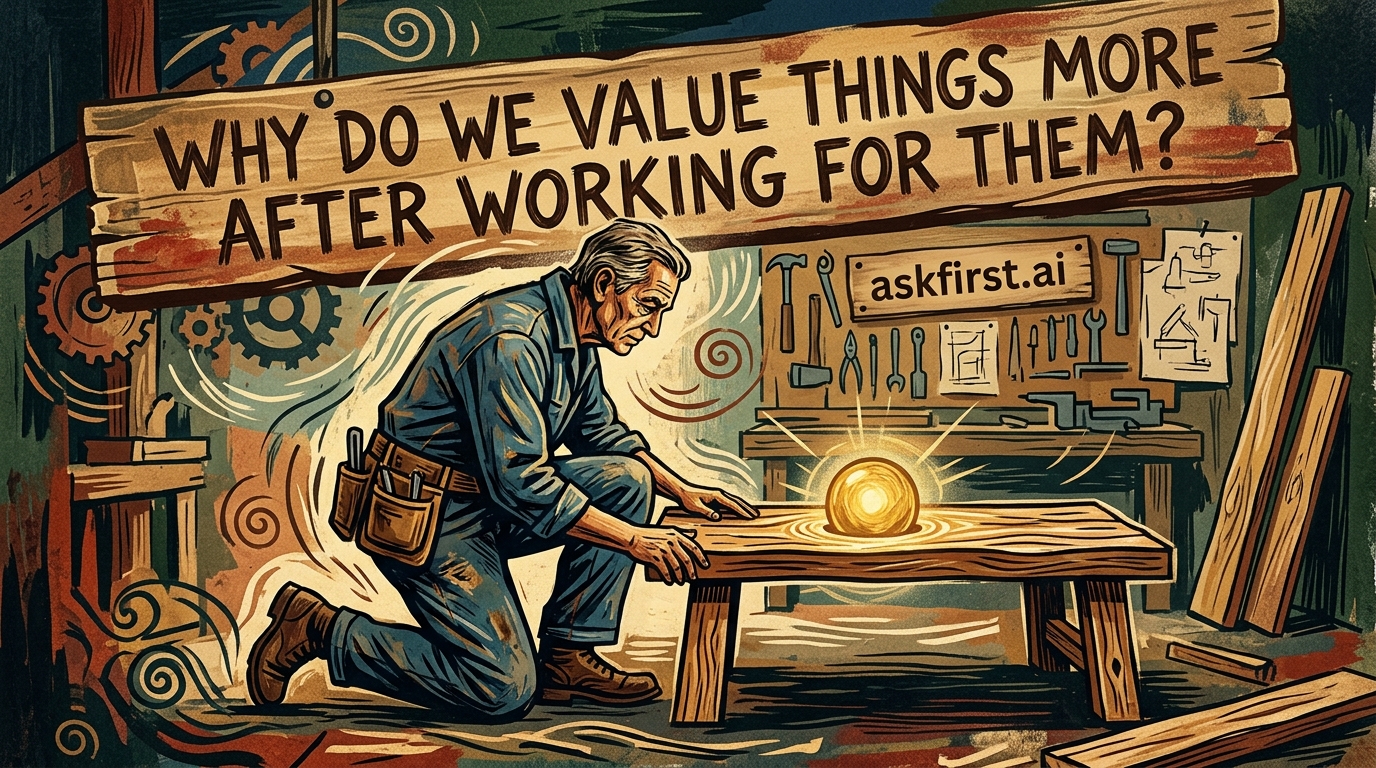
The phenomenon where human beings attribute a higher value to an outcome that they have had to put effort into achieving is known in psychology as the Effort Justification Effect. This is a core component of cognitive dissonance theory, first proposed by Leon Festinger in 1957. Simply put, when individuals undergo a difficult or unpleasant process to achieve a goal, they psychologically inflate the value of that goal to justify the time, energy, and stress invested. If they did not value the outcome, they would be forced to acknowledge that they had wasted their resources, which creates uncomfortable psychological tension.
The IKEA Effect: A Modern Case Study
One of the most famous applications of this concept in modern business is the IKEA Effect. Research conducted by Michael I. Norton of the Harvard Business School and his colleagues revealed that people place a disproportionately high value on products that they partially created themselves, such as flat-pack furniture. Even if the finished product is objectively inferior or less stable than a pre-assembled piece, the mere act of assembly increases the owner's subjective attachment. The labor invested creates a sense of psychological ownership, transforming an impersonal commodity into a personal triumph.
Why the Brain Rewires Value
From a neurobiological perspective, the exertion of effort activates the dopaminergic reward system. When we set a difficult goal and work toward it, our brains release dopamine not just at the moment of completion, but throughout the process of overcoming obstacles. This creates a feedback loop. Furthermore, the brain prefers consistency; we like to think of ourselves as rational agents who make smart decisions. If we work hard for something mundane, we tell ourselves, 'I wouldn't have worked this hard if it weren't worth it.' This self-persuasion process is an unconscious mechanism designed to protect our ego.
The Role of Scarcity and Investment
Value is rarely absolute; it is almost always relational. When effort is required, the object or result becomes scarce relative to the amount of labor available.
- Investment of Time: Time is a non-renewable resource. Spending hours or weeks on a project creates a sunk cost that the brain feels compelled to justify.
- Overcoming Resistance: When we struggle against friction—be it intellectual, physical, or social—the resolution of that struggle provides a spike in neurotransmitters associated with achievement, like serotonin and endorphins.
- Identity Integration: The things we work for become extensions of our identity. If someone builds a chair, it is not just a chair; it is an extension of their skill, patience, and identity.
Implications in Personal and Professional Life
Understanding this bias has profound implications for how we structure our lives:
- Productivity and Goal Setting: By choosing tasks that require active participation rather than passive consumption, we gain more fulfillment. This is why cooking a meal from scratch often feels more satisfying than ordering takeout.
- Leadership and Management: To foster employee engagement, leaders should involve their teams in the decision-making and creation processes. People care significantly more about policies or projects they helped draft than those handed down as directives.
- Relationships: This concept also applies to interpersonal dynamics. Relationships that survive initial conflict or 'hard work' in the early stages are often reported as more resilient and valuable by the participants. The effort put into mutual understanding creates a deep, non-fungible value.
The Paradox of Ease
In an age of instant gratification and one-click purchasing, we are increasingly shielded from the friction of acquisition. However, the science suggests that by removing all difficulty, we may be inadvertently removing the source of our deepest satisfaction. True fulfillment is rarely found in the 'free' or the 'immediate.' It is found in the exertion, the trial, and the persistence that precedes the achievement. When we work for something, we are not just paying for the outcome; we are paying for the right to feel proud of our ability to manifest our intentions into reality. Thus, the effort is not the cost of the object; the effort is the primary source of its value.