The Matriarch of Mvezo: Unveiling the Life of Nosekeni Fanny Mandela
To understand the foundational influences that shaped Nelson Rolihlahla Mandela—the man who would eventually dismantle the machinery of apartheid and become the first black president of South Africa—one must look beyond the political stage and into the traditional homesteads of the Eastern Cape. Central to his early development was his mother, Nosekeni Fanny Mandela, a woman of profound character, faith, and traditional values. While history books often focus on Mandela’s political trajectory, his mother provided the essential grounding in Xhosa culture and Christian spirituality that informed his moral compass.
Ancestry and Identity: The Woman Behind the Icon
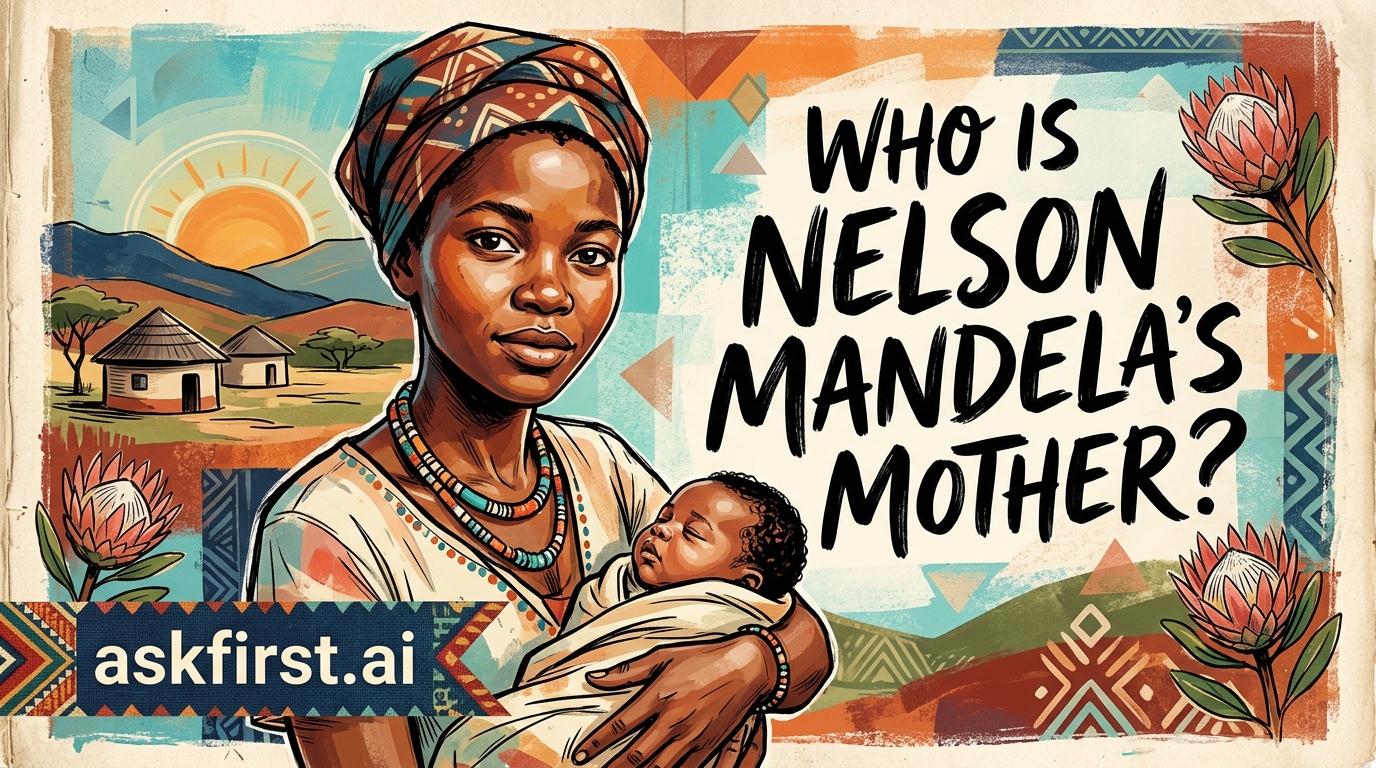
Nosekeni Fanny Mandela was a member of the Right Hand House of the Thembu royal family. Born into a culture where lineage and kinship dictated social standing, she was the third wife of Gadla Henry Mphakanyiswa, a chief of Mvezo. In his seminal autobiography, Long Walk to Freedom (published by Little, Brown and Company, 1994), Mandela describes his mother as a woman of quiet dignity.
She was not a public figure or a political activist in the modern sense; rather, she was a pillar of the domestic sphere. She played a crucial role in maintaining the traditions of the Thembu people, ensuring that her children were raised with a deep respect for their heritage. Her identity was inextricably linked to the rural environment of the Transkei region, a landscape that Mandela would later describe with great nostalgia as the place where he first learned the rhythms of the earth and the complexities of tribal governance.
The Influence of Faith and Education
One of the most significant contributions Nosekeni made to her son’s life was her devotion to the Methodist Church. Although Mandela would later become a global symbol of secular leadership, his early education was steeped in the teachings of the mission schools. Nosekeni was a devout Christian, and it was through her influence that Mandela was baptized in the Methodist Church.
In the biography Mandela: The Authorized Biography by Anthony Sampson (published by HarperCollins, 1999), it is noted that Nosekeni’s religious convictions provided a counterbalance to the traditional Xhosa rituals practiced by his father. This dual upbringing—the ancestral traditions of the Thembu royalty and the formal education provided by the missionaries—created a synthesis in Mandela’s character that allowed him to navigate both traditional tribal structures and the modern, Western-influenced political systems he would later challenge. Nosekeni’s commitment to his schooling was unwavering; she understood that for a boy born into a royal lineage that was losing its political autonomy under colonial rule, education was the only viable path to influence and survival.
Life in Qunu: A Portrait of Resilience
Following the death of his father in 1930, Mandela was placed under the guardianship of the Acting King of the Thembu, Jongintaba Dalindyebo. Despite this shift in guardianship, Nosekeni remained a constant presence in his life. She eventually moved to the village of Qunu, a place that Mandela frequently referred to as his "home."
Life in Qunu was characterized by agricultural labor, communal responsibilities, and the strict adherence to Xhosa customs. Nosekeni was the one who managed the household, teaching her children the importance of self-reliance. She instilled in them a sense of duty to their community—a trait that would later manifest in Mandela’s lifelong dedication to the liberation of his people. According to the accounts found in Mandela: The Authorized Biography, she was a woman of few words but immense influence, whose stoicism during times of hardship set a standard for her son to follow. Her resilience in the face of poverty and the pressures of the colonial administration taught Mandela that strength is often found in endurance rather than aggression.
Legacy and Historical Significance
Nosekeni Fanny Mandela passed away in 1968, a period during which her son was already deep into his life sentence at Robben Island. The tragedy of her death was compounded by the fact that the apartheid government denied him permission to attend her funeral. This moment remains one of the most poignant episodes in Mandela’s life, reflecting the cruelty of a regime that sought to isolate him from his familial roots.
She was buried in the cemetery at Qunu, the village that served as the setting for so much of Mandela’s early development. Today, the site remains a place of reverence, reflecting the simple but profound life of a woman who birthed a revolutionary. Her life serves as a reminder that behind even the most towering figures in history lie the quiet, often overlooked influences of parents who shaped their values, their resilience, and their sense of purpose.
Conclusion
In summary, Nosekeni Fanny Mandela was far more than just the mother of a world leader; she was the custodian of the traditions and values that defined his early years. Through her devotion to her faith, her commitment to her children’s education, and her quiet strength in the rural landscapes of the Transkei, she provided the bedrock upon which Nelson Mandela built his character. Whether through the lens of Anthony Sampson’s research or Mandela’s own reflections in Long Walk to Freedom, it is clear that the path to justice and reconciliation he forged was paved by the lessons learned at his mother’s side in Qunu. Her legacy is woven into the very fabric of South African history, reminding us that the seeds of greatness are often sown in the humble soil of the home.