The Constructive Nature of Memory: Why Recollection is Not Video Playback
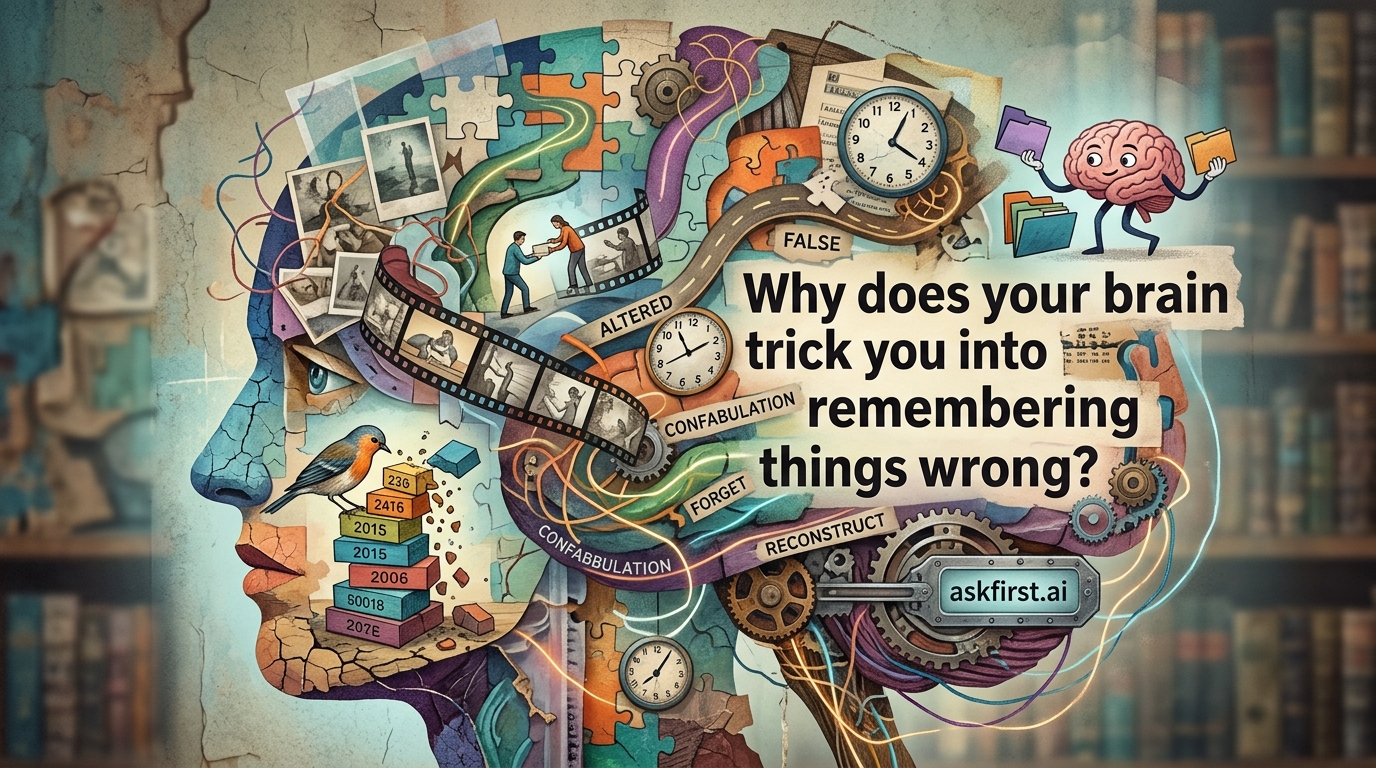
Many people mistakenly view human memory as a high-fidelity video recorder, capturing life events in perfect resolution for later playback. In reality, neuroscience reveals that memory is a reconstructive process. When you retrieve a memory, you are not simply accessing a stored file; you are actively reconstructing the experience using fragmented neural data, expectations, and current emotional states. This phenomenon, often termed the "constructive memory framework," explains why two people can witness the same event and recall it differently.
The Mechanisms Behind Memory Distortions
1. Schema-Driven Encoding
Brains rely on schemas—internal cognitive structures or frameworks—to organize information. Schemas act like shortcuts, allowing the brain to process vast amounts of data efficiently. However, these shortcuts lead to errors. If an event does not fit perfectly into a pre-existing schema (e.g., a formal meeting), the brain may unconsciously "adjust" the memory to align with typical expectations, smoothing out inconsistencies or missing details to create a cohesive narrative.
2. The Misinformation Effect
Research by psychologist Elizabeth Loftus has famously demonstrated the susceptibility of human memory to external influence. Through the misinformation effect, the mere phrasing of a question or the introduction of post-event information can rewrite a memory. If witnesses to a car accident are asked, "How fast were the cars going when they smashed into each other?" rather than "hit each other," they often report higher speeds and recall broken glass that never actually existed. The brain integrates this new, misleading information into the original memory trace.
3. Source Monitoring Errors
Humans are remarkably bad at tracking the provenance of information. A source monitoring error occurs when you recall a fact or a scene but forget where it came from. You might believe you witnessed a news event firsthand when you actually only heard about it from a friend or saw it in a film. The brain retains the semantic content of the memory while losing the metadata regarding its origin.
Psychological Hooks: Why We Distort Our Own History
- The Egocentric Bias: Individuals have a natural tendency to overemphasize their role in positive events while minimizing their culpability in negative ones. This serves as a psychological defense mechanism, protecting self-esteem and maintaining a coherent, positive self-identity.
- Hindsight Bias: Known as the "knew-it-all-along" effect, this causes individuals to overestimate their ability to have predicted an outcome after the result is known. Once the outcome is clear, the brain re-scripts the past to make the result seem inevitable.
- Confabulation: In extreme cases, the brain fills in memory gaps with fabricated details that the person honestly believes are true. This is not necessarily an attempt to deceive but rather the brain's frantic attempt to restore logical structure to a fragmented past.
Can We Improve Memory Accuracy?
While the brain will likely never be a perfect digital recorder, individuals can adopt strategies to minimize distortion:
- Reflective Journaling: Writing down events immediately after they occur provides a raw baseline, reducing the tendency to rewrite history based on subsequent emotions.
- Diverse Perspectives: Discussing shared events with others who were present helps challenge individual bias and triangulate the facts.
- Mindful Awareness: Recognizing that memory is "malleable" is the first step toward skepticism. By questioning one’s own certainty, one can avoid the trap of overconfidence in personal recollection.
Conclusion: The Purpose of Imperfection
It is essential to understand that these memory distortions are not a "bug" in the human biological system; they are a feature. The human brain prioritizes utility over accuracy. It is far more useful for an organism to have a flexible, adaptable model of the past that helps predict the future, rather than an encyclopedic collection of raw, uninterpreted data. The malleability of memory is what allows humans to learn, evolve, and update their worldviews in light of new experiences. Embracing the subjective nature of memory allows for greater empathy, deeper intellectual humility, and a clearer understanding of the marvelous, albeit imperfect, complexity of the human mind.