The Foundation of Human Character
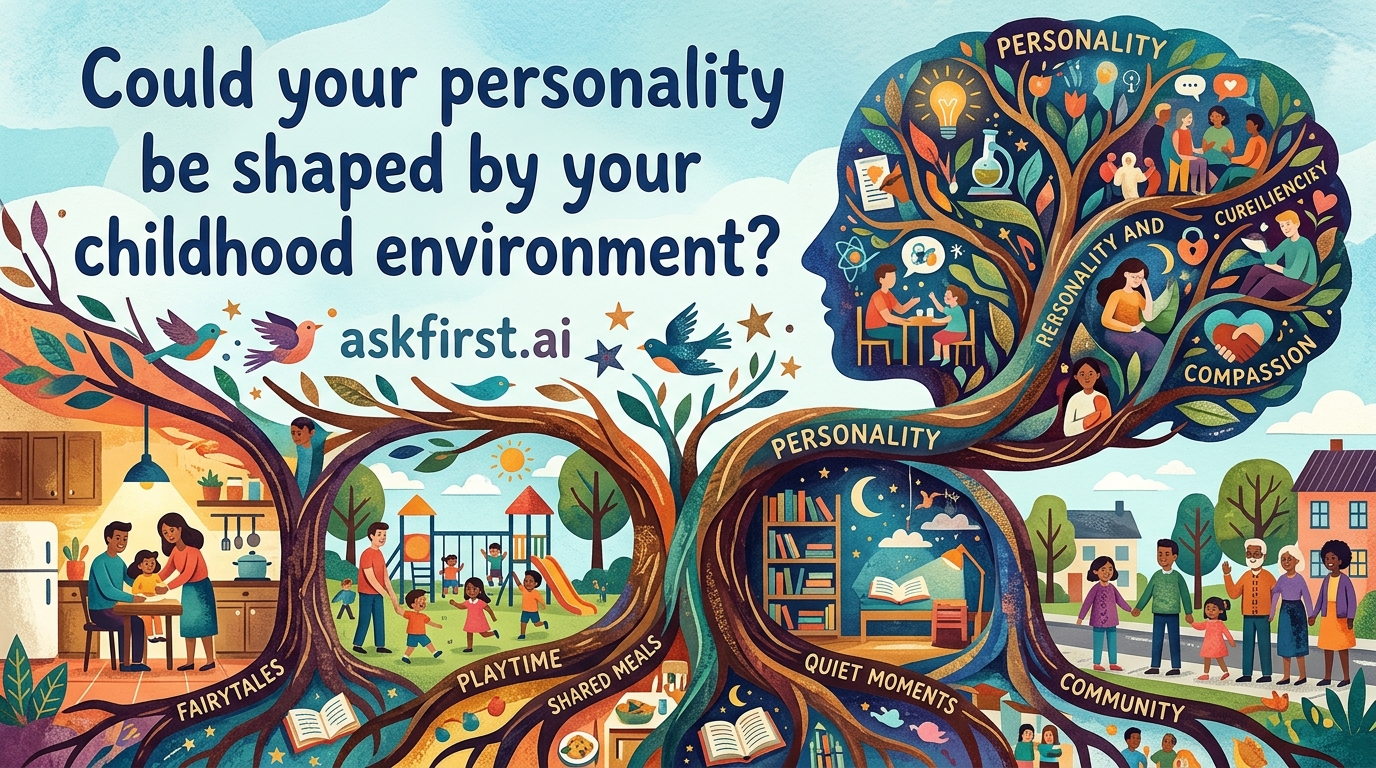
Personality development is one of the most complex puzzles in the field of psychology, sitting at the intersection of biological inheritance and environmental impact. For decades, researchers have debated the relative weight of 'nature versus nurture,' yet current consensus suggests that childhood environments serve as a critical crucible for shaping the trajectory of the human psyche. Far from being a passive background, the early years of life act as a template for emotional regulation, social cognition, and behavioral responses that persist into adulthood.
The Role of Attachment Styles
One of the most robust frameworks for understanding how childhood environment dictates personality is Attachment Theory, pioneered by John Bowlby and Mary Ainsworth. This framework posits that the reliability and responsiveness of primary caregivers establish an internal working model for relationships. A secure attachment formed in the first few years of life typically correlates with higher self-esteem, better stress management, and improved interpersonal skills later in life. Conversely, inconsistent or dismissive caregiving environments may foster anxious or avoidant personality traits, as the child adapts their emotional responses to minimize perceived threats of abandonment or rejection.
Neuroplasticity and the Developing Brain
From a neurological perspective, the childhood environment is a physiological sculptor. During the first few years, the brain is undergoing a period of intense neuroplasticity, where synapses are forged and pruned based on external stimuli. Environments rich in exploration, vocabulary, and positive social interaction effectively 'hardwire' neural pathways for resilience and cognitive flexibility.
- Enriched Environments: These provide varied stimuli that encourage problem-solving and curiosity, often leading to higher scores on trait openness to experience in adulthood.
- Stagnant or Over-Stimulated Environments: When a child’s environment is consistently chaotic or devoid of intellectual nourishment, the brain often prioritizes survival-based circuitry, which may manifest as heightened neuroticism or an inclination toward cautious, risk-averse behavior later in life.
Behavioral Modeling and Social Learning
Albert Bandura’s Social Learning Theory further illustrates that personality is not merely innate; it is acquired through the observation and imitation of models within one’s immediate environment. Children act as highly efficient sponges, absorbing the coping mechanisms, communication styles, and value systems of those around them. If an environment prioritizes assertive conflict resolution, the child will likely internalize these behaviors as their own standard operating procedure. If the environment is characterized by silence and emotional suppression, the developing individual may cultivate an introverted or emotionally inhibited personality structure. This observational learning is foundational; it essentially automates social behaviors that eventually become recognized as individual personality traits.
The 'Good Enough' Environment and Resilience
It is important to note that environmental influence is not synonymous with complete determinism. While early environments provide the initial blueprint, the concept of 'equifinality'—the idea that different developmental pathways can lead to similar outcomes—remains highly relevant. Resilience studies have shown that individuals can effectively 'rewrite' parts of their personality through conscious effort and intentional environmental changes in adulthood.
Cultural and Socio-Economic Variables
Beyond the immediate family, the broader socioeconomic and cultural environment plays a massive role in shaping character. Collectivist cultures, which prioritize harmony and group cohesion, often foster personality traits like agreeableness and empathy. Individualistic cultures, which celebrate autonomy and achievement, tend to reward extraversion and competitive drive. These environments communicate what is 'valued,' and children, seeking social integration, adapt their evolving personalities to fit the local social hierarchy. This is why a person raised in a high-pressure, urban environment might develop a different 'persona'—characterized by speed and cynicism—compared to someone raised in a slower-paced, rural community.
Conclusion: The Ever-Evolving Self
While childhood environment is undeniable in its power to shape the early scaffolding of the human personality, it is not the final chapter. The consensus among modern developmental psychologists is that the human personality remains plastic well into adulthood. By understanding the influence of our formative years—the attachment styles we learned, the behaviors we modeled, and the neural habits we built—we gain the power to consciously curate our future environments. We are not just the products of our pasts; we are the active architects of our future selves, capable of continuous evolution regardless of the soil in which our first seeds were planted.