The Neurobiology of Attachment
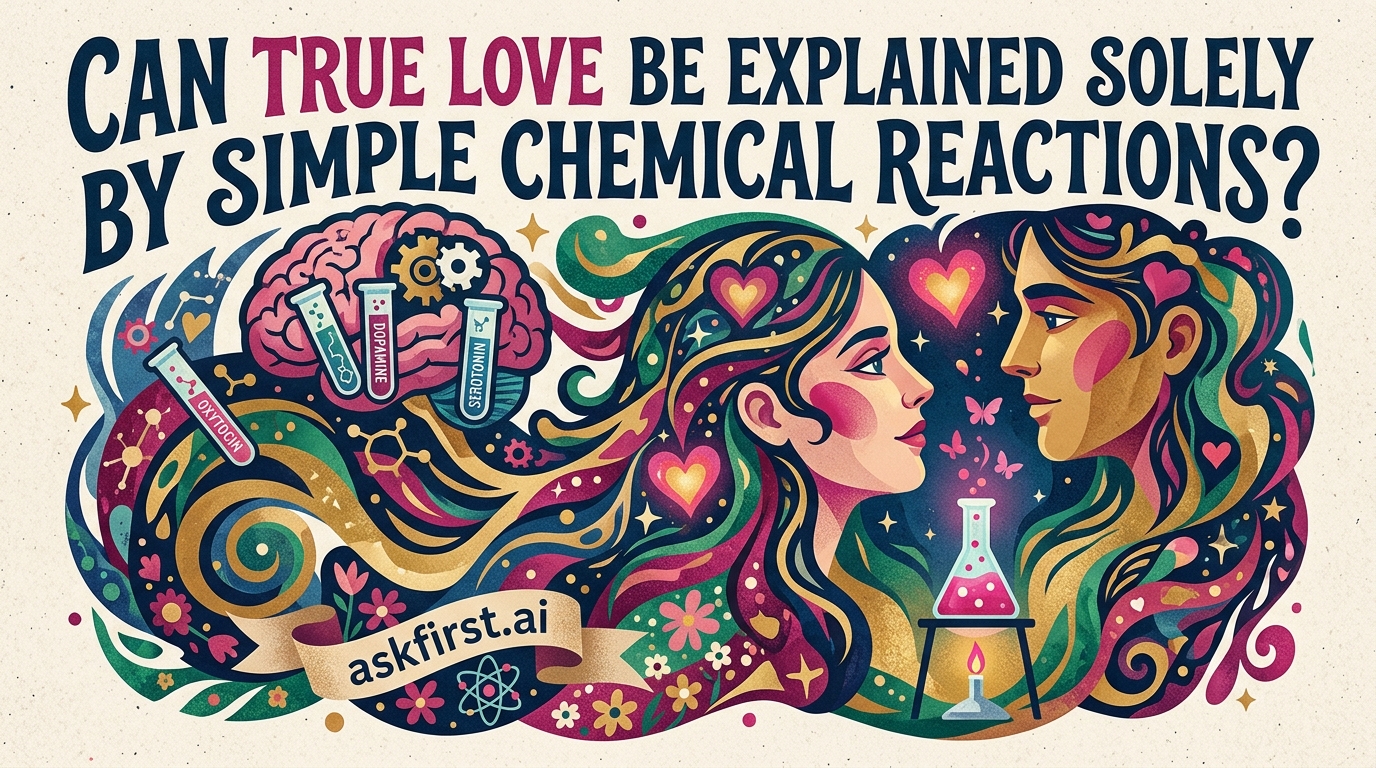
At the foundational level, human bonding is undoubtedly driven by a sophisticated cascade of neurotransmitters and hormones. Dopamine, often labeled the reward chemical, creates the euphoria associated with new attraction. Oxytocin, frequently termed the 'cuddle hormone,' facilitates long-term pair bonding and social trust. Finally, serotonin levels fluctuate significantly during the initial phases of infatuation, mirroring patterns seen in obsessive-compulsive behavior. While these molecules provide the physiological scaffolding for attraction, reducing the totality of love to mere chemistry is akin to explaining the complexity of a symphony by analyzing the vibration of individual strings.
The Failure of Reductionism
Reductionism, the philosophical approach that attempts to explain complex systems solely by their constituent parts, faces an insurmountable hurdle when addressing the human experience of love. Science, specifically neurochemistry, excels at describing the how—the mechanism—but remains largely silent on the why—the meaning. Even if every synaptic firework associated with romantic affection were mapped, the qualitative experience of 'feeling' loved remains an emergent property. Emergent properties, by definition, arise from complex interactions that are greater than the sum of their individual components. In this light, love is an irreducible reality that occupies a space beyond biology.
The Role of Cultural and Narrative Context
Love is profoundly shaped by the sociocultural landscape in which an individual matures. Narrative, symbolism, and shared history play integral roles that chemicals cannot replicate. When partners build a life together, they construct a shared reality, develop internal languages, and assign transcendent meaning to experiences. These external scaffolding structures—shared rituals, collective sacrifices, and psychological projections—are human inventions that provide context for our biology. Neurotransmitters do not dictate the specific choice of a life partner; that choice is governed by individual history, character formation, and conscious value alignment. The biological 'urge' to mate is universal, but the intentionality behind sustained love is a manifestation of willpower and personal agency.
Beyond Biology: The Philosophy of Commitment
True love is often defined by its duration and its resistance to the entropy of time. While initial infatuation is temporary and driven by high-dopamine states, sustained, lifelong commitment requires the transcendence of immediate biological impulses. Commitment is an exercise in values. Philosophers like Erich Fromm have long argued that love is an art—a deliberate practice requiring discipline, patience, and active cultivation. This perspective posits that love is a verb, not just a sensation. One does not 'feel' their way through a fifty-year marriage; one 'acts' their way through it, navigating challenges, personal growth, and shifting priorities. Biology provides the impetus, but the human will provides the endurance.
Psychological and Evolutionary Perspectives
From an evolutionary standpoint, the chemical underpinnings of love served a clear purpose: the survival of the species. By incentivizing pair-bonding, natural selection increased the likelihood that offspring would survive in dangerous environments. However, humans have repurposed these evolutionary tools to facilitate deeper social bonds, altruism, and the creation of civilization. The fact that love has evolved to be more than just a procreative tool suggests that humans have successfully hijacked their own biology for higher-order goals. We treat love as a bridge toward transcendence, connecting the individual ego to something larger—the beloved, the family, or the community.
Synthesizing the Physical and the Transcendental
To bridge the gap between science and experience, one must accept a dual perspective. Love is both a biological reality and a psychological construct. Denying the chemical aspect ignores the empirical evidence, while denying the spiritual or existential aspect ignores the lived human reality. The most comprehensive understanding of love lies in the interplay between these domains:
- The Physical Base: Chemicals like oxytocin provide the 'spark' and the biological drive to bond.
- The Emotional Experience: Psychology provides the emotional coloring, shaped by attachment styles and personal growth.
- The Existential Layer: Values, culture, and individual agency provide the enduring architecture that allows love to survive when the initial chemical novelty fades.
In conclusion, love is not just chemistry. While chemistry acts as the medium for the signal, it does not compose the message. The richness of human connection exists in the space where biological programming meets the vast, uncharted territory of consciousness, memory, and choice. As we look toward the future, acknowledging this synergy is essential to fully appreciating the depth of what it means to be truly, humanly connected.