The integration of artificial intelligence into the fabric of modern existence represents a shift as profound as the Industrial Revolution or the advent of the printing press. We are currently witnessing a transformation that moves beyond simple automation into the realm of cognitive augmentation. This evolution is not merely a technological upgrade; it is a fundamental restructuring of how we work, learn, create, and interact with the physical world.
The Transformation of Professional Landscapes
The most immediate impact of AI is the radical shift in the nature of human labor. We are moving away from repetitive, rule-based tasks—what economists Erik Brynjolfsson and Andrew McAfee describe in their seminal work, The Second Machine Age, as "routine cognitive labor"—toward a landscape defined by human-AI collaboration.
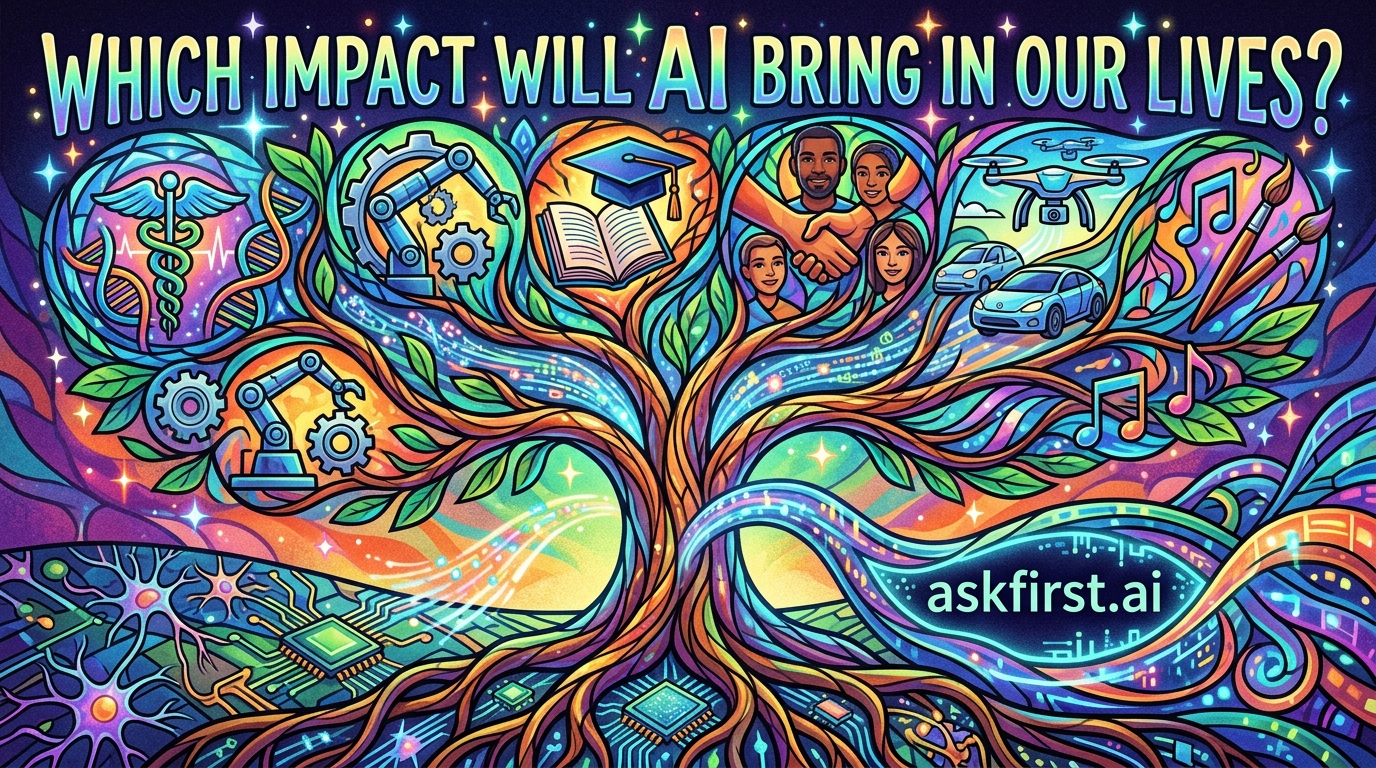
In fields like radiology, AI algorithms are already outperforming human practitioners in detecting early-stage malignancies from medical imaging. However, this does not eliminate the radiologist; rather, it shifts their role from a "pattern recognition machine" to a "clinical strategist." By offloading the diagnostic heavy lifting to a neural network, the professional can focus on patient communication, complex case analysis, and personalized treatment plans. This trend is echoed across legal, financial, and engineering sectors, where AI acts as a "copilot" that synthesizes vast datasets into actionable insights, leaving the high-level judgment to the human expert.
Personalized Education and the End of the "One-Size-Fits-All" Model
For decades, the educational system has been constrained by a standardized model that struggles to accommodate individual learning paces. AI is dismantling this constraint through adaptive learning platforms. Researchers like Salman Khan, founder of Khan Academy, have argued that AI-driven tutors can provide the "1-to-1 attention" that was historically reserved for the elite.
These systems analyze a student’s progress in real-time, identifying specific conceptual gaps—such as a misunderstanding of quadratic equations—and adjusting the curriculum accordingly. In practice, this means a student is no longer forced to move forward if they haven't mastered the basics. This creates a mastery-based learning environment where the technology acts as a tireless, patient mentor, effectively democratizing high-quality, personalized instruction for anyone with an internet connection.
The Evolution of Creative Expression and Intellectual Labor
Perhaps the most controversial impact is in the creative arts. We are entering an era of "generative intelligence," where the barrier between an idea and its realization is thinning. Authors, designers, and musicians are utilizing generative models to iterate rapidly on concepts.
As noted by technologist Kevin Kelly in his reflections on the "inevitable" trajectory of technology, AI will not replace human creativity; it will expand the palette of what is possible. For instance, a filmmaker can now use AI to generate complex visual assets that would have previously required a multi-million dollar studio budget. This empowers the individual creator, allowing for a democratization of storytelling where the limiting factor is no longer technical skill or budget, but the quality of the imagination itself.
Navigating Ethical Challenges and Societal Risks
Despite these benefits, the integration of AI brings significant existential and societal challenges. The primary concern, as highlighted by Nick Bostrom in his book Superintelligence, is the alignment problem—ensuring that the goals of autonomous systems remain strictly aligned with human values.
Moreover, there is the issue of algorithmic bias. Because AI models are trained on historical data, they often replicate the prejudices present in that data. If an AI is used to screen job applicants or assess loan eligibility, it risks institutionalizing systemic inequality unless rigorous oversight and "human-in-the-loop" verification protocols are strictly enforced. We must treat these systems not as objective oracles, but as powerful tools that require constant calibration and ethical auditing.
The Future of Daily Living: Ambient Intelligence
Looking toward the next decade, AI will likely fade into the background of our lives, becoming what experts call "ambient intelligence." We will no longer "use" AI in the way we use an app on a phone; instead, our homes, cities, and workplaces will become reactive environments.
Imagine a smart home that anticipates your needs—adjusting lighting, temperature, and dietary suggestions based on your circadian rhythms and health metrics. In urban planning, AI will manage traffic flows and energy grids with a level of precision that eliminates waste and reduces carbon footprints. This is the vision of a "frictionless society" where the mundane administrative tasks of life are handled silently in the background.
Conclusion
The impact of AI on our lives is not a singular event but an ongoing process of integration. It is a dual-edged sword that promises unprecedented efficiency and creative potential while simultaneously demanding a high level of societal vigilance. The future will belong to those who treat AI as a partner in their cognitive processes rather than a replacement for their intellect. By embracing this technology with a focus on ethical implementation and continuous human oversight, we have the opportunity to solve some of the most complex challenges facing our species today. We are not merely building machines; we are building a new foundation for human potential.