The Evolutionary Architecture of Achievement
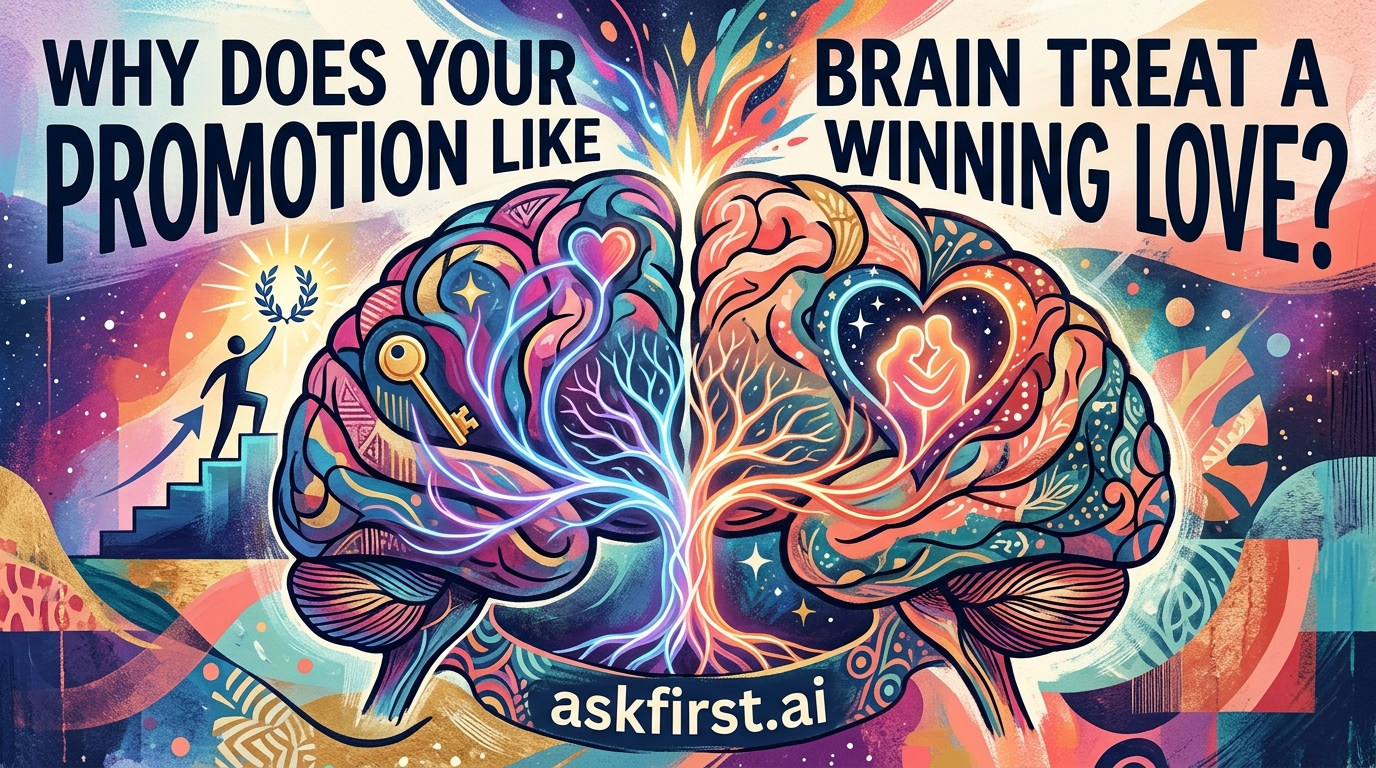
The phenomenon of equating a professional promotion with the raw, emotional rush of romantic affection is not a mere metaphorical coincidence; it is a profound manifestation of neurobiology and evolutionary psychology. At the core of the human experience, the brain does not distinguish between the 'reward' of a job title upgrade and the 'reward' of social or romantic acceptance. Both activate the Mesolimbic Dopaminergic Pathway, a primitive brain circuit designed to ensure survival by incentivizing behaviors that increase status, safety, and reproductive success.
The Dopaminergic Reward System
When a person receives a promotion, the brain experiences a massive surge of dopamine, the neurotransmitter responsible for anticipation and pleasure. Evolutionarily, humans lived in small, tight-knit tribal units. In such environments, higher status—which a promotion represents—directly correlated with better food access, protection, and greater romantic options. Consequently, the brain coded 'success' and 'validation from the hierarchy' as synonymous with 'belonging' and 'being valued.'
- The Status Link: Professional advancement signals to the brain that the individual has successfully navigated the social hierarchy.
- Biological Survival: In ancestral terms, the person who ascends the hierarchy is less likely to be ostracized, mirroring the security found in successful romantic bonding.
Why Love and Labor Feel the Same
Studies in neuroimaging demonstrate that the brain regions lighting up during positive work recognition—such as the Ventral Striatum and the Anterior Cingulate Cortex—overlap significantly with those triggered by falling in love. This overlap is known as the Common Neural Currency hypothesis. This hypothesis suggests that the brain reduces various types of rewards—monetary, social, and romantic—into a single metric of value to help the organism prioritize goals. When an individual receives a promotion, the brain experiences:
- Validation of Self-Worth: Much like a partner declaring commitment, a promotion acts as an external affirmation of the self, soothing the primal fear of social rejection.
- Increased Oxytocin Production: This neuropeptide, often called the 'love hormone,' is released not only during physical intimacy but also during social bonding and high-trust status achievements. It reinforces the emotional attachment to the institution, effectively creating a 'corporate love affair.'
The Role of Social Grooming
Human beings are intensely social primates. Grooming behavior in primates involves touching and social interaction to reinforce bonds. In the modern workspace, a promotion acts as a form of 'symbolic grooming.' Management is effectively saying, 'You are an important member of this group,' which triggers the same neural pathways as a grooming interaction between two primates. This is why rejection or failing to get a promotion can feel physically painful, mimicking the heartbreak associated with a romantic breakup. The brain perceives both as a threat to one's social standing and, by extension, survival.
The Trap of the 'Corporate Spouse'
Because the brain treats the workplace as a surrogate for tribal structure, many individuals develop an intense, romantic-like attachment to their workplace. This is why burnout often feels like an emotional betrayal by a partner rather than a simple exhaustion of resources. When the entity (the company) does not provide the expected validation, the brain registers the loss of a 'loved one.' Recognizing this mechanism is the first step toward reclaiming agency. By understanding that a promotion is a functional exchange of labor for compensation rather than a declaration of personal worth or love, individuals can mitigate the emotional highs and lows associated with professional trajectories.
Summary of Cognitive Mechanisms
- Dopamine Spikes: The reward system anticipates future security when status increases.
- Social Validation: Hierarchical success acts as a proxy for tribe acceptance, triggering deep evolutionary triggers for belonging.
- Neuro-overlap: The shared brain pathways ensure that the emotional satisfaction of being 'chosen' for a promotion is indistinguishable from being 'chosen' by a romantic interest at a subconscious level.
In conclusion, the brain interprets a promotion as a signal of high social value and tribal security. It is a biological 'win' that masquerades as an emotional one. While it is natural for the brain to crave this validation, maintaining a clear distinction between professional accomplishments and personal identity is essential for long-term mental health and emotional stability.