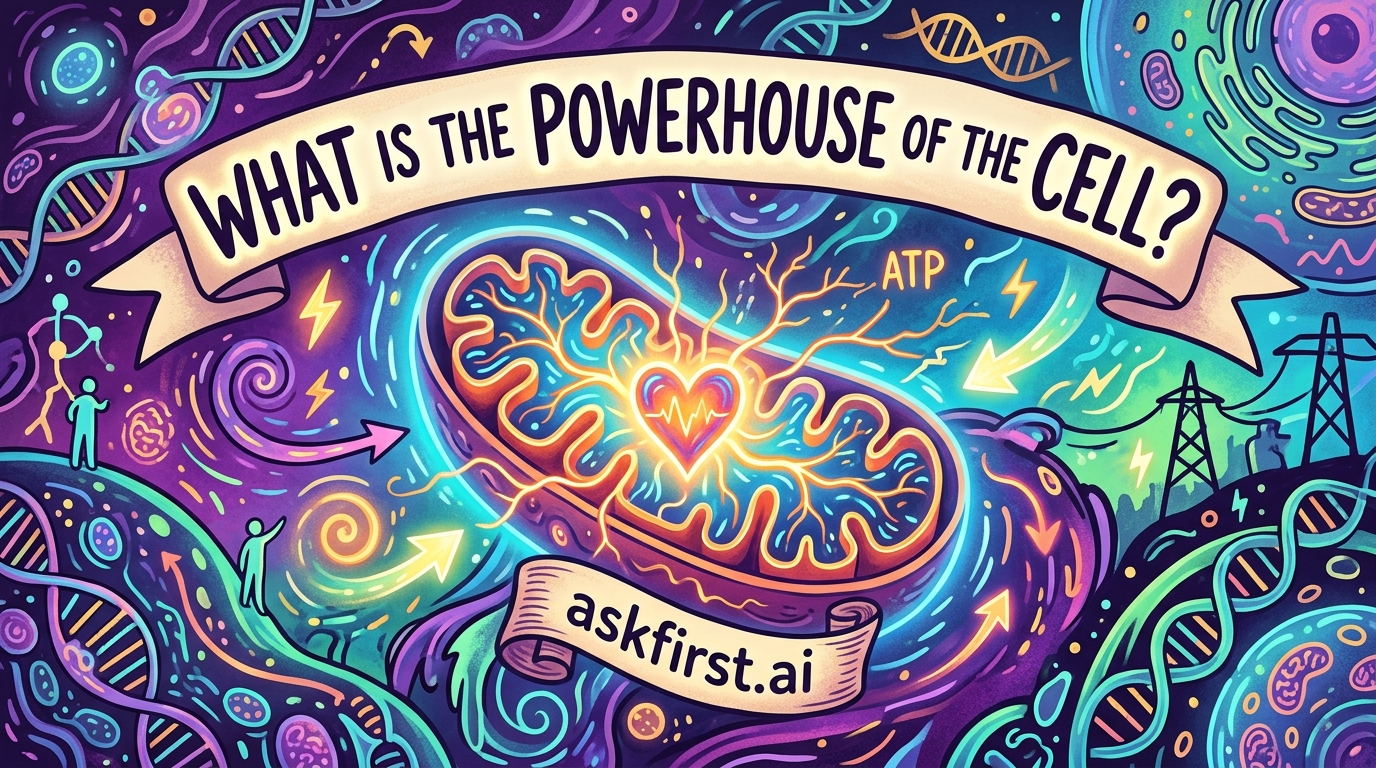
The Mitochondrion: The Biological Engine of Life
In the intricate architecture of eukaryotic cells, one organelle stands out as the fundamental engine of biological activity: the mitochondrion. Often colloquially referred to as the "powerhouse of the cell," this double-membrane-bound organelle is responsible for the vast majority of adenosine triphosphate (ATP) production, the chemical currency of energy in living organisms. Understanding the mitochondrion is not merely an exercise in cellular biology; it is an exploration of the evolutionary history and metabolic mechanics that sustain all complex life on Earth.
Evolutionary Origins: The Endosymbiotic Theory
To truly grasp why mitochondria function as they do, one must look back nearly two billion years to the Endosymbiotic Theory. Proposed most famously by biologist Lynn Margulis in her seminal work Origin of Eukaryotic Cells (1970), this theory posits that mitochondria were once independent, aerobic prokaryotic bacteria that were engulfed by a larger host cell.
Rather than being digested, these bacteria established a symbiotic relationship. The host cell provided a protected environment and nutrients, while the engulfed bacteria provided an efficient mechanism for aerobic respiration. This evolutionary "merger" is evidenced by several unique features of the mitochondrion:
- Independent DNA: Mitochondria contain their own circular genome (mtDNA), distinct from the nuclear DNA of the cell.
- Double Membrane: The presence of an outer and inner membrane suggests an ancestral engulfment process (the inner membrane representing the original bacterial membrane).
- Ribosomes: Mitochondria possess their own ribosomes, which are structurally more similar to bacterial ribosomes than those found in the cytoplasm of the host cell.
The Architecture of Energy Production
The mitochondrion’s efficiency is a direct result of its highly specialized structure. The organelle consists of four distinct compartments: the outer membrane, the intermembrane space, the inner membrane, and the matrix.
The inner membrane is folded into numerous structures called cristae. These folds are critical because they vastly increase the surface area available for the electron transport chain (ETC) and ATP synthase enzymes. According to Bruce Alberts in the essential textbook Molecular Biology of the Cell, these cristae are the "workbenches" where the chemical reactions of oxidative phosphorylation take place. By packing these membranes with protein complexes, the mitochondrion ensures that it can maximize ATP output even in oxygen-limited environments.
The Process: Cellular Respiration and ATP
The "powerhouse" nickname is derived from the mitochondrion’s role in aerobic respiration. While glycolysis occurs in the cytoplasm, the subsequent stages—the Citric Acid Cycle (Krebs Cycle) and the Electron Transport Chain—occur exclusively within the mitochondrion.
- The Krebs Cycle: Taking place in the mitochondrial matrix, this cycle processes acetyl-CoA to produce high-energy electron carriers (NADH and FADH2).
- Oxidative Phosphorylation: This is the terminal stage of respiration. Electrons from NADH and FADH2 are passed through a series of complexes embedded in the cristae. This movement creates a proton gradient across the inner membrane.
- ATP Synthase: This remarkable molecular motor uses the energy from the proton gradient to rotate, physically synthesizing ATP from ADP and inorganic phosphate. This mechanism, described by Peter Mitchell in his Nobel Prize-winning work on Chemiosmotic Coupling, is one of the most elegant examples of bioenergetics in the natural world.
Beyond Energy: Mitochondria in Health and Disease
While energy production is their primary function, mitochondria are also involved in critical secondary roles, including calcium homeostasis, heat production (thermogenesis), and the regulation of apoptosis (programmed cell death).
When mitochondrial function falters, the consequences for the organism are severe. Diseases such as Leigh Syndrome or MELAS (Mitochondrial Encephalomyopathy, Lactic Acidosis, and Stroke-like episodes) highlight how vital these organelles are. Because the brain and muscles are the most energy-demanding tissues in the human body, mitochondrial defects often manifest as neurological or muscular disorders. Furthermore, modern research—such as the findings published in The Mitochondrial Basis of Aging by Dr. David Sinclair—suggests that the accumulation of mitochondrial DNA mutations may be a primary driver of the aging process itself.
Conclusion
The mitochondrion is far more than a simple battery. It is a sophisticated, semi-autonomous biological machine that bridges the gap between ancient bacterial life and modern, multicellular complexity. Through the process of oxidative phosphorylation, it provides the energy required for every heartbeat, every neural impulse, and every muscular contraction.
From the pioneering research of Lynn Margulis regarding our symbiotic origins to the contemporary clinical studies on metabolic disease, the mitochondrion remains a centerpiece of biological inquiry. By maintaining this delicate balance of energy production and cellular signaling, the mitochondrion serves as the silent, tireless worker that makes the existence of complex, high-energy life forms possible. Without these microscopic power plants, the evolution of life as we know it would have stalled at the level of simple, single-celled organisms.