The Paradigm Shift: Navigating a World Defined by Artificial Intelligence
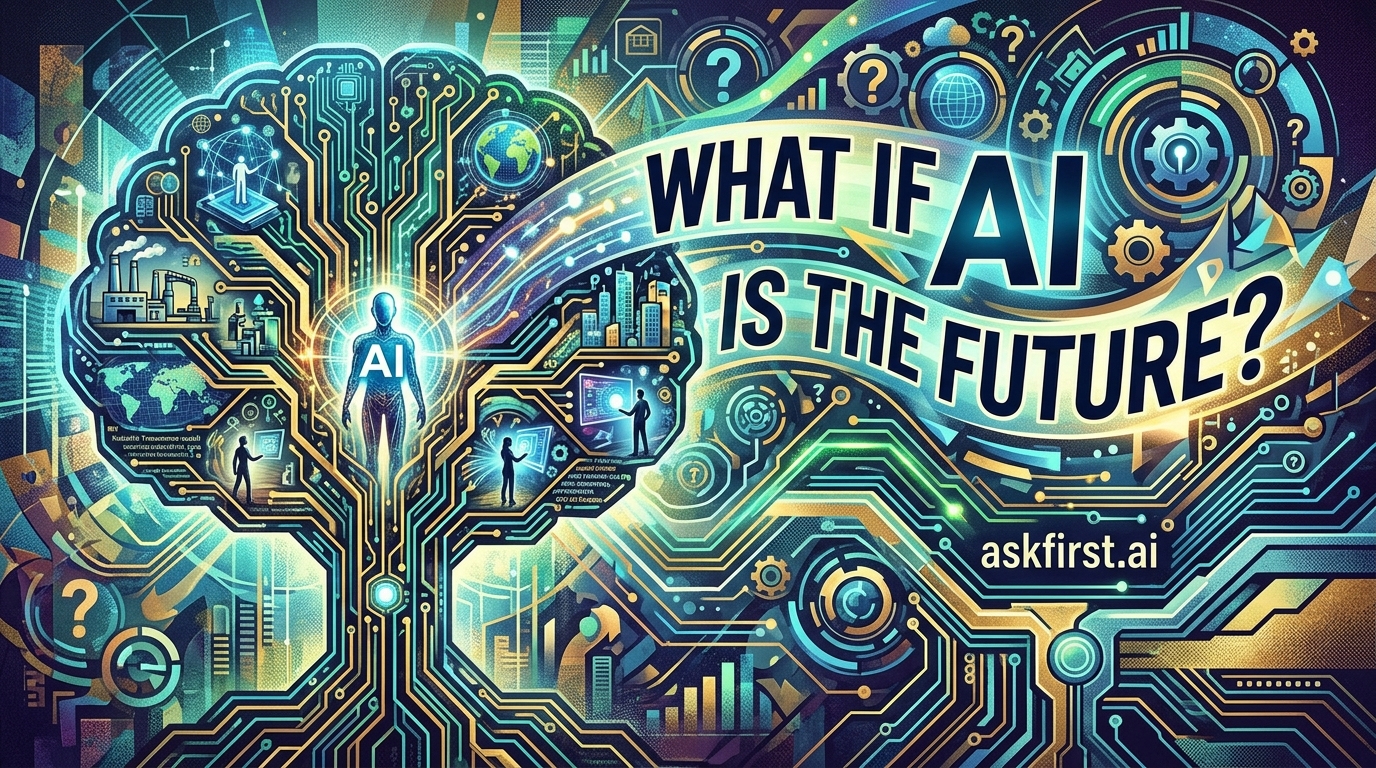
The question of whether artificial intelligence (AI) represents the definitive future is no longer a speculative exercise reserved for science fiction authors like Isaac Asimov or Philip K. Dick. We are currently witnessing a civilizational transition equivalent to the Industrial Revolution. As of May 2026, AI has moved past the stage of novelty and deep into the infrastructure of global governance, medicine, creative arts, and heavy industry. If AI is indeed the future, we are looking at a fundamental rewriting of the social contract, the labor market, and the very definition of human intellectual agency.
The Automation of Cognitive Labor
The most immediate impact of an AI-driven future lies in the transition from physical automation to cognitive automation. Historically, machines replaced muscle; today, they replace analytical processing. In his seminal work, The Second Machine Age, Erik Brynjolfsson and Andrew McAfee argued that we are entering a period where digital technologies perform tasks previously thought to be the sole domain of the human brain.
Consider the field of diagnostic medicine. Systems like those developed by research teams at the Mayo Clinic or DeepMind are currently capable of analyzing radiological scans with a level of granular accuracy that exceeds the average human radiologist. By recognizing patterns in pixel data that are invisible to the naked eye, these systems are not merely "assisting" doctors; they are fundamentally changing the diagnostic pipeline. In this future, the human physician shifts from a data processor to a high-level synthesizer and empathetic caregiver, roles where human nuance remains irreplaceable.
Economic Restructuring and the Post-Scarcity Ideal
If AI becomes the primary driver of economic value, we must address the "Great Decoupling"—the phenomenon where productivity rises while labor demand in certain sectors collapses. According to economist Jeremy Rifkin in his book The Zero Marginal Cost Society, the integration of advanced automation and the Internet of Things (IoT) will drive the cost of producing goods and services toward zero.
In a mature AI economy, the traditional model of trading hours for wages becomes increasingly obsolete. We are already seeing the early stages of this through the rise of Universal Basic Income (UBI) pilot programs in regions like Finland and select cities in the United States. If AI generates the wealth, the future of human work will likely focus on:
- Creative Synthesis: Using AI tools to generate complex artistic and structural designs.
- Ethical Oversight: Managing the guardrails and moral frameworks within which AI systems operate.
- Experience-Based Service: Human-to-human interaction in fields like therapy, education, and hospitality, where the "human touch" is a luxury commodity.
The Governance of Autonomous Systems
A future defined by AI necessitates a new branch of political science: Algorithmic Governance. As outlined by Shoshana Zuboff in The Age of Surveillance Capitalism, the danger of an AI-led future is the potential for "instrumentarian power," where human behavior is modified and predicted by opaque algorithmic systems.
To ensure this future is beneficial rather than dystopian, we are seeing a global push toward "Human-in-the-Loop" (HITL) architecture. This requires that every critical decision—whether it be the deployment of military assets or the denial of a loan—must have a human point of accountability. The challenge for the next decade is not the development of the algorithms themselves, but the legal frameworks required to hold developers and corporations liable for the outcomes of these autonomous decision-makers.
The Evolution of Human Identity
Perhaps the most profound consequence of AI becoming the future is the existential question: What is left for us? If machines can write poetry, diagnose cancer, and code software, the human identity must shift from "producer" to "curator."
In the book Life 3.0 by MIT professor Max Tegmark, the argument is made that humanity has the unique opportunity to steer the evolution of intelligence. We are the creators of our own successors. This does not mean replacement; it means augmentation. The future likely belongs to "Centaur" systems—collaborations where human intuition and machine processing power form a hybrid entity capable of solving "wicked problems" like climate change and interstellar travel, which are far too complex for either entity to solve alone.
Conclusion: A Conscious Integration
If AI is the future, it is a future that we are actively building in real-time. It is not an exogenous force that happens to us, but a tool we are choosing to wield. The trajectory suggests that the most successful societies will be those that embrace AI as an infrastructure for human flourishing rather than a replacement for human worth. By focusing on education that emphasizes critical thinking, emotional intelligence, and ethical stewardship, we can ensure that this technological epoch serves to expand the boundaries of human potential rather than contract them. We are not just building machines; we are building the environment in which our descendants will define what it means to be human.