The Psychology of Parasocial Relationships
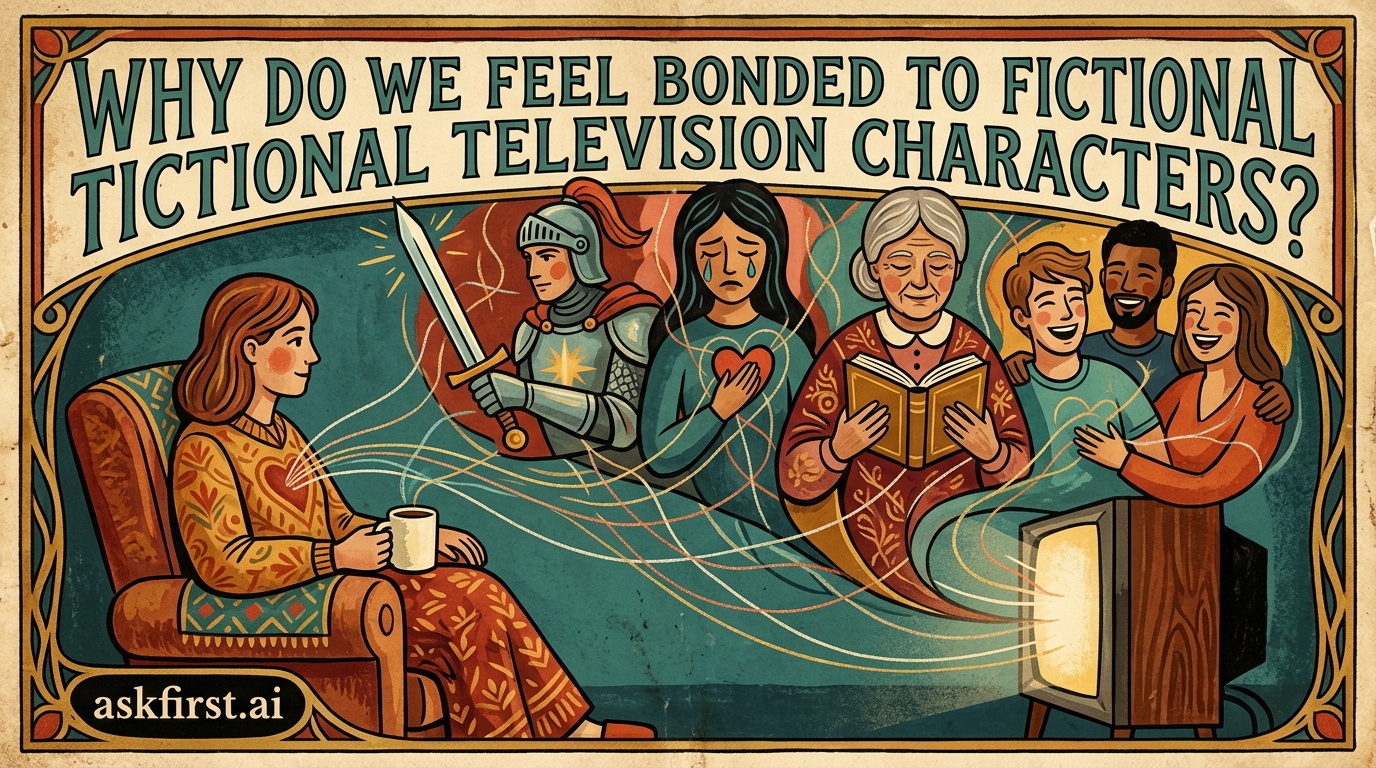
Human beings are social creatures by design, hardwired through millions of years of evolution to seek companionship and form deep emotional ties. In the modern era, these tendencies do not exclusively manifest within our physical social circles; they frequently extend to the digital and narrative realms. The phenomenon known as a parasocial relationship refers to the one-sided emotional attachments viewers develop toward media figures, including television characters. Despite the lack of actual interaction, the human brain often struggles to distinguish between the emotional presence of a real person and a vividly portrayed fictional character.
The Role of Mirror Neurons and Empathy
At the neurological level, the brain utilizes a system of mirror neurons that fire both when an individual performs an action and when they observe someone else performing that same action. When a viewer watches a television character experience joy, heartbreak, or triumph, their brain mimics those neural patterns to a certain degree. This biological empathy creates a sense of shared experience, effectively allowing the viewer to 'live through' the events portrayed on screen. As a result, the boundary between the observer and the observed blurs, leading to a genuine feeling of intimacy and companionship.
Narrative Immersion and the Narrative Transport Theory
Psychological researchers often cite Narrative Transport Theory to explain this bond. When a viewer becomes deeply immersed in a show, they undergo a psychological state of transport where their focus shifts away from their physical surroundings and toward the diegetic world of the series. During this time, the individual experiences what is often termed 'the feeling of being there.' If a character is written with psychological depth—displaying flaws, growth, and vulnerabilities—the viewer begins to project their own internal world onto that character. This identification facilitates a strong sense of kinship.
The Security of Low-Stakes Companionship
One of the most profound reasons for these bonds is the low-stakes nature of fictional relationships. In real life, human interactions are fraught with uncertainty, social anxiety, and potential rejection. Fictional characters offer a safe space. They never change their personality, they do not reject the viewer, and they provide a sense of consistency in an unpredictable world. This 'predictable sociality' acts as a form of emotional regulation, helping individuals manage stress or feelings of loneliness. By engaging with characters, viewers can practice emotional resilience and perspective-taking without the risks inherent in real-world social dynamics.
The Impact of Binge-Watching and Continuity
In the era of streaming, the ability to 'binge-watch' multiple episodes in a single sitting dramatically accelerates the formation of these bonds. Frequent, prolonged exposure to a character creates a sense of propinquity, a psychological term describing the tendency for people to form bonds with those they interact with frequently. When a viewer spends dozens of hours with a character, the brain registers this as an extended period of social interaction. This high frequency of exposure tricks the brain into creating a schema of familiarity, treating the character as a member of one's own 'social tribe.'
Cultural and Evolutionary Context
From an evolutionary standpoint, the ability to understand others—a capacity known as Theory of Mind—was essential for survival. We evolved to analyze motivations, predict behaviors, and understand the internal states of our peers. Modern television serves as a high-tech training ground for these skills. By analyzing fictional dilemmas and character development, humans are essentially exercising their social cognitive faculties. We feel bonded to these characters because we are biologically equipped to constantly evaluate and care for the people in our social ecosystem, and our minds are simply expanding that ecosystem to include the vivid, compelling personalities we invite into our living rooms via the screen.
Conclusion: A Valid Emotional Experience
While critics may dismiss these connections as 'imaginary,' psychologists increasingly acknowledge that the emotions generated by these bonds are objectively real. The physical sensations of happiness when a character succeeds, or the genuine sense of grief experienced upon a character's departure from a series, are markers of human capacity for connection. Ultimately, our tendency to bond with fictional characters is not a weakness; it is a testament to the sophistication and depth of the human heart, demonstrating an incredible capability to find community, comfort, and insight even in the stories we share.