The Paradox of Temporal Compression
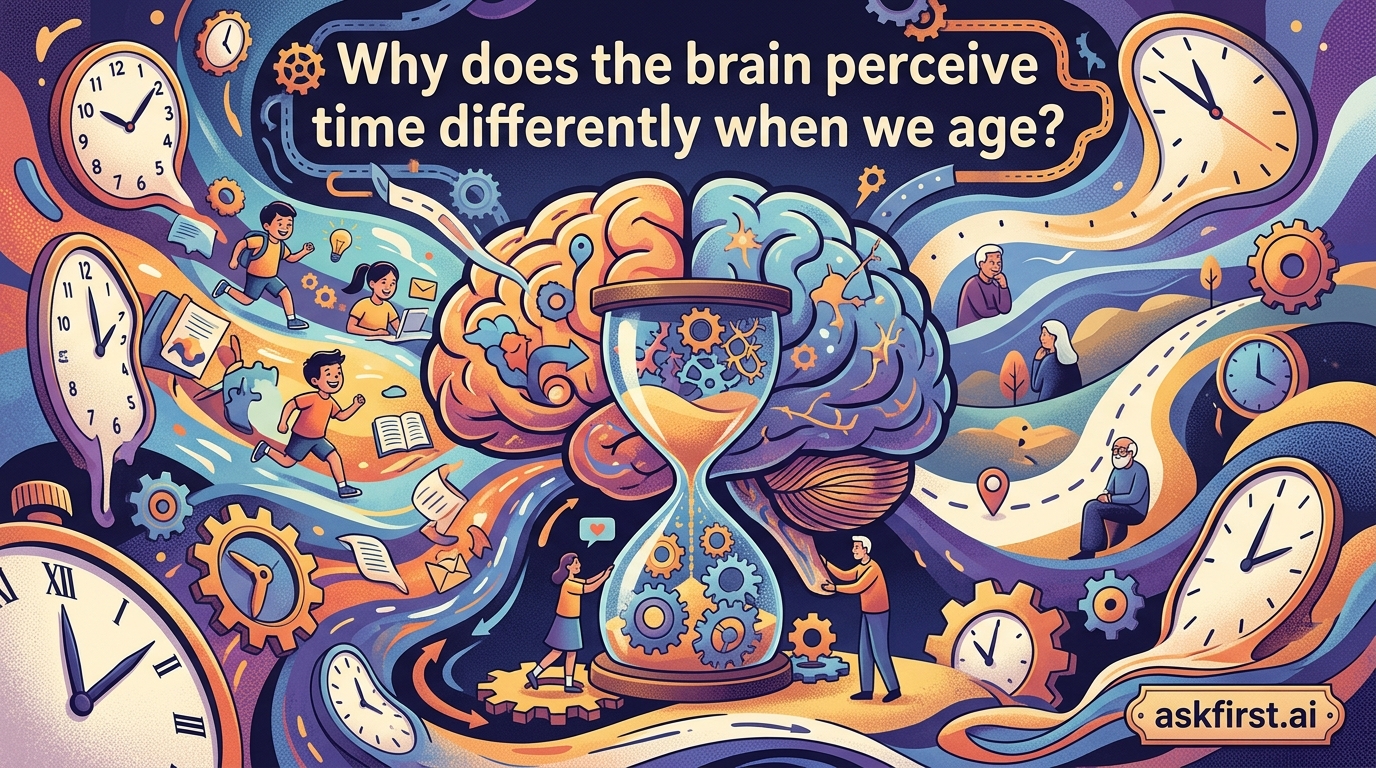
Have you ever wondered why a summer vacation felt like an eternity when you were seven, yet the entire decade of your thirties seems to have vanished in the blink of an eye? This phenomenon is known as the "Holiday Paradox" or temporal compression, and it is a fascinating intersection of neurology, psychology, and cognitive processing. The brain does not possess a singular 'clock' that records time at a constant rate; instead, time perception is a constructive process built by various neural mechanisms.
The Proportionality Theory
The most widely cited explanation for this perceived acceleration of time is the Proportionality Theory. When a child is five years old, one single year represents 20% of their entire life experience. Each year is a massive, life-defining chunk of time. Conversely, for a fifty-year-old, one year represents only 2% of their total life. As our life span grows, each new unit of time constitutes a smaller percentage of our total existence, causing the brain to intuitively feel that the period is 'shorter.'
The Role of Novelty and Neural Encoding
Perhaps the most compelling neurological explanation involves how the brain encodes memories. Our perception of time is heavily dependent on the number of new memories we create. Research in cognitive psychology suggests that the brain processes familiar experiences with efficiency. When we perform routine, repetitive tasks—commuting to work, eating the same lunch, following a standard workday—the brain enters 'autopilot' mode. Because the environment is predictable, the brain does not need to allocate significant neural resources to encode new information.
The Memory Density Hypothesis:
- Childhood: Everything is novel. A child learns to ride a bike, reads their first book, or encounters a new seasonal weather pattern for the first time. This creates a dense, rich tapestry of neural data that the brain takes longer to process and store.
- Adulthood: Life is often characterized by routine. When fewer unique memories are formed, the brain has less 'data' to look back upon. When we look back at a year filled with routine, we find fewer distinct markers, causing the brain to collapse that period into a seemingly brief duration.
Biological Clock Speeds and Information Processing
Neuroscientist Adrian Bejan suggests that the physical structure of the brain—specifically the speed at which it processes images—changes with age. As we grow older, the degradation of nerve fibers and the increased complexity of neural pathways lead to a slowing of the speed at which neural signals travel.
In essence, our 'frame rate' decreases. In childhood, the brain processes visual images at a higher frequency. Because we capture more 'frames' per second in our youth, we experience more subjective time within the same objective period. As we age, if the brain processes fewer mental images per second, time appears to speed up because each unit of actual time contains less perceived information.
Emotional and Dopaminergic Influences
Beyond simple biology, neurotransmitters play a vital role. Dopamine, a chemical often linked to reward and motivation, is produced in greater quantities when we encounter new or exciting experiences. This surge of dopamine enhances our focus and memory formation, effectively 'stretching' time. Children exist in a state of near-constant dopamine-fueled discovery, which elongates their subjective experience. Adults, having mastered their environments, see less dopamine production triggered by their daily activities, leading to the sensation that life is 'speeding up.'
How to Slow Down Your Subjective Clock
Understanding these mechanisms provides a practical blueprint for reclaiming one's perception of time:
- Seek Novelty: Break your routines. Travel to new places, learn a difficult new skill, or engage in hobbies that force your brain to create new neural pathways.
- Practice Mindfulness: By focusing intensely on the present moment, you increase the 'granularity' of your sensory input. Mindfulness requires the brain to stop relying on automatic memory retrieval and start recording current data with higher fidelity.
- Engage in Deep Learning: Mastery of a complex subject requires slow, deliberate effort. This deliberate effort forces the brain to allocate more focus, thereby creating more significant memory markers that retrospectively extend your sense of time.
Conclusion
The perception of time is ultimately a masterpiece of the human brain's own creation. While objective time marches forward at a constant, unyielding pace, our subjective experience is a malleable construct. By filling our lives with novelty, continuous learning, and mindful engagement, we can effectively trick our brains into slowing down, turning the fast-moving river of the years into a series of vivid, expansive, and memorable experiences.