The Paradox of Social Isolation Amidst Crowds
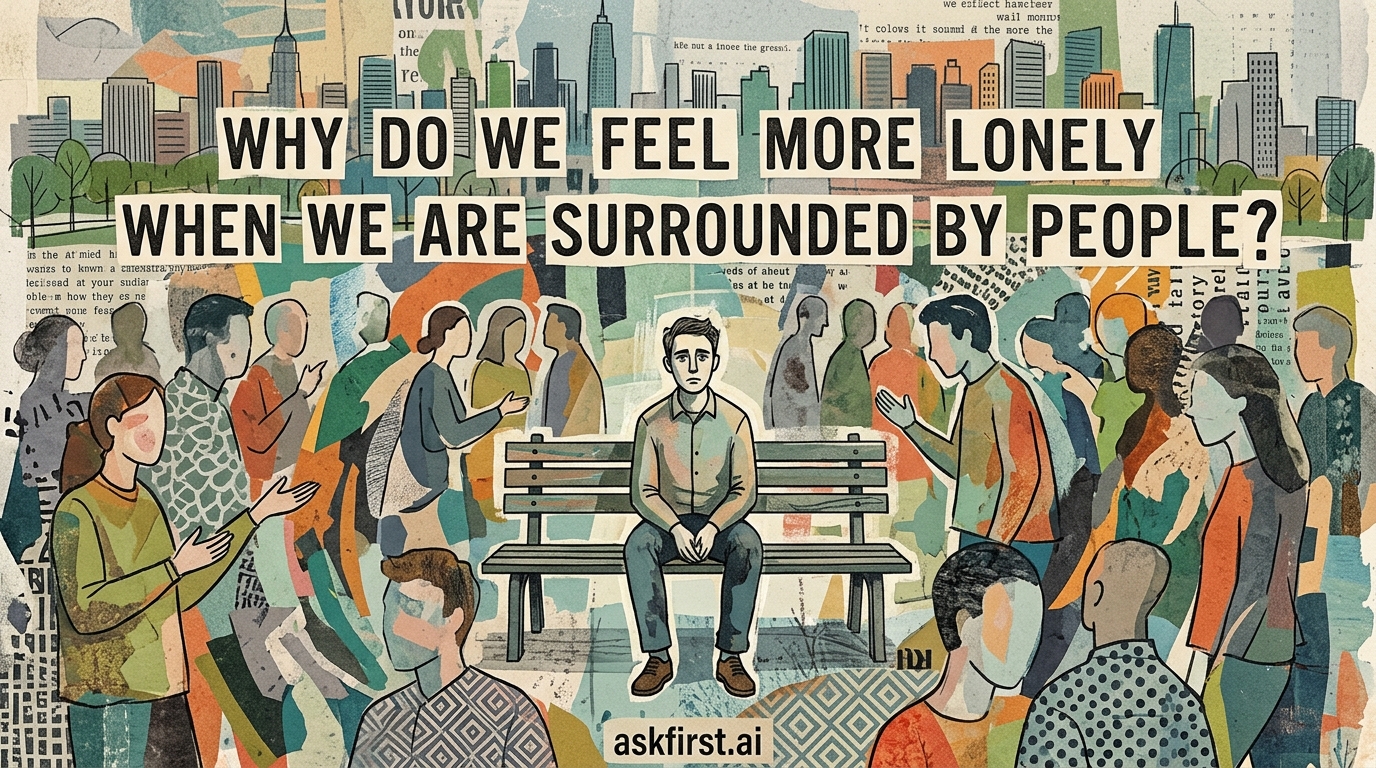
It is a profound irony of the human condition that individuals often experience the deepest pangs of loneliness while standing in a crowded room or navigating a bustling city street. This phenomenon, often referred to as 'social isolation within a group,' suggests that loneliness is not a measure of physical proximity, but rather a metric of psychological intimacy and perceived social validation. When the quality of connection fails to meet the individual's inherent psychological needs, the presence of others can actually exacerbate feelings of detachment.
The Mismatch of Expectations vs. Reality
At the core of this experience lies a psychological mismatch. Humans are hardwired for 'co-regulation'—a biological state where our nervous systems seek comfort and synchronization with others. When someone is in a crowd where they feel they cannot express their true selves, a 'perceptual barrier' is created. The individual perceives that others are connected in ways they are not, leading to a sense of being an outsider looking in. Research by psychologists like John Cacioppo suggests that loneliness is a biological warning signal, akin to hunger, designed to prompt humans to seek meaningful connection. When that need for meaningful connection is left unfulfilled despite being around people, the brain heightens the internal alarm, resulting in an intensified sensation of isolation.
The Impact of Social Comparison
In social settings, the 'Social Comparison Theory'—pioneered by Leon Festinger—plays a massive role. In a group, humans subconsciously evaluate their own social status, likability, and belonging. If an individual feels they do not 'fit' the prevailing social vibe or lack the depth of connection they perceive others to have, this comparison triggers a negative feedback loop. The feeling of being 'alone in a room full of people' is often an analytical realization that the environment does not offer the emotional nourishment the brain is craving.
Factors Contributing to Crowded Loneliness
- Lack of Psychological Safety: If an individual feels they must wear a 'mask' or perform a specific social role, they cannot form a genuine bond, leading to internal fatigue.
- Superficial Interaction Patterns: Digital-age social settings often emphasize brevity and performance over substance. Shallow exchanges prevent the release of oxytocin, the bonding hormone.
- The Spotlight Effect: Many people believe others are focusing on their perceived inadequacies, leading to self-consciousness that blocks authentic interaction.
Neurobiology and the Need for Synchrony
Neuroscience studies have shown that when people bond, their brain waves often synchronize. In a crowded environment where interactions are fragmented or non-existent, this neural synchrony does not occur. Without the 'shared reality' that comes from deep conversation or shared goals, the brain perceives itself as being in a state of social scarcity. Even in a sea of faces, if those faces are not signaling safety, trust, or mutual recognition, the brain's internal architecture remains in a defensive, vigilant state.
Strategies to Reclaim Social Connection
Understanding the mechanics of this phenomenon allows for proactive mitigation strategies. It is not about increasing the number of people around, but the depth of the interaction:
- Prioritize One-on-One Interaction: Instead of focusing on group dynamics, aim to engage one person in a conversation that moves beyond small talk. This lowers the cognitive load and increases the potential for dopamine release through genuine connection.
- Practice Active Listening: By focusing entirely on another person's narrative, an individual shifts their internal focus from their own sense of inadequacy to curiosity about others, effectively breaking the cycle of self-imposed isolation.
- Find Micro-Communities: Loneliness thrives in anonymity. Joining or creating smaller groups built around shared interests (hobbies, book clubs, or volunteer work) creates the 'shared reality' needed to mitigate that feeling of being an outsider.
Conclusion: The Quality Over Quantity Rule
Ultimately, loneliness is not a reflection of social failure but a testament to the complex, sophisticated nature of human bonding. Recognizing that feeling alone in a crowd is a common, well-documented psychological state is the first step toward resolution. By shifting the focus from 'being with people' to 'being with people who see and understand,' the grip of isolation can be loosened, replacing a sense of being lost in a crowd with a sense of being grounded in community.