The Evolutionary Blueprint of Regret
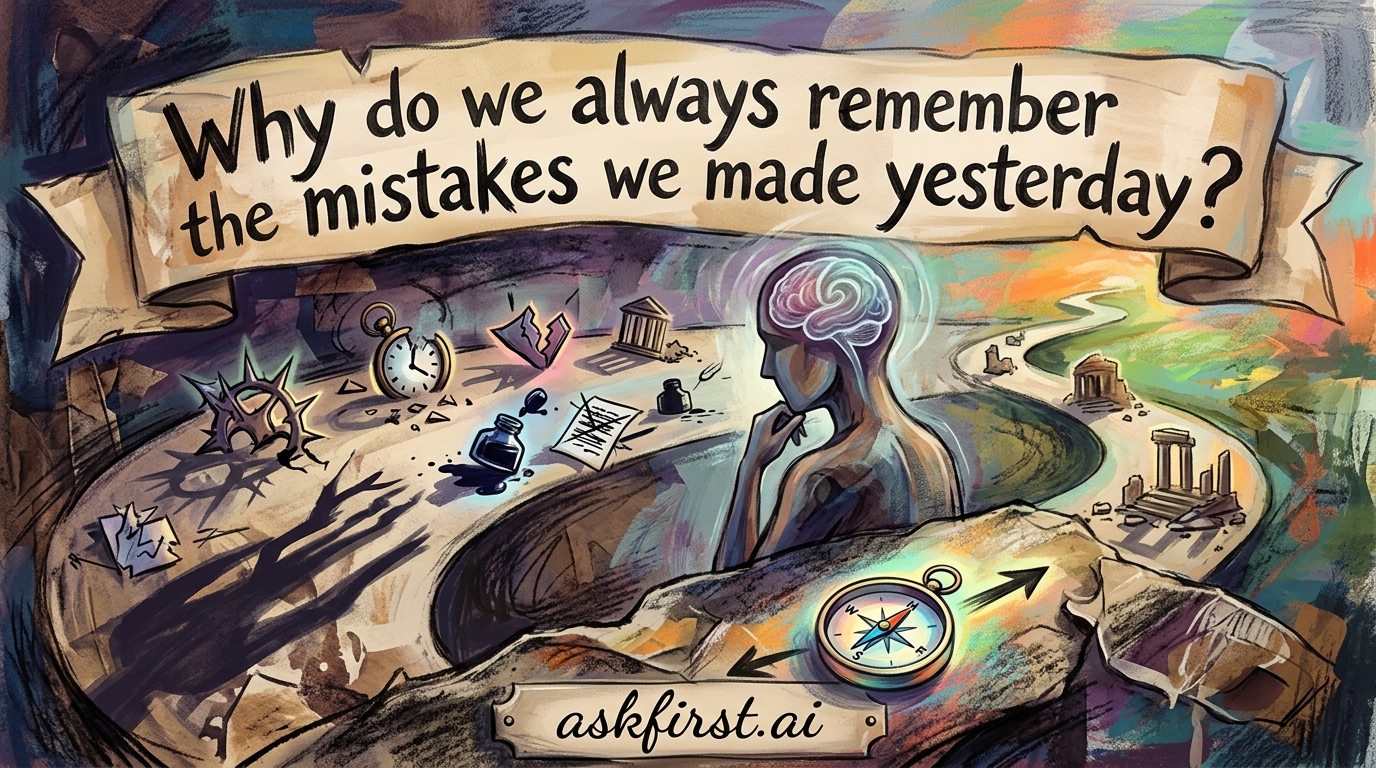
The phenomenon of ruminating on past errors, often called 'hindsight bias' or 'negative bias', is rooted deeply in human neurobiology. From an evolutionary perspective, the brain is hardwired to prioritize negative experiences over positive ones as a survival mechanism. Our ancestors did not need to remember where they found a beautiful flower, but they absolutely needed to remember which cave housed a predator. By constantly replaying yesterday's mistakes, the brain attempts to simulate future success, effectively turning the regret of a social faux pas or a work-related error into a mental rehearsal for future accuracy.
The Role of the Amygdala and Prefrontal Cortex
When an error occurs, the amygdala, the emotional center of the brain, triggers a stress response. This emotional tagging ensures that the memory is stored with high intensity. Subsequently, the prefrontal cortex, responsible for executive function, analyzes these events to derive lessons. However, because the brain perceives the sting of a mistake as a threat to one's social status or competence, it loops the memory repeatedly. This repetitive thought pattern, known as rumination, serves as an internal alert system. The neurochemistry of dopamine, specifically the 'prediction error' signal, plays a key role; when reality falls short of expectations, the brain experiences a dip in dopamine, which alerts the system that something must be corrected to avoid a repeat performance.
Cognitive Biases and the Spotlight Effect
The tendency to obsess over a mistake is often exacerbated by the Spotlight Effect. Humans operate under the illusion that others are noticing our faults as intensely as we are noticing them. In reality, while an individual might be cringing over a comment made in a meeting yesterday, colleagues have likely moved on. Recognizing this bias is essential for psychological well-being. Understanding that the subjective importance of a mistake is inflated by one's own internal narrative allows for a more objective assessment of past events.
Psychological Strategies for Reframing
To move past the cycle of rumination, one must employ active cognitive restructuring:
- Objectivity Testing: Ask if the mistake would matter in five years. If the answer is no, categorize it as a low-impact learning opportunity.
- The 'Growth Mindset' Shift: As popularized by psychologist Carol Dweck, viewing errors as data points rather than personality flaws shifts the brain from a state of 'shame' to a state of 'optimization'.
- Mindfulness and Distancing: Using third-person perspective (e.g., 'He made a mistake' instead of 'I made a mistake') has been shown in studies to reduce the emotional reactivity associated with memory, allowing for more logical processing of the error.
The Social Utility of Memory
Human social intelligence relies heavily on the ability to learn from interpersonal mistakes. Maintaining a high level of social awareness—knowing what is acceptable and what is not—requires the continuous calibration of behavior. The memory of a mistake serves as a social barrier that keeps individuals within the acceptable boundaries of their community. Without this 'internal critic', humans would struggle to form stable long-term social groups, which historically provided the safety required for survival. Therefore, while remembering mistakes feels uncomfortable, it is the primary mechanism through which we refine our social skills and professional competence over time.
Conclusion
Ultimately, the brain is not punishing itself; it is attempting to be more efficient. The next time a memory of yesterday's error surfaces, interpret it not as a failure, but as a biological 'patch' being applied to a system striving for better output. By shifting the internal dialogue from self-criticism to constructive analysis, individuals can leverage this evolutionary design to foster continuous personal development. Embrace the discomfort as the byproduct of a mind that is constantly, tirelessly striving to be better than it was the day before.