The Illusion of Personal History: Understanding Autobiographical Memory
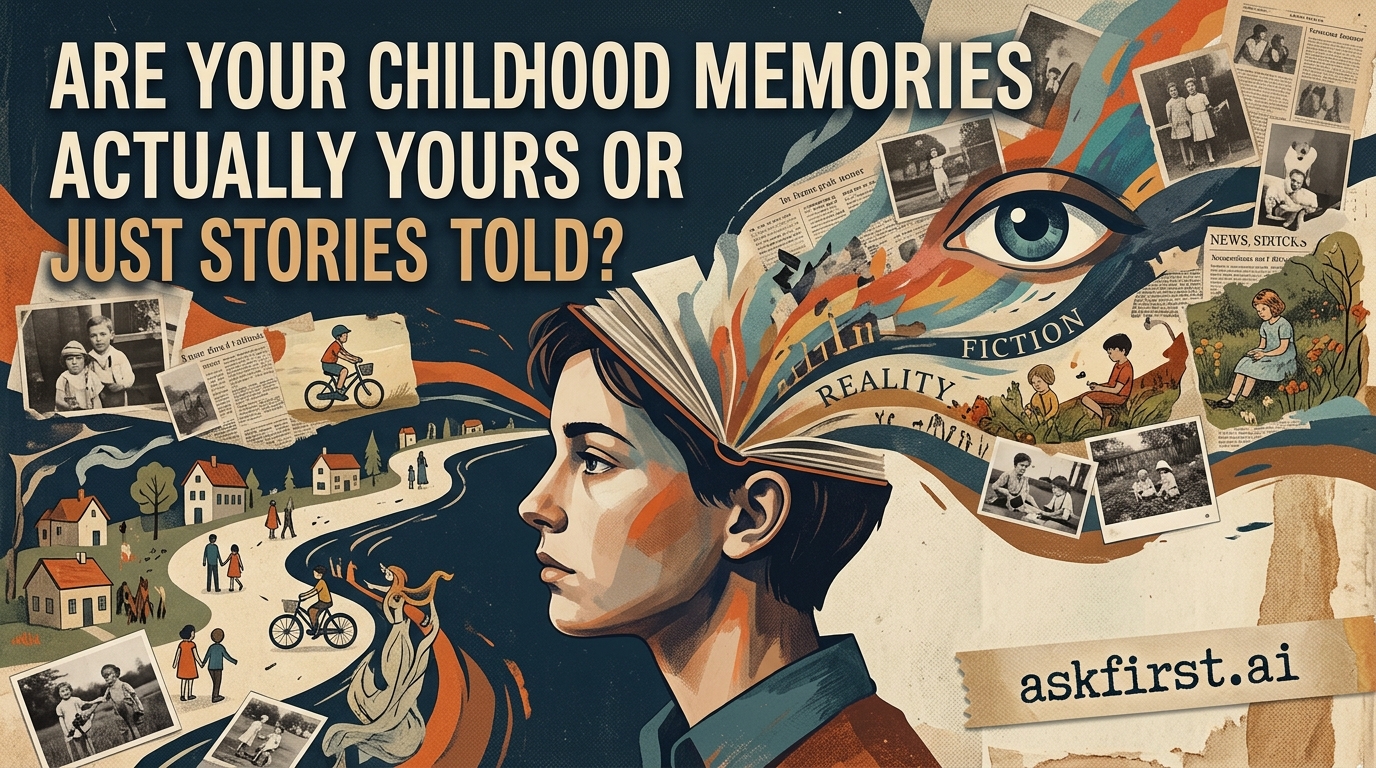
The question of whether early childhood memories are authentic recollections or constructed narratives based on stories told by others is a profound inquiry into the nature of human cognition. Neuroscientists and psychologists suggest that the human brain does not function like a digital video recorder. Instead, memory is a reconstructive process, prone to the subtle influences of social reinforcement, family lore, and post-event information.
The Phenomenon of Childhood Amnesia
Most adults struggle to recall specific events before the age of three or four, a phenomenon known as childhood amnesia or infantile amnesia. This gap exists because the brain's hippocampus and frontal cortex, which are essential for consolidating long-term episodic memories, are not fully developed in early childhood. Furthermore, the lack of a fully formed linguistic framework during infancy makes it difficult to encode experiences into a narrative form that can be retrieved later in life. Consequently, when people do 'remember' something from the age of two, it is frequently a reconstruction built upon photographs, home videos, or repeated family anecdotes.
The Mechanics of Constructive Memory
Memory is inherently plastic. Every time a memory is accessed, it becomes malleable and susceptible to modification. This is known as reconsolidation. During this window of vulnerability, the brain can integrate new information into the old memory, potentially altering its details. When a parent recounts a story about a toddler's first trip to the beach, the child’s brain attempts to fill in the gaps. Over years of hearing that same story, the brain synthesizes an episodic memory—a mental image that feels authentic even if it was originally birthed from a verbal narrative.
Source Monitoring Errors
Psychologists emphasize the concept of source monitoring to explain why we mistake stories for memories. Source monitoring is the ability to track the origin of a piece of information—whether it came from a direct experience, a dream, a book, or a friend’s account. When this mechanism fails, a 'source monitoring error' occurs. An individual might vividly recall the sensation of sand on their toes because they have heard their parents describe it so often that the brain erroneously tags the sensory imagery as a first-hand experience.
The Influence of External Narratives
- Photographic Memory vs. Reality: Seeing a photograph of oneself at a specific event often provides the visual anchor needed for the brain to hallucinate a broader scene. If an adult looks at a photo of themselves sitting on a park bench at age three, they may eventually 'remember' the sounds of the birds, the warmth of the sun, and the taste of a snack, even if these details were entirely imagined by the brain to complete the context of the image.
- Social Reinforcement: Families often share positive, repetitive narratives about a child’s early years. This social reinforcement creates a shared reality that the child eventually adopts as their own biographical truth.
Distinguishing Between Semantic and Episodic Memory
It is vital to distinguish between semantic memory (knowing facts, such as 'I had a yellow tricycle') and episodic memory (recollecting the specific experience of riding the tricycle). Often, what we perceive as childhood memories are actually semantic knowledge masquerading as episodic experience. We know it happened because we were told it happened, but we lack the 'mental time travel' components—the specific spatial, temporal, and sensory markers—that characterize a truly authentic episodic recollection.
Why Does the Brain Construct These Stories?
Why would the brain engage in this 'deception'? From an evolutionary and psychological standpoint, building a cohesive narrative of our past is essential for identity formation. A sense of self requires a timeline. If there is a void in our early life, the brain proactively fills it to create a sense of continuity. By integrating stories told by parents, we create a bridge between our present identity and our earliest beginnings. This narrative construction is not a failure of the brain, but a highly adaptive feature that helps humans maintain a stable sense of who they are.
Conclusion: The Subjective Truth
While science suggests that many early memories are hybrid constructions, this does not diminish their value. These 'stories told' often carry the emotional essence of the relationships and values imparted during those years. Whether a memory is a perfect recording or a collage of family lore and imagination, it remains a pillar of individual identity. The reality is that the self is an ongoing project, and the memories we cherish are the threads used to weave the tapestry of our internal lives, regardless of their precise point of origin.