The Phenomenon of Temporal Perception
The perception of time is one of the most intriguing aspects of human consciousness. As individuals progress from childhood into adulthood, the subjective experience of time passing undergoes a dramatic shift. Days feel like weeks in youth, yet years seem to vanish in an instant during later life. This is not a mechanical failure of time itself, but a complex intersection of neurobiology, memory consolidation, and psychological processing. Scientists and psychologists have proposed several frameworks to explain why time appears to speed up as we age.
The Proportional Theory
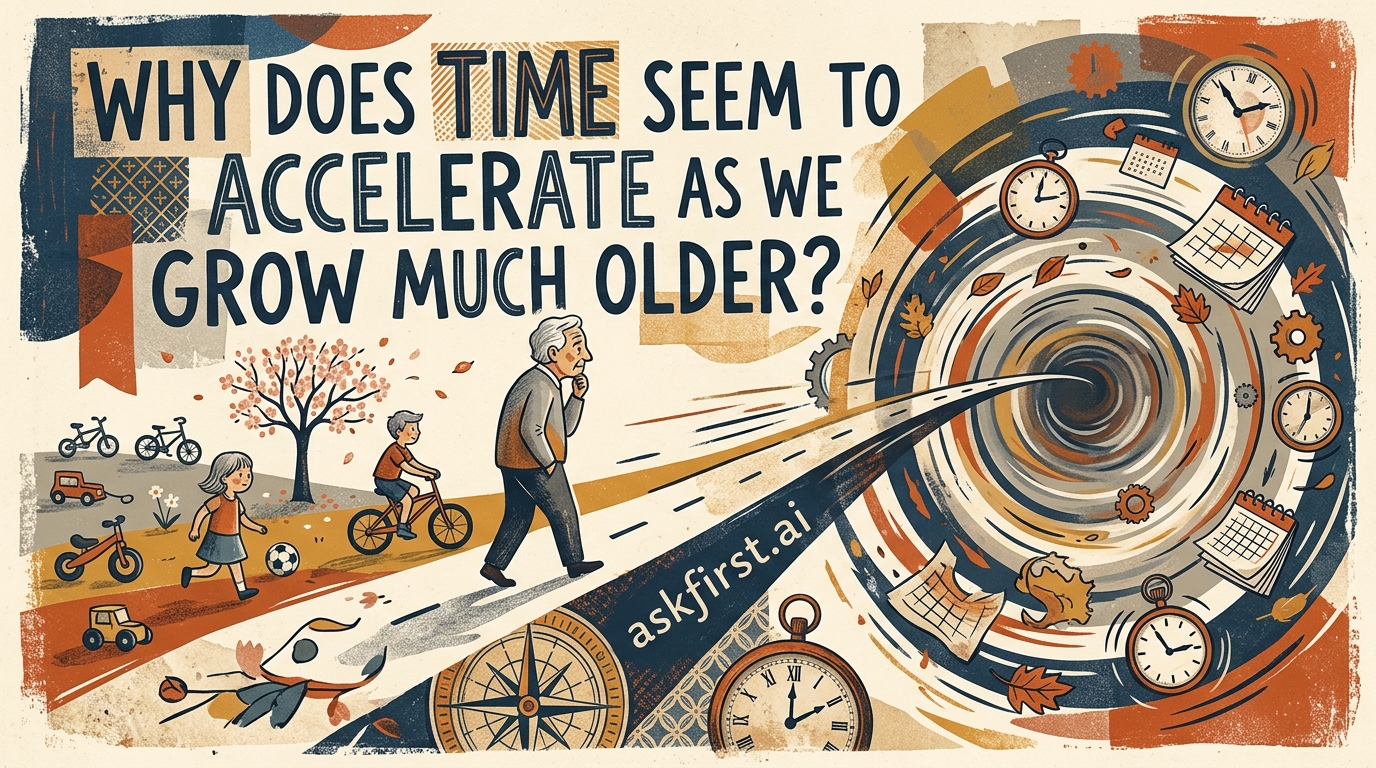
One of the most famous explanations is the Proportional Theory, first proposed by Paul Janet in 1877. This theory posits that our brain perceives time in proportion to the total duration of our lives. When a person is five years old, one year represents twenty percent of their entire existence. In contrast, for a fifty-year-old, one year represents only two percent of their life. Because every new experience is evaluated against the backdrop of total life lived, the relative 'weight' of a year diminishes over time, making it feel significantly shorter. This mathematical perspective offers a baseline for understanding the relativity of temporal estimation.
The Role of Novelty and Memory Consolidation
The most widely accepted scientific explanation involves the way the brain encodes memories. During childhood, the world is filled with 'firsts.' Learning to ride a bike, the first day of school, and discovering new hobbies require intense neurological processing. The brain records these experiences with high density, requiring significant neural bandwidth. When we look back at these times, the abundance of recorded detail creates the illusion that the period was long.
Conversely, as we reach adulthood, our lives become defined by routines and patterns. Cognitive scientists refer to this as the 'Holiday Paradox.' When we engage in repetitive daily tasks—commuting to work, preparing meals, and performing familiar chores—the brain effectively puts itself on autopilot. Because the brain does not need to store detailed new information for these redundant experiences, it does not expend energy 'recording' them deeply. When we recall these periods, the lack of distinct, novel memories makes that block of time seem to have passed in a flash.
Neurochemical Modulation of Time
The speed at which we process information may also play a crucial role. Some research suggests that the brain's internal 'clock' is linked to the speed at which we process visual and sensory data. Children process information at a much higher frequency, meaning they receive more 'frames per second' than adults. As we age, neural pathways begin to degrade slightly or become less efficient, resulting in a slower processing rate. If the brain receives fewer images and sensory inputs per second, the duration of those seconds feels shorter, leading to the perception of time rushing forward.
The Dopamine Connection
Neurotransmitters, particularly dopamine, serve as regulators for our internal timing mechanisms. Dopamine levels in the brain tend to decrease as we age. Since dopamine is heavily involved in the perception of duration, its decline can fundamentally alter the way we experience the ticking of the clock. A higher level of dopamine in youth may stretch the perception of time, while lower levels in middle and old age may cause the internal clock to speed up, resulting in shorter subjective intervals.
How to Slow Down Time
Understanding the mechanics of temporal perception provides a unique opportunity to 'hack' our own sense of time. To counteract the acceleration of time, one must focus on increasing the density of novel experiences.
- Cultivate New Skills: Learning a new language or musical instrument forces the brain to create new, dense neural pathways, breaking the monotony of the 'autopilot' state.
- Travel and Exploration: Visiting unfamiliar environments ensures that the brain is constantly recording new data, effectively elongating the perceived duration of a trip compared to staying at home.
- Mindful Presence: By practicing mindfulness, one can bring focus to the current moment, forcing the brain to 'record' the passage of time more intentionally rather than letting it slip away unnoticed.
In conclusion, time does not actually speed up; rather, our internal system for measuring and storing life experiences changes. By deliberately incorporating novelty, challenges, and mindful observation into our daily lives, we can effectively broaden the canvas of our subjective reality, making our years feel as rich and long as they once did in our youth.