The Psychology of Relocation: Personality Plasticity Defined
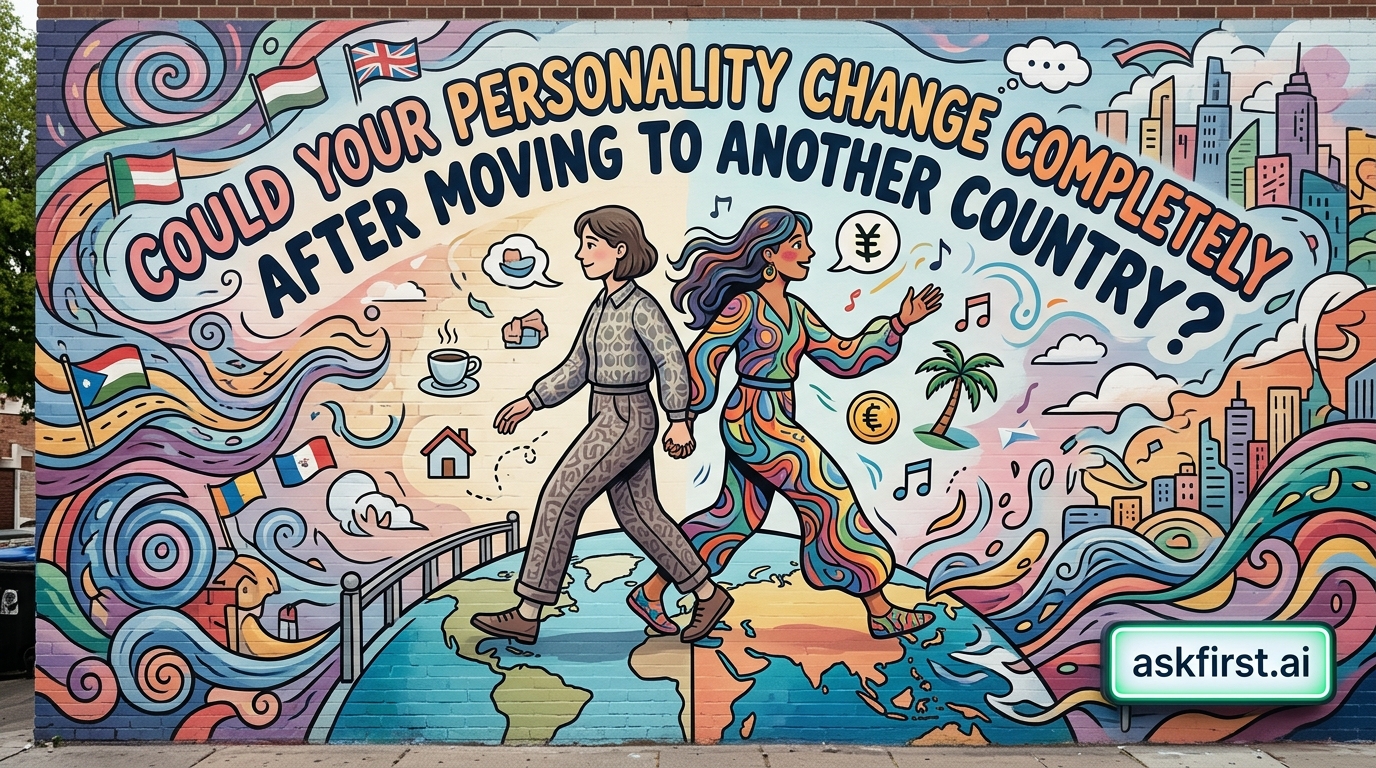
Moving to another country is frequently viewed as a physical displacement, yet psychologists argue it is essentially a radical psychological restructuring. The notion that personality is a static, immutable essence is a common myth. Instead, contemporary personality science, particularly the Whole Trait Theory, suggests that personality is an amalgamation of stable traits and dynamic states that shift in response to environmental demands. When an individual migrates, the sudden immersion into a new cultural, linguistic, and social ecosystem functions as an external catalyst for long-term behavioral adaptation, a phenomenon known as 'acculturative personality shift.'
The Mechanisms of Behavioral Adaptation
When a person enters a new culture, they encounter what social psychologists term Cultural Shock, which is not merely an emotional hurdle but a cognitive demand to reconcile disparate social scripts. To function effectively, the brain must engage in 'cognitive flexibility.' Over time, these temporary adjustments solidify into character traits.
- The Shift in Extraversion: Often, individuals who were highly extraverted in their home country may experience a transient reduction in sociability as they master a new language. Conversely, the need to build a new network from scratch often forces introverts to practice 'boldness' traits, eventually increasing their baseline levels of assertiveness.
- The Rise of Openness: Moving to a foreign land is the single most effective way to elevate the 'Openness to Experience' trait. Studies have shown that migrants frequently report higher levels of intellectual curiosity, aesthetic appreciation, and willingness to tolerate ambiguity after just two years in a new environment.
Can Personality Change 'Completely'?
While personality does not shift overnight into a unrecognizable person, it undergoes what researchers call 'personality maturation' accelerated by environmental friction. The Big Five personality model—Openness, Conscientiousness, Extraversion, Agreeableness, and Neuroticism—remains the gold standard for measuring these shifts. While core temperament (the biological baseline) remains relatively steady, the manifestations of these traits fluctuate dramatically based on the 'Person-Environment Fit.'
The Role of Cultural Intelligence (CQ)
Individuals who possess high Cultural Intelligence are more likely to adapt their personality traits to suit their surroundings without losing their sense of self. This involves:
- Metacognitive adaptation: Monitoring how one's personality is perceived by locals and adjusting non-verbal cues accordingly.
- Behavioral modification: Adopting the local pace of life or communication styles, which eventually rewires neural pathways associated with social patience and rhythm.
The Impact of Language Acquisition
Linguistic relativity, or the Sapir-Whorf hypothesis, plays a pivotal role in this transformation. Learning a new language is effectively learning a new way of thinking. For example, individuals who move from a language that emphasizes individual status to a language that emphasizes collective harmony often find themselves becoming more empathetic and less prone to individualistic conflict. The grammar, vocabulary, and metaphorical structure of a new tongue provide a new 'lens' through which one interprets the world, fundamentally altering how one frames their own experiences and personality.
Sustained Psychological Evolution
It is important to note that these changes are rarely volatile. Instead, they are incremental. The brain exhibits neuroplasticity, which remains active throughout adulthood. By engaging in new, foreign environments, an individual effectively 'updates' their psychological software. The person who returns to their country of origin after a decade abroad often finds that their 'original' self no longer fits comfortably back into their old environment. This is because they have outgrown the feedback loops of their previous culture.
Conclusion: A New You?
To answer whether personality changes 'completely,' one must distinguish between the 'Core Self' and the 'Public Persona.' While the core values may remain, the expression, reaction thresholds, and habits—the elements that make up the day-to-day experience of a personality—are fundamentally mutable. Relocation forces the individual to drop outdated habits and synthesize new, highly adaptive behaviors. Therefore, while the fundamental essence of an individual may remain, their outward personality trajectory can be radically altered, creating a version of the self that would not have existed had they stayed in the place of their birth. This process is not just an adaptation; it is an evolution toward a more complex, nuanced, and globally-attuned personality structure.