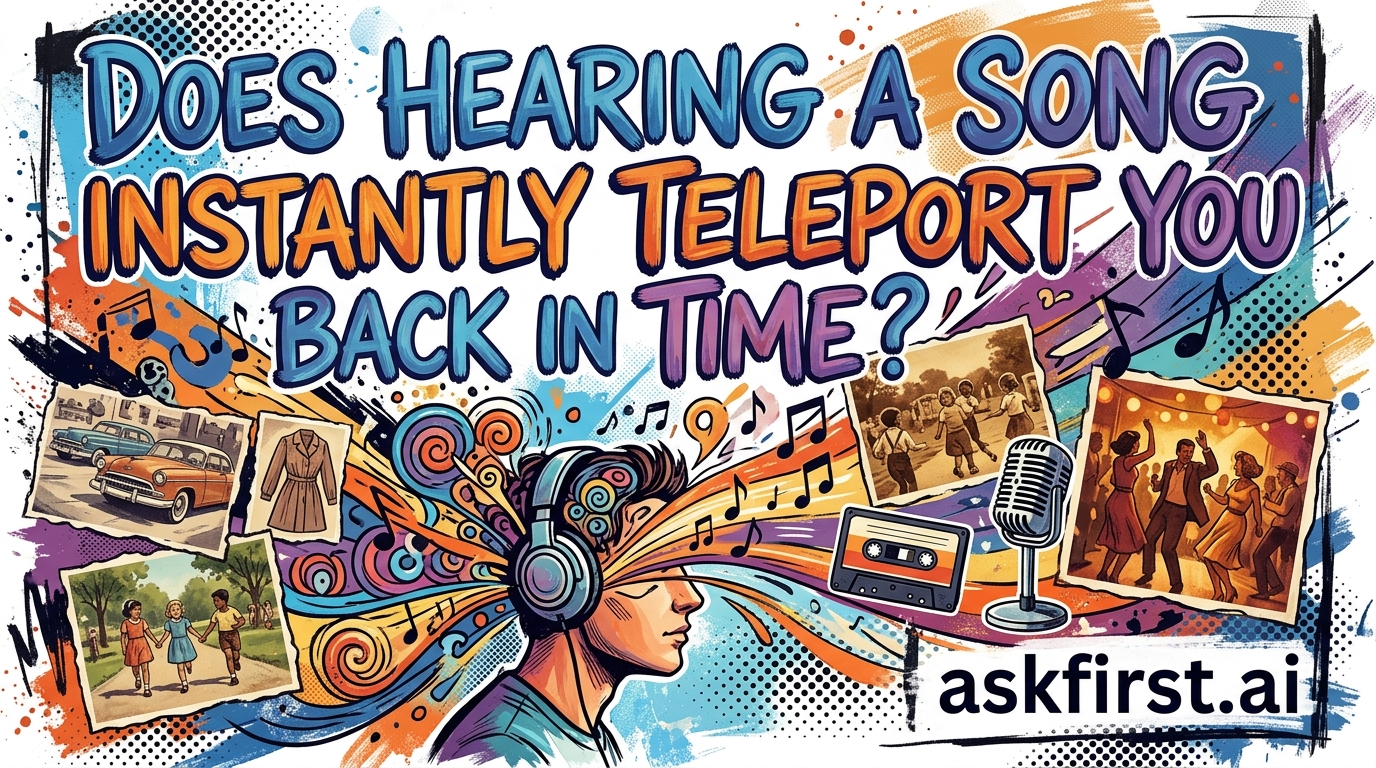
The Phenomenon of Auditory Time Travel
While physical time travel remains a concept reserved for science fiction, the human brain possesses a remarkable, biological mechanism that effectively bridges the gap between the present and the past. When a familiar song begins to play, the listener often experiences an instantaneous shift in consciousness. This is not mere nostalgia; it is a complex neurological reaction known as Music-Evoked Autobiographical Memory (MEAM). The sensation is so profound that it frequently feels like being physically transported to the moment the music was first heard.
The Neural Architecture of Memory
To understand why music holds this unique power, one must look at the anatomy of the brain. Unlike other sensory stimuli, music occupies a distributed network. While the auditory cortex processes rhythm and pitch, the emotional resonance of a melody activates the limbic system, specifically the amygdala and the hippocampus. The hippocampus is the archive of the brain, responsible for long-term memory formation. Because music often acts as a 'hook' for memories, it strengthens the neural pathways associated with specific events. This is why a simple chord progression can unlock decades-old memories that were previously inaccessible.
Why Music is the Ultimate Key
- The Involuntary Recall Mechanism: Most memory retrieval requires conscious effort. Music, however, triggers involuntary autobiographical memories. It bypasses the analytical mind and strikes directly at the emotional core, making the memory retrieval feel more 'real' and visceral.
- State-Dependent Learning: The brain encodes memories alongside the environment and emotional state present during the initial experience. Music acts as a powerful environmental cue. When the music returns, the brain perceives it as a signal that the original 'state' of the past has returned, prompting a recall of the surrounding circumstances.
- Sensory Integration: Sound is processed through a unique route that avoids the initial filtering stages that visual information undergoes. This allows for a faster, more raw emotional response, facilitating that 'teleportation' sensation.
The Science of 'Nostalgia' in Rhythm
Psychologists emphasize that music is a mnemonic scaffold. In studies conducted by neuroscientists such as Dr. Petr Janata, it has been demonstrated that the medial prefrontal cortex is particularly active during music listening. This region acts as a hub, connecting memories to emotional rewards. When individuals hear music from their 'reminiscence bump'—the period between the ages of 15 and 25 when the brain is most developmentally sensitive—the intensity of the time-travel sensation is at its peak. This is because, during this life stage, experiences are forming the foundation of personal identity, and music serves as the soundtrack to that foundational construction.
Practical Applications and Benefits
- Cognitive Resilience: Research indicates that music therapy can help individuals with dementia maintain connections to their past. By playing songs from a patient's youth, caregivers can often stimulate periods of clarity and comfort, proving that the 'teleportation' effect has therapeutic utility.
- Mood Regulation: By understanding how music triggers past states, individuals can curate 'time-capsule playlists' to aid in emotional regulation. Listening to music associated with high-achieving or positive periods can effectively shift a person’s current perspective, reducing stress and enhancing motivation.
- Learning Enhancement: Because music encodes memory so deeply, some educators use musical cues to help students recall complex information. Connecting academic concepts to rhythmic structures utilizes the same neural pathways as autobiographical memory, proving that this 'time travel' effect is a robust feature of human cognitive architecture.
Is the Teleportation Real?
While the subjective experience is one of being in the past, the brain is effectively reconstructing a scene. It is a form of mental time travel, a cognitive ability that allows humans to project themselves into different points on their personal timeline. Music is the most efficient engine for this process because it combines temporal patterns (rhythm) with emotional triggers (harmony).
Ultimately, hearing a song does not move the body through time, but it allows the mind to inhabit past sensory spaces with such vividness that the distinction between 'then' and 'now' dissolves. It is a testament to the sophistication of the human brain that such a simple arrangement of vibrations can reconstruct the complexity of a lost moment. By engaging with music intentionally, one gains access to a private archive, ensuring that past joys and lessons remain reachable throughout a lifetime. Music is not just a form of entertainment; it is the ultimate record-keeper of the human experience.