The Psychology of Lingering Embarrassment
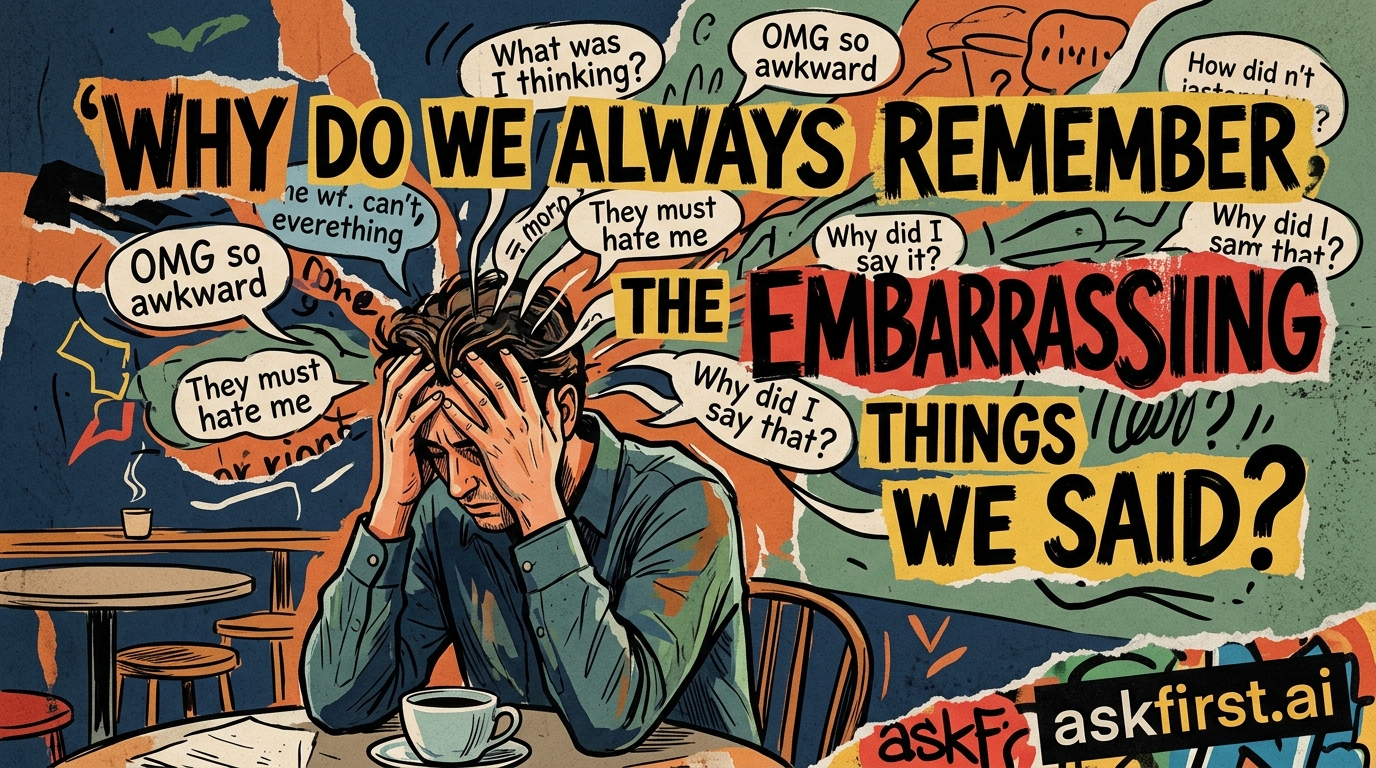
The phenomenon of recurring, intrusive memories regarding embarrassing social moments is a universal human experience. From a neurobiological perspective, the brain is hardwired to prioritize negative social feedback as a survival mechanism. Evolutionary psychologists suggest that early humans required tight social cohesion to survive; being ousted from a tribe meant death. Consequently, the brain developed an alarm system to monitor social behavior, making 'cringe-worthy' memories stickier than neutral ones.
The Role of the Spotlight Effect
Central to this psychological mystery is the Spotlight Effect. This is a cognitive bias where individuals tend to overestimate the degree to which their actions and appearances are noticed by others. In reality, most observers are preoccupied with their own internal dialogues and insecurities. The brain, however, continues to process the embarrassing memory as if it were a high-stakes event. By replaying the scenario, the mind attempts to analyze the 'mistake' to prevent future exclusion, essentially acting as a subconscious quality control system that has become hyper-vigilant.
Neuroplasticity and Negative Bias
Humans possess a strong negativity bias, which is the tendency to give more weight to negative experiences than positive ones. Neurochemically, cortisol and adrenaline are released during moments of high social anxiety. These neurotransmitters facilitate the strengthening of synaptic connections in the hippocampus and the amygdala—the areas responsible for memory formation and emotional regulation. This is why a single awkward comment at a party can be recalled with vivid clarity years later, while an entire evening of pleasant, standard conversation is forgotten. The brain categorizes the embarrassing event as a 'learning opportunity' that requires significant neural resources to avoid repetition.
Ruminative Loops and Cognitive Overload
When one begins to obsess over an embarrassing moment, it triggers a cycle known as rumination. This is characterized by repetitive, unproductive thought patterns. During these loops, the prefrontal cortex attempts to 'solve' the problem, but because the event has already concluded, the brain remains in a state of unresolved tension. This cycle is reinforced by the feeling that the past can be corrected or atoned for through analysis, even though the reality of the situation is immutable.
Strategies for Mitigating the Effect
To move past the persistent recall of social blunders, one can utilize several evidence-based cognitive strategies:
- Cognitive Reframing: Consciously shift the perspective from 'What is wrong with me?' to 'How does this look in the context of my life trajectory?' Recognizing that these memories are natural allows for the reduction of their emotional intensity.
- The Exposure Paradigm: Accept that social discomfort is part of being human. Paradoxically, the more one tries to suppress a memory, the more prominent it becomes in the subconscious mind.
- Compassionate Detachment: Treat the memory as an external object rather than a core component of one's identity. Visualizing the memory as a third-person narrative can strip it of its emotional sting.
- Perspective-Taking: Consider if an embarrassing comment made by someone else would be remembered by the observer for more than a few minutes. Usually, the answer is no, which helps anchor the individual in the reality of external perception.
Conclusion: Reclaiming Mental Space
Understanding the biological purpose of these intrusive thoughts provides a sense of liberation. While the brain is evolutionarily programmed to obsess over social errors, the modern world rarely penalizes individual social blunders with the severity the primitive brain anticipates. By acknowledging that these loops are merely the brain's internal 'warning light' working overtime, one can eventually learn to ignore the alert and redirect focus toward productive, present-moment goals. The path to relief lies not in erasing the memory, but in recognizing that the weight placed upon it is an illusion created by a well-meaning but outdated survival instinct.