The Digital Revolution in the Fields: AI and Sustainable Agriculture
The global agricultural landscape is currently undergoing a seismic shift. As the world population hurtles toward the ten-billion mark by 2050, the pressure to produce more food with fewer resources—water, land, and chemical inputs—has never been greater. Artificial intelligence (AI) has emerged as the linchpin of this transition, moving beyond simple automation into the realm of complex, data-driven stewardship of the land. By integrating machine learning, computer vision, and predictive analytics, farmers are transforming from intuitive managers into precision engineers of biological systems.
Precision Agriculture: The Art of Doing More with Less
At the heart of sustainable AI-driven farming is the concept of precision agriculture. Historically, farmers treated entire fields as homogenous units, applying water, fertilizer, and pesticides uniformly. This "blanket" approach is inherently inefficient and environmentally taxing.
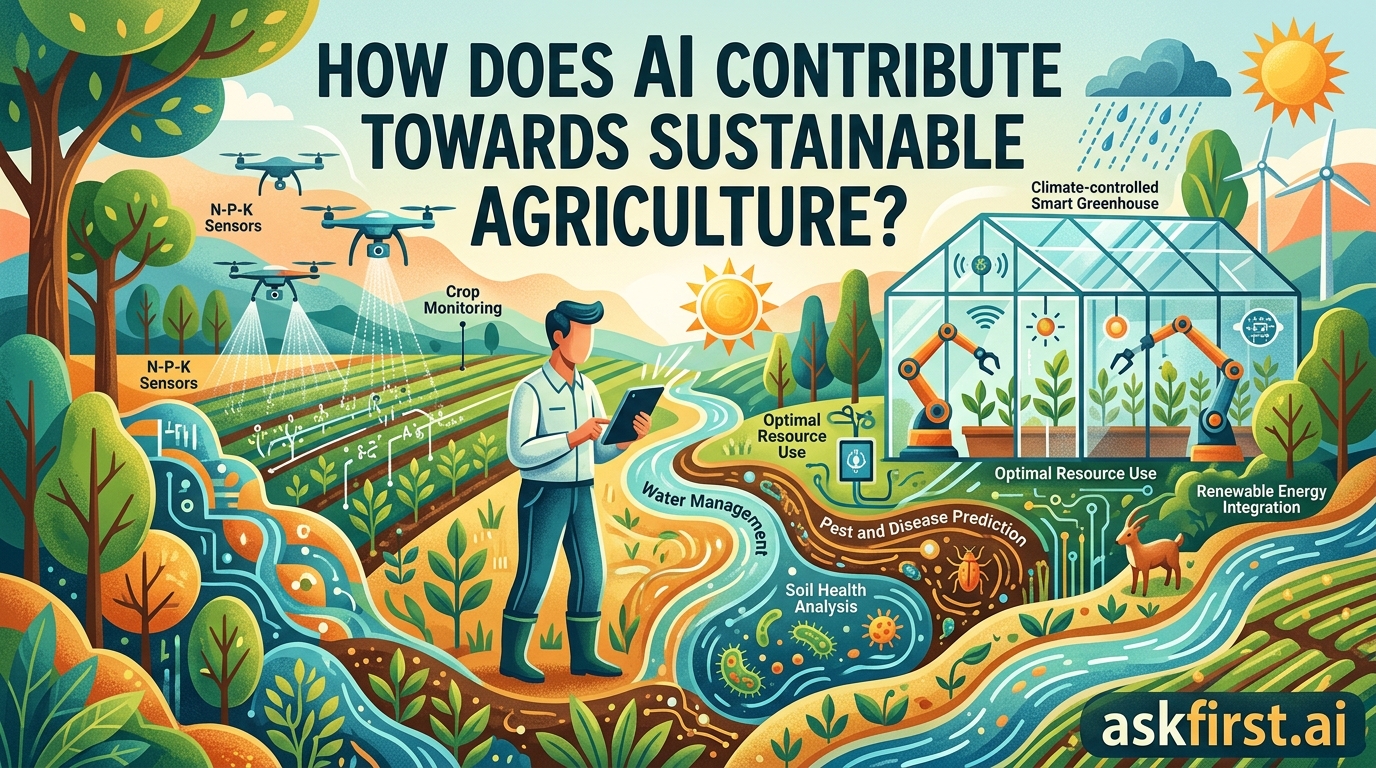
AI-powered systems, such as those developed by companies like John Deere and Blue River Technology, utilize computer vision to differentiate between crops and weeds in real-time. Their "See & Spray" technology uses high-resolution cameras to identify individual weeds and apply herbicide only to the target, rather than the entire acreage. According to field studies cited in The Future of Agriculture by Dr. Robert L. Zimdahl, this targeted approach can reduce chemical usage by up to 90%, drastically lowering the risk of groundwater contamination and reducing the selection pressure for herbicide-resistant weeds.
Predictive Analytics and Soil Health Management
Sustainable agriculture is fundamentally about the long-term health of the soil. AI models now ingest vast datasets—including soil moisture levels, historical yield data, satellite imagery from the European Space Agency’s Copernicus program, and localized weather patterns—to provide prescriptive insights.
Platforms like IBM’s Environmental Intelligence Suite leverage deep learning to forecast soil moisture deficits long before they reach a critical stage. By predicting drought stress, AI allows for "variable rate irrigation." Instead of adhering to a rigid schedule, automated irrigation systems deliver precise amounts of water to specific zones of a field. This not only conserves vital water resources—an increasingly scarce commodity in regions like the Central Valley of California—but also prevents the nutrient leaching that occurs with over-irrigation. In his seminal work The Soil Will Save Us, author Kristin Ohlson notes that managing soil carbon and moisture is the most effective way to sequester atmospheric CO2; AI provides the granular control necessary to make this a scalable reality.
Autonomous Robotics and Labor Efficiency
Labor shortages are a pervasive problem in the agricultural sector, often leading to unharvested crops and waste. AI-driven robotics are stepping in to bridge this gap while simultaneously improving the precision of cultivation.
Consider the Tertill robot, an autonomous solar-powered weeder designed for smaller plots, or the large-scale robotic harvesters developed by Advanced Farm Technologies. These machines use neural networks to identify the ripeness of fruits like strawberries or apples without damaging the plant. By harvesting only at the peak of maturity, these robots reduce post-harvest food waste—a massive contributor to the carbon footprint of the food supply chain. Furthermore, because these robots are lighter than traditional heavy tractors, they significantly reduce soil compaction, a physical degradation factor that hinders root growth and water infiltration.
Enhancing Biodiversity and Resilience
AI is also proving instrumental in the management of crop diversification and integrated pest management (IPM). By analyzing historical patterns of pest outbreaks and correlating them with climate variables, AI tools can help farmers design complex crop rotations that naturally break pest cycles. This minimizes the reliance on synthetic pesticides, fostering a more robust ecosystem where beneficial insects and soil microbes can thrive.
In the book The Lean Farm by Ben Hartman, the focus is on the elimination of "waste" (muda). AI acts as the ultimate tool for this philosophy, optimizing the logistics of food distribution so that produce reaches the market faster, reducing spoilage. When AI predicts demand with higher accuracy, it prevents the overproduction that forces farmers to dump excess harvest, a silent but significant contributor to agricultural sustainability issues.
Conclusion: A Future Built on Data and Stewardship
The integration of AI into agriculture is not merely about technological novelty; it is a fundamental requirement for a sustainable future. By shifting the focus from mass-scale industrial intervention to micro-scale biological management, AI allows farmers to work in concert with, rather than against, the natural environment.
While challenges remain—specifically regarding the "digital divide" and the need for data interoperability between different farm management software—the trajectory is clear. As noted in the UN Food and Agriculture Organization (FAO) report on Digital Agriculture, the democratization of these tools will be the defining factor in whether we can meet the food demands of the next century without exhausting the planet’s natural capital. Through the lens of AI, the farm of the future is not a factory, but a sophisticated, self-optimizing ecosystem. The synthesis of traditional ecological knowledge with high-speed computational intelligence is the most promising path toward a resilient and truly sustainable food system.