The Proportional Theory of Time
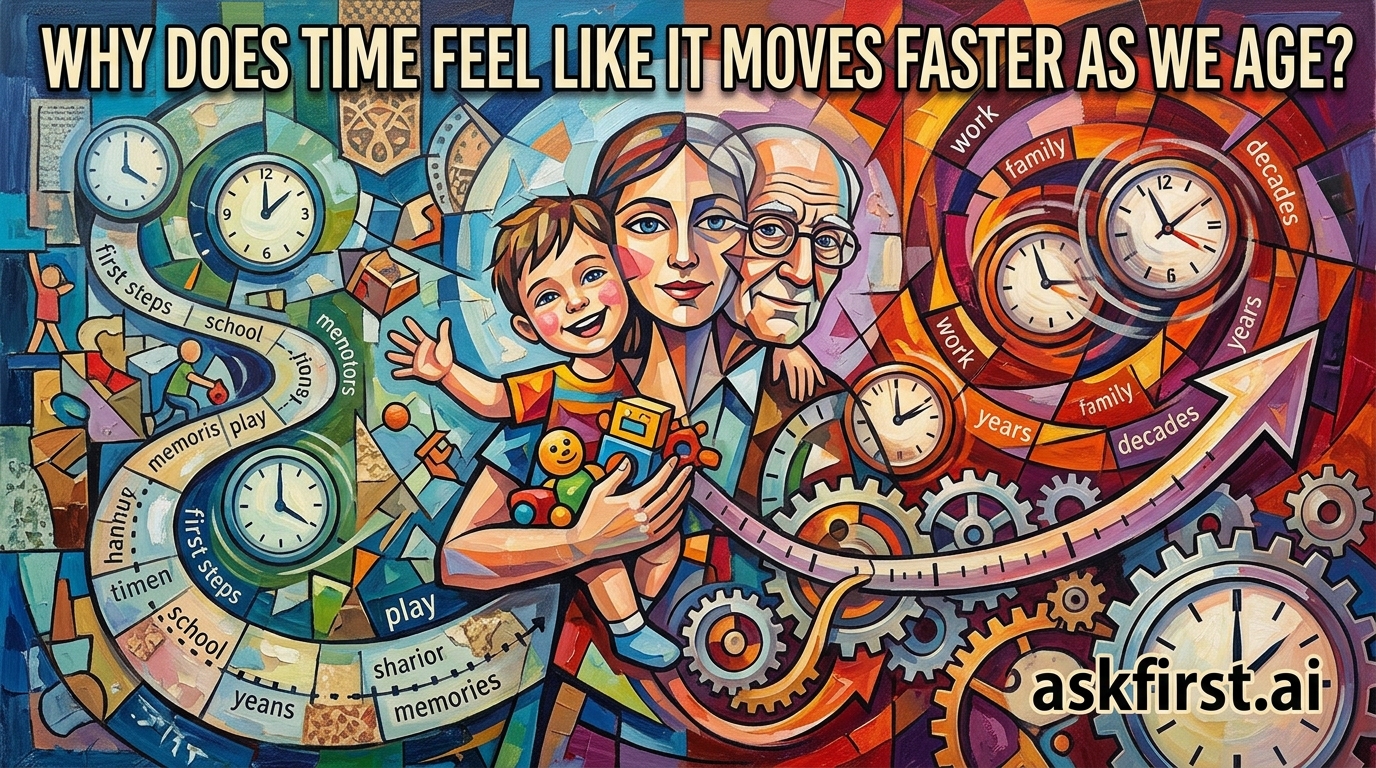
One of the most prominent explanations for the acceleration of perceived time is the Proportional Theory, first proposed by French philosopher Paul Janet in 1877. This theory posits that as humans grow older, each interval of time represents a smaller fraction of the total lifespan. For a five-year-old child, a single year accounts for 20% of their entire existence—an eternity of experience. By contrast, for a fifty-year-old, a year is merely 2% of their life. Because our brains calculate time relative to the duration of our lived experience, the years feel significantly shorter as the cumulative 'base' of time grows larger.
The Role of Novelty and Memory Encoding
Another compelling scientific framework involves the way the brain encodes memories. When individuals are young, almost everything is new. A first trip to the beach, the first day of school, or learning to ride a bicycle forces the brain to process high levels of sensory data. Psychologists suggest that because the brain must work harder to record these novel experiences, it creates a denser, more complex memory map.
- High Novelty: In youth, time feels stretched because of the sheer volume of new information being stored.
- The Routine Trap: As people age, life often falls into repetitive cycles—commuting, working, and performing household chores. When the brain encounters familiar patterns, it effectively goes into 'autopilot' mode. Because there is little new information to process, the brain does not store detailed snapshots of these days. When looking back, the mind perceives a lack of distinct 'anchors,' making a month or a year feel as though it vanished in an instant.
The Physiological Clock and Dopamine
Biological factors also play a critical role in the perception of time. Research into neurochemistry, particularly the role of dopamine, offers a fascinating perspective. Dopamine is a neurotransmitter involved in our ability to perceive duration. It has been hypothesized that as we age, dopamine levels in the brain naturally fluctuate. High levels of dopamine are often associated with the ability to judge time more accurately, while lower levels can lead to a perception that time is slipping away or moving in a blurred, continuous stream.
Furthermore, the speed of neural processing affects time perception. Some studies suggest that the physical speed at which our brains process visual images slows down as we age. Because younger brains capture more frames of information per second, they perceive more detail, making time feel 'slower' and more expansive. As the speed of neural signal transmission changes, the internal frame rate drops, leading to the sensation that the world is moving faster than our perception can keep up with.
Counter-Intuitive Truths: How to Slow Down Time
If the acceleration of time is linked to routine and familiarity, then the antidote is consciously introducing novelty. By intentionally breaking out of established routines, humans can force their brains to exit 'autopilot' mode.
- Learn a New Skill: Engaging in a complex hobby, such as playing a musical instrument or learning a new language, creates high-density memory nodes. These 'milestones' act as mental landmarks that effectively stretch the perceived duration of a year.
- Travel and Exploration: Visiting new environments requires the brain to process a vast amount of new sensory information. This cognitive demand prevents the 'blur' that usually accompanies repetitive, daily life.
- Mindfulness and Presence: Practicing mindfulness forces the brain to focus on the present moment, increasing the density of attention paid to the 'now' rather than living in a state of anticipatory distraction.
Scientific Perspective on Subjectivity
It is essential to recognize that 'time' in this context is purely a psychological construct. Physicists measure time as a constant, linear progression—seconds and minutes tick by with objective regularity regardless of age. However, the human brain is not a clock; it is a narrative machine. The way we perceive the passage of time is a reconstruction based on the density of our stored memories. When you remove the novelty of childhood, you remove the spikes of data that make time feel long. By understanding the mechanisms behind this phenomenon, one gains the power to take control of their perceived lifespan, filling the years not just with more time, but with more 'life' in every moment.