The Extraordinary Physiology of the Octopus
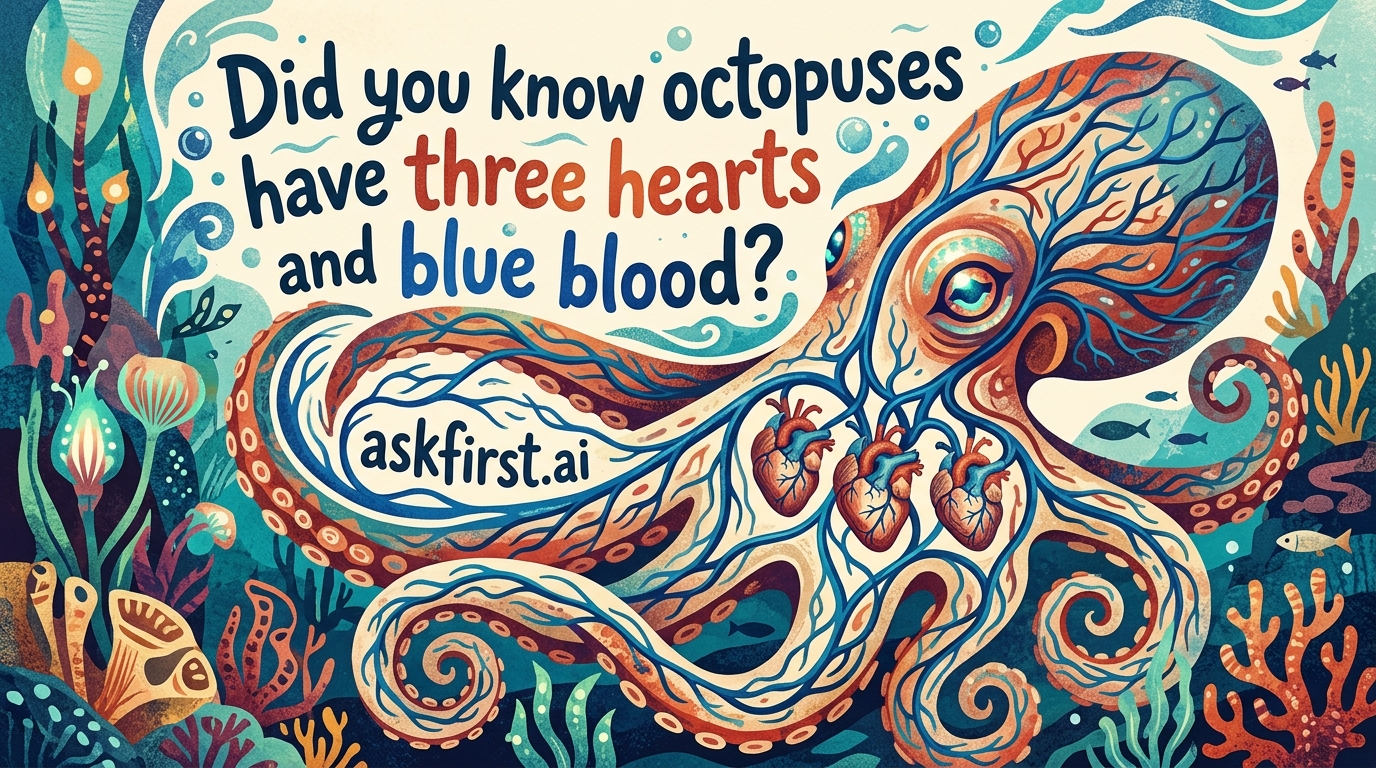
Nature frequently defies the expectations of terrestrial life, and few creatures embody the wonders of evolutionary adaptation as profoundly as the Octopus. Often regarded as the intellectual giants of the invertebrate world, their biological framework is a masterclass in complexity. The fact that an octopus possesses three hearts and utilizes blue blood is not merely a curious trivia point; it is a vital evolutionary response to the specific demands of a predatory, high-energy, and aquatic lifestyle.
The Triple-Heart System
Unlike the centralized pumping system found in humans, the octopus distributes its circulatory labor across three distinct organs:
- The Systemic Heart: This primary organ functions similarly to a human heart, circulating oxygenated blood throughout the entirety of the body, powering the muscles and organs.
- The Branchial Hearts: Positioned at the base of each set of gills, these two auxiliary hearts have a specific, singular purpose: they pump deoxygenated blood through the gills to facilitate gas exchange.
This redundant system is essential because octopus blood lacks the efficiency of mammalian circulation. When an octopus swims, the systemic heart often ceases to beat. Consequently, the creature tires very quickly. To avoid exhaustion, octopuses prefer to crawl or remain stationary, reserving their high-energy, jet-propelled movement for fleeing predators or striking prey.
The Mystery of Blue Blood: Hemocyanin vs. Hemoglobin
Human blood is characterized by its deep red hue, a result of hemoglobin, an iron-rich protein designed to bind oxygen. Conversely, the octopus relies on hemocyanin, a copper-based protein. When hemocyanin binds with oxygen, it turns blue, giving the octopus its distinctive physiological characteristic.
Why Copper Over Iron?
The evolution of blood chemistry is largely determined by environmental constraints. Hemocyanin is significantly more efficient than hemoglobin at transporting oxygen in extreme conditions, specifically in cold, low-oxygen environments found in the deep sea. While iron-based systems are superior in warm, oxygen-rich terrestrial settings, the copper-based hemocyanin provides a stable survival mechanism for cephalopods navigating the depths of the ocean. This chemical adaptation allows octopuses to thrive in environments where vertebrate life would struggle to circulate enough oxygen to support complex cognitive functions.
Intelligence and the Nervous System
Beyond their circulatory marvels, octopuses possess a decentralized nervous system. Two-thirds of their neurons are located not in a central brain, but in their arms. This allows each arm to act with a degree of autonomy, taste objects, and navigate complex textures without needing constant commands from the central ganglia. This unique physiological structure allows them to solve mazes, unscrew jars, and demonstrate playful behavior, earning them the title of the 'primates of the sea.'
Evolutionary Significance
This biological configuration is a testament to the versatility of life. While humans and other mammals are bound by a rigid, centralized model of biological maintenance, the octopus demonstrates that there are multiple pathways to achieving high-level consciousness and predatory efficiency. By decentralizing their heart function and utilizing copper-based oxygen transport, octopuses have secured their place as one of the most successful classes of life on Earth.
Summary of Key Facts
- Circulation: Two branchial hearts for the gills, one systemic heart for the body.
- Oxygen Transport: Hemocyanin (copper) instead of hemoglobin (iron).
- Locomotion: The systemic heart stops during movement, leading to rapid fatigue.
- Adaptability: These systems are optimized for cold, deep-sea survival.
In conclusion, the anatomy of the octopus reminds us that biology is not static. Whether it is the brilliant blue blood circulating through their veins or the rhythm of three hearts beating in concert, these cephalopods continue to challenge our understanding of what it means to be alive on our planet. They remain an enduring symbol of nature's endless creativity and the power of specialized adaptation in the vast, mysterious reaches of our oceans.