The Science of Interspecies Empathy: Decoding Pet Perception
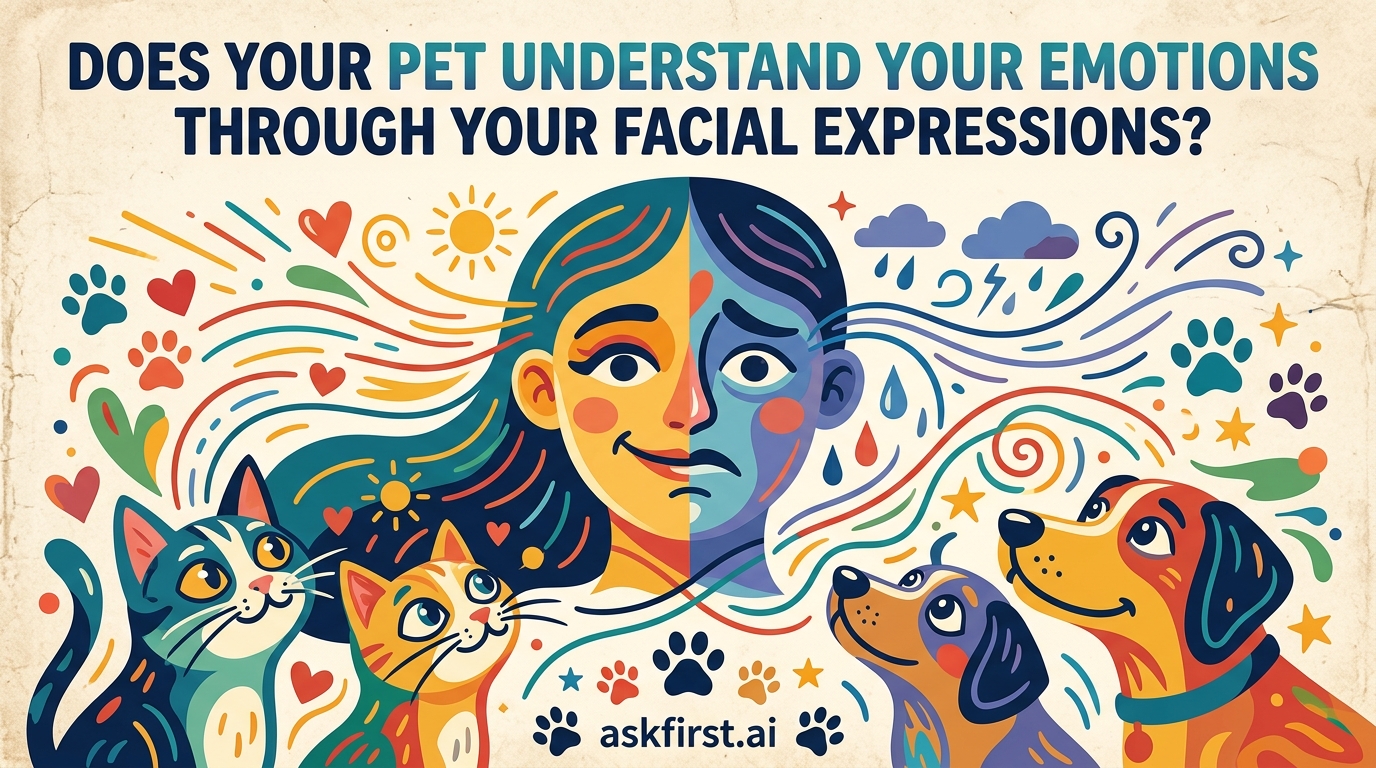
Recent advancements in behavioral biology and cognitive neuroscience have fundamentally altered the understanding of human-animal bonds. For decades, the consensus in the scientific community leaned toward the idea that animals were primarily reactive to environmental cues, such as vocal tone or body posture. However, modern research suggests that companion animals, particularly dogs and cats, possess a sophisticated mechanism for reading human facial expressions to discern emotional states. This phenomenon, often referred to as cross-species emotional contagion, is a testament to the evolutionary journey taken alongside humans.
The Neurobiology of Face Processing
Research published in journals such as Current Biology highlights that dogs utilize specific regions in their brains to process human faces. Similar to humans, dogs possess a 'face-processing' area that activates when presented with human expressions of joy, anger, or sadness. This indicates that their ability to 'read' a face is not merely a learned association with a treat but an innate cognitive process shaped by thousands of years of domestication. The dog brain can distinguish between a smiling face and a frowning face even when the visual cues are subtle. This is a remarkable feat of interspecies communication that underscores the deep synchronization between humans and their canine counterparts.
Canines: Masters of Emotional Mimicry
Dogs are highly attuned to human emotional triggers because they have evolved as social partners. Experiments involving fMRI scans have demonstrated that dogs prioritize human social signals over other stimuli. When presented with a fearful face, a dog may display signs of anxiety, such as avoiding eye contact or panting, while a happy expression often elicits a 'wagging' tail or relaxed body language.
- The Power of Gazing: Mutual gazing triggers the release of oxytocin in both the human and the dog, effectively mimicking the biological bond between a mother and an infant.
- Contextual Understanding: Dogs do not just see the face; they interpret the surrounding environmental context, confirming their suspicions about human moods through a triangulation of scent, sound, and sight.
The Feline Perspective: A More Subtle Approach
Cats, often stereotyped as aloof, have also demonstrated a capacity to recognize human emotions, though their methods differ from those of dogs. While cats might not always mirror emotional states in a way that is easily observable, studies indicate that they are remarkably perceptive of human facial expressions. Researchers at Oakland University discovered that cats behave differently toward their owners depending on the human's current mood. When a person smiles, a cat is more likely to engage in positive behaviors such as purring or rubbing against the individual. Conversely, when a human is distressed, a cat might approach with caution or attempt to provide comfort, suggesting a level of emotional awareness that contradicts the 'indifferent cat' myth.
The Role of Evolutionary Co-Adaptation
Why have these animals developed such keen observational skills? The theory of evolutionary co-adaptation posits that animals capable of accurately gauging human temperament were more likely to survive and thrive in human households. Those that could identify a 'happy' provider versus an 'angry' protector gained significant social advantages. Over time, this selective pressure ingrained the ability to read facial micro-expressions into the genetic fabric of domesticated pets.
Practical Applications: Strengthening the Bond
Understanding that pets are constant observers of human expressions can significantly change the way owners interact with their companions.
- Intentional Communication: Be aware that pets are observing facial cues even when they seem distracted. A calm, neutral, or happy expression can act as a stabilizing influence in a pet’s environment.
- Emotional Regulation: If an individual is feeling particularly stressed or angry, the animal will likely pick up on this tension. Utilizing calm facial expressions during training sessions can reduce anxiety for the pet and lead to better behavioral outcomes.
- Positive Reinforcement: When teaching new commands, pairing verbal praise with a genuine smile can enhance the animal's learning process. The visual feedback serves as a secondary, highly effective motivator.
Conclusion: A Deeper Connection
It is no longer a matter of debate that domestic pets perceive human facial expressions as a primary method of deciphering emotional intent. This ability is a profound reflection of the evolutionary history shared with these creatures. Whether it is a dog seeking security from a calm face or a cat offering companionship during times of sadness, the evidence is clear: the human-animal relationship is built on a foundation of emotional intelligence that transcends linguistic barriers. By acknowledging and respecting this silent dialogue, humans can nurture stronger, more empathetic, and more fulfilling relationships with their pets, ensuring that the bond remains as vital in the future as it has been for millennia.