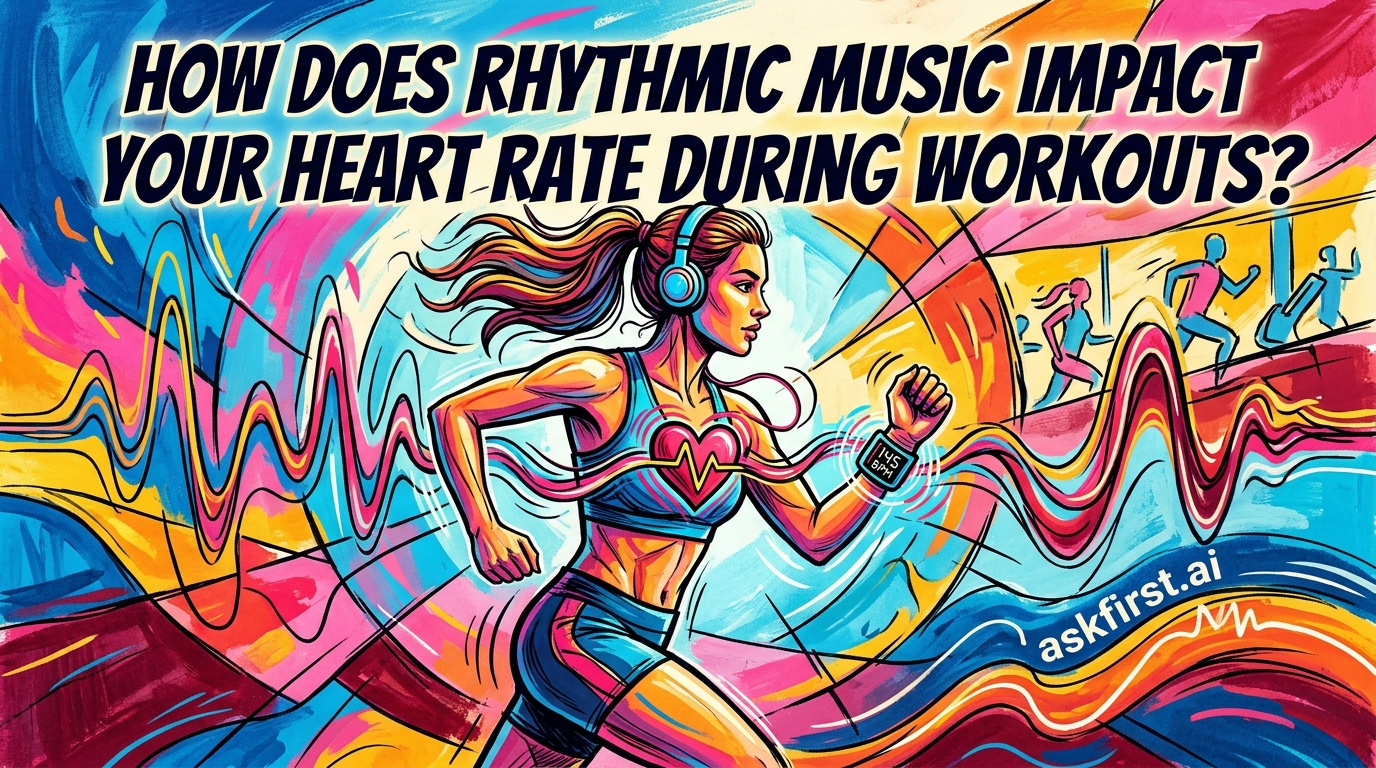
The Science of Rhythmic Entrainment and Cardiac Response
The relationship between auditory input and physiological output is one of the most fascinating intersections of neuroscience and exercise physiology. When the body engages in rhythmic movement—such as running, cycling, or weightlifting—it naturally seeks to synchronize with external rhythmic stimuli. This phenomenon, known as auditory-motor entrainment, acts as a biological pacemaker that can significantly alter cardiac demand and performance metrics. When the tempo of music aligns with the cadence of an athlete, the heart rate does not merely reflect physical exertion; it begins to mirror the rhythmic structure of the soundscape itself.
The Mechanisms of Synchrony
At a neurological level, the brain processes music through the auditory cortex and the motor areas, specifically the cerebellum and the basal ganglia. When a consistent beat is present, these regions facilitate the prediction of upcoming auditory events, allowing the motor system to prepare for movement with higher efficiency. This reduces the 'neural cost' of performing repetitive exercise. As the perceived effort decreases due to this improved motor efficiency, the cardiovascular system often responds with a stabilized or even slightly lower heart rate compared to exercising without music at the same intensity. This is a classic example of dissociation, where the brain becomes so focused on the rhythmic pattern that it downregulates the perception of internal fatigue markers.
Tempo and BPM: The Cardiac Driver
Research indicates that 'Beats Per Minute' (BPM) plays a critical role in determining cardiac outcomes during physical training. Generally, music falling between 120 and 140 BPM is considered optimal for moderate to high-intensity aerobic activity.
- The Synchrony Effect: When the music's BPM matches the step frequency, cardiac output becomes more rhythmic. Studies have shown that during endurance activities, cyclists who listened to music synchronized with their pedaling cadence maintained a higher power output for the same heart rate compared to those listening to asynchronous music or silence.
- The Pacing Strategy: Faster, high-energy music can act as a catalyst for elevated heart rates. By intentionally selecting tracks with a rapid tempo, the central nervous system is stimulated, often leading to a sympathetic nervous system response that increases catecholamine release. This prepares the heart for a higher workload, effectively nudging the heart rate upward, which can be beneficial for high-intensity interval training (HIIT).
Psychological Impact and Cardiovascular Regulation
Beyond simple mechanics, the emotional response to music triggers the release of neurotransmitters like dopamine and serotonin. This neurochemical shift influences the autonomic nervous system. Music that a listener perceives as 'uplifting' or 'motivating' can lead to better regulation of the parasympathetic-sympathetic balance. In a state of 'flow'—often facilitated by rhythmic music—the heart rate variability (HRV) tends to improve. A higher HRV is a hallmark of a well-recovered and efficient cardiovascular system. Consequently, rhythmic music does not just drive the heart rate up; it can make the heart's response to exertion more efficient, preventing premature spikes in heart rate caused by stress or irregular breathing patterns.
Myth-Busting: Does Music Make the Heart 'Lazy'?
A common misconception suggests that if music helps the workout feel easier, the heart is not working as hard. This is scientifically inaccurate. While the perceived exertion is lower, the physiological workload remains constant or improves. The music essentially acts as a performance-enhancing tool that allows the heart to operate within its optimal training zone for longer durations. By masking the signals of physical fatigue, rhythmic music enables athletes to push through physiological barriers they might otherwise shy away from, leading to more consistent cardiac conditioning over the long term.
Practical Application for Athletes
To leverage these effects, consider these strategic approaches to playlist curation:
- Warm-up: Start with moderate-tempo tracks (100–110 BPM) to gradually elevate the heart rate while focusing on mobility.
- Steady-State Cardio: Utilize tracks that maintain a steady, driving beat (125–135 BPM) to achieve a "locked-in" state, allowing for consistent cardiac performance.
- High-Intensity Bursts: Switch to faster-paced, high-energy music (145+ BPM) to spike the central nervous system, driving the heart rate toward maximal exertion levels.
Conclusion
In summary, the influence of rhythmic music on the heart is a complex interplay between sensory stimulation, motor control, and autonomic regulation. By consciously selecting music that aligns with the desired physical output, one can effectively modulate their cardiac response, enhancing performance while optimizing the cardiovascular training stimulus. Far from being a background distraction, rhythmic music acts as an integral component of the physiological architecture of exercise, bridging the gap between mind and muscle.