The Fascinating Mechanism Behind the Placebo Effect
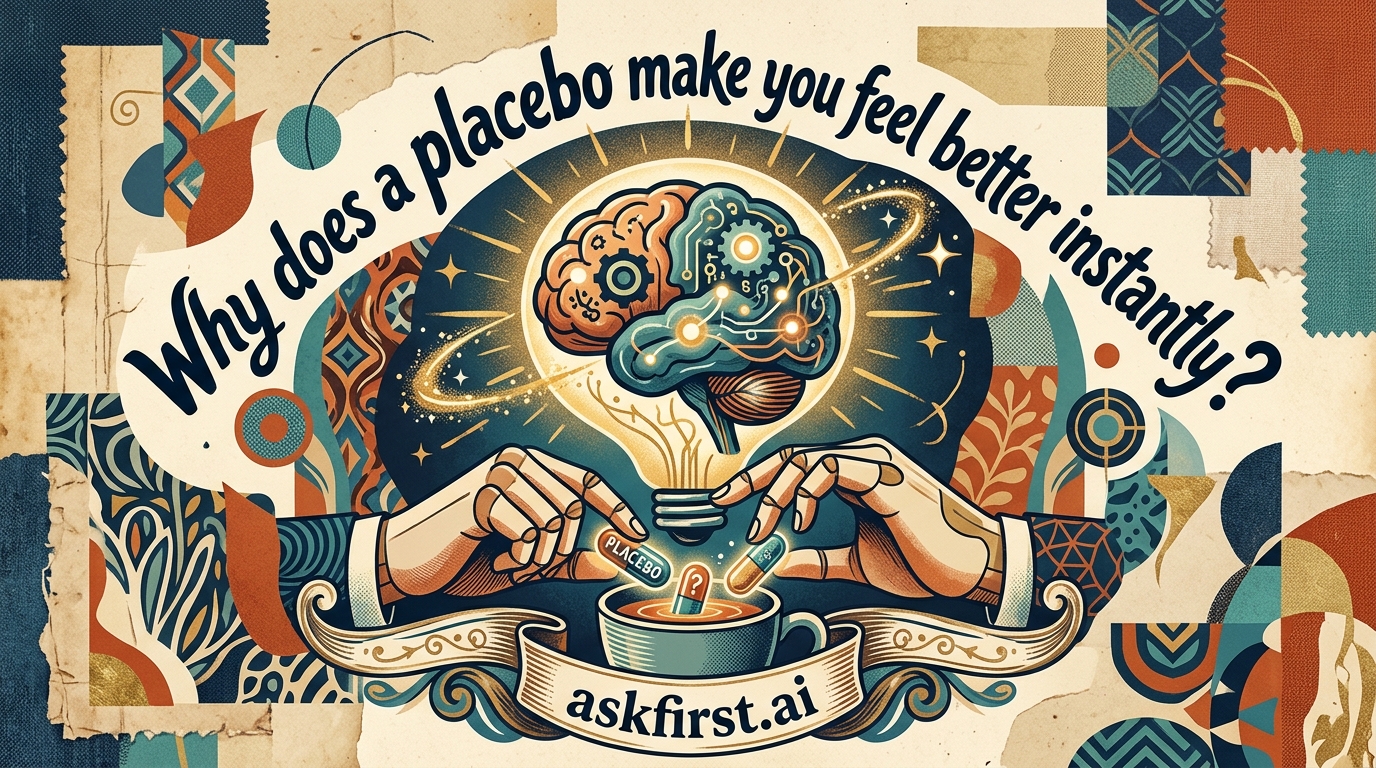
The placebo effect represents one of the most intriguing phenomena in modern medicine and psychology. It demonstrates the profound ability of the human brain to alter physiological states simply through the power of expectation, belief, and conditioning. When an individual receives a treatment—even one with no active therapeutic ingredient—the mere ritual of healing can trigger biological responses that alleviate symptoms and promote well-being.
The Neurobiology of Belief
At the core of the placebo response lies a complex interaction between the brain and the body. When a patient expects relief, the brain initiates a cascade of neurochemical reactions. Specifically, researchers have observed the activation of the endogenous opioid system. The brain begins to release natural painkillers, known as endorphins and enkephalins, which bind to the same receptors targeted by pharmaceutical analgesics. This internal "pharmacy" can effectively dampen pain signaling pathways, leading to measurable relief.
Furthermore, the dopaminergic reward system plays a pivotal role. The anticipation of improvement releases dopamine in areas such as the nucleus accumbens, reinforcing a sense of motivation and optimism. This biochemical shift does not just change how one perceives pain; it modulates how the nervous system interprets sensory input, effectively lowering the emotional and physical burden of a condition.
The Psychological Pillars: Expectation and Conditioning
There are two primary psychological drivers of the placebo effect:
- Expectancy Theory: This suggests that the belief in a specific outcome is sufficient to induce that outcome. If a patient is told that a pill will reduce their headache, the cognitive anticipation of recovery creates a mental state conducive to actual physiological changes.
- Classical Conditioning: Much like Pavlov’s famous experiments, years of exposure to healthcare environments create a subconscious association. Walking into a clinic, interacting with a physician, or swallowing a pill triggers a "learned" healing response in the brain, independent of the actual medication being administered.
Contextual Factors and Ritualistic Healing
The environment in which care is provided serves as a potent amplifier for the placebo response. Several elements contribute to the efficacy of this phenomenon:
- The Clinical Setting: Sterile environments, professional uniforms, and sophisticated medical equipment signal to the subconscious that healing is imminent.
- The Provider-Patient Relationship: Studies indicate that warm, empathetic, and confident clinicians evoke a stronger placebo response than those who appear cold or detached. The rapport acts as a psychological buffer, reducing patient anxiety—a known enemy of physical recovery.
- Treatment Characteristics: Interestingly, the appearance of the placebo matters. Larger pills, injections, and even the branding associated with the "treatment" influence the perceived power of the intervention. More invasive-looking treatments (such as sham acupuncture or saline injections) often produce a stronger effect than simple oral tablets because they feel more like "real" medicine.
Why It Is Not "All in the Head"
One of the most persistent myths is that the placebo effect is merely a psychological trick or a sign of dishonesty. On the contrary, the effect is a genuine biological event. Advanced imaging, such as fMRI and PET scans, has revealed that placebo treatments can physically alter brain activity in the prefrontal cortex, the anterior cingulate cortex, and the insula.
This means that when a patient reports feeling "better," their brain has undergone specific functional changes. Heart rate, blood pressure, and hormone levels can stabilize in response to a placebo, proving that the mind and body function as an integrated, non-dualistic system. By lowering systemic stress, the placebo effect allows the immune system to function more efficiently, accelerating natural healing processes.
The Future of Placebo Science
In contemporary medicine, the concept of the "Open-Label Placebo" has emerged as a groundbreaking area of study. This involves telling patients they are receiving a placebo—yet they still report significant improvements. This suggests that the mere act of engaging in a care ritual, combined with the underlying biological processes mentioned above, is powerful enough to override the knowledge that no active drug is present.
As research evolves, the goal of science is not to "eliminate" the placebo effect from drug trials, but to harness its power to complement traditional treatments. By understanding how to activate the body's internal healing mechanisms, the medical community can potentially reduce dependency on high-dose pharmaceuticals, optimize recovery times, and improve the overall quality of patient care. The placebo effect remains a testament to the extraordinary, self-regulating capabilities of the human organism, serving as a reminder that health is as much about mindset as it is about chemistry.