The Auditory Illusion: Why Your Voice Sounds Alien to You
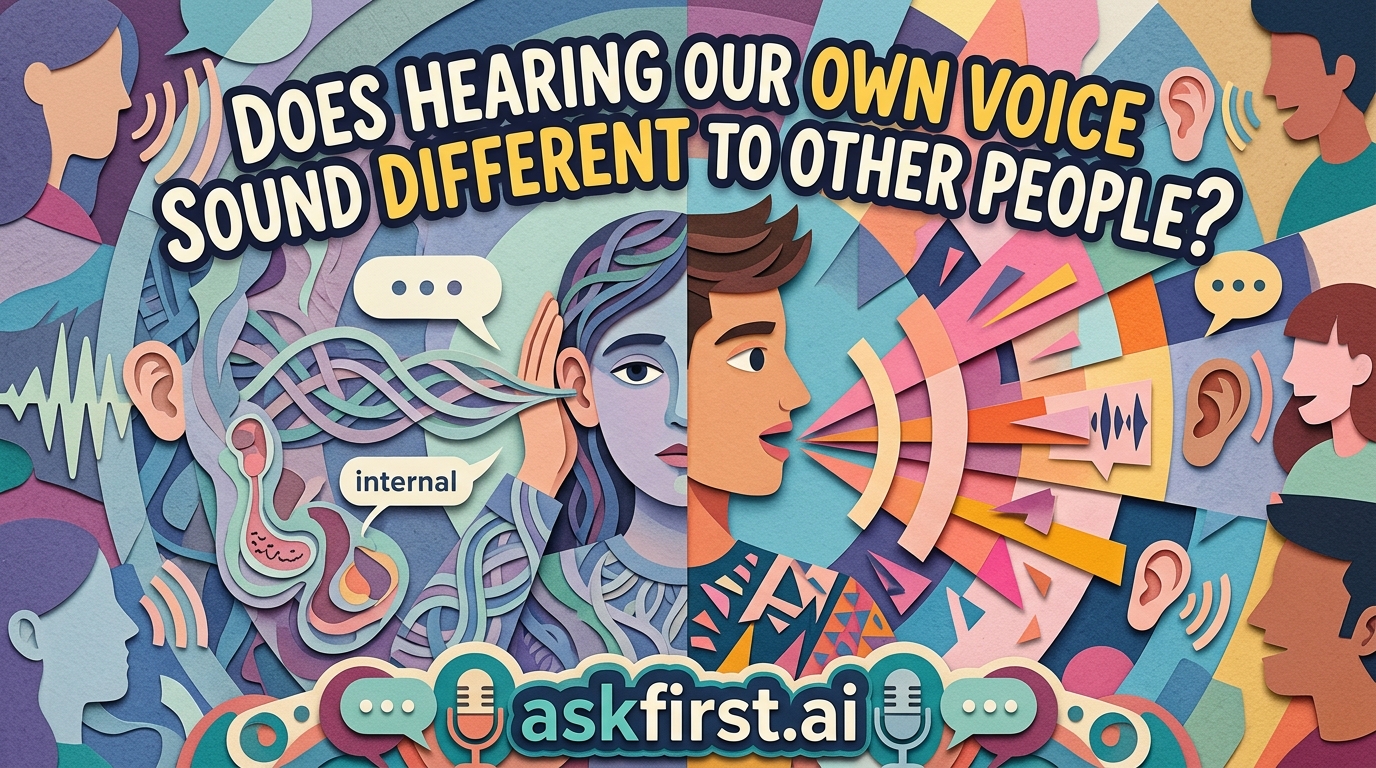
Have you ever listened to a recording of your own voice and felt an immediate sense of shock, confusion, or even mild embarrassment? You are not alone. This phenomenon, known as 'voice confrontation,' is a universal human experience. It highlights a fascinating gap between self-perception and external reality. When you speak, you are hearing two distinct sources of audio simultaneously: the sound waves traveling through the air (air conduction) and the vibrations traveling through your internal bone structures (bone conduction).
The Science of Bone Conduction
To understand why we sound different to ourselves, one must look at the physiological pathway of sound. When you speak, your vocal cords vibrate, producing sound waves that travel out of your mouth, through the air, and into your ear canals. This is the sound everyone else hears. However, there is a second pathway that only you experience. The vibrations from your vocal cords also travel through your skull and tissues. This 'bone conduction' allows low-frequency vibrations to travel more efficiently to the inner ear, specifically the cochlea.
Because your skull is a superior conductor of lower frequencies, your own voice sounds deeper, fuller, and more resonant to you than it actually is. When you listen to a recording, these internal bone-conducted vibrations are completely stripped away. What remains is only the air-conducted sound, which often strikes the listener as 'thinner,' 'higher-pitched,' or 'nasal.' The discrepancy between these two signals is why the voice on a recording sounds foreign to the brain.
The Psychological Impact of Voice Confrontation
Beyond the physical mechanics, there is a psychological layer to this experience. Your brain processes your voice as a constant, intrinsic part of your identity. When an external recording fails to match the 'template' of your voice stored in your memory, the brain flags it as 'incorrect' or 'strange.' This reaction can lead to a phenomenon described by psychologists as 'dissonance.' It is similar to the feeling of looking at a mirrored image versus a photograph; because we are used to seeing ourselves in reverse, a non-mirrored image often feels subtly wrong.
Why Do People Hate Their Own Voices?
Many individuals report a dislike for the 'recorded' version of themselves. This is partly due to the following factors:
- Lack of Contextual Cues: Recordings remove the social context, body language, and intent behind the words.
- The 'Thinness' Perception: As mentioned, the loss of low-frequency bone conduction makes the voice sound weaker to the speaker's own ears, leading to a loss of perceived authority or confidence.
- Anxiety and Self-Criticism: Recordings often capture linguistic ticks, breaths, or nuances that the speaker ignores during the flow of natural conversation, leading to heightened self-scrutiny.
Can You Train Your Ears?
While the physical difference is immutable, the discomfort associated with it can be mitigated through exposure. Public speakers, professional podcasters, and vocalists frequently listen to playback of their work. Through consistent exposure, the brain rewires its internal template, eventually accepting the 'air-conducted' recording as the legitimate representative of the person's voice. This is a form of habituation where the brain stops triggering a 'stranger' alert when it hears the recording.
Technological Limitations: The Role of Microphones
It is also essential to recognize that microphones are not human ears. A high-quality microphone captures sound differently than the human auditory system. Microphones often struggle with the dynamic range of human speech, sometimes emphasizing sibilance or high-frequency tones that the ear would naturally filter out. Thus, even if a recording is technically accurate, it may still fail to represent the 'natural' experience of listening to you in a face-to-face conversation.
Conclusion
In essence, hearing your own voice on a recording is an exercise in reality checking. It reminds us that we possess a private, internal experience of ourselves that is inaccessible to the rest of the world. While the 'alien' quality of the voice can be unsettling, it serves as a testament to the complex way our bodies translate physical vibrations into the auditory sensations that define our daily lives. Embracing the difference is simply a matter of recognizing that the voice others hear is the authentic sound of your communication, while the voice you hear in your head is a unique, personal symphony of internal vibration.