The Mechanism of Sensory Gating
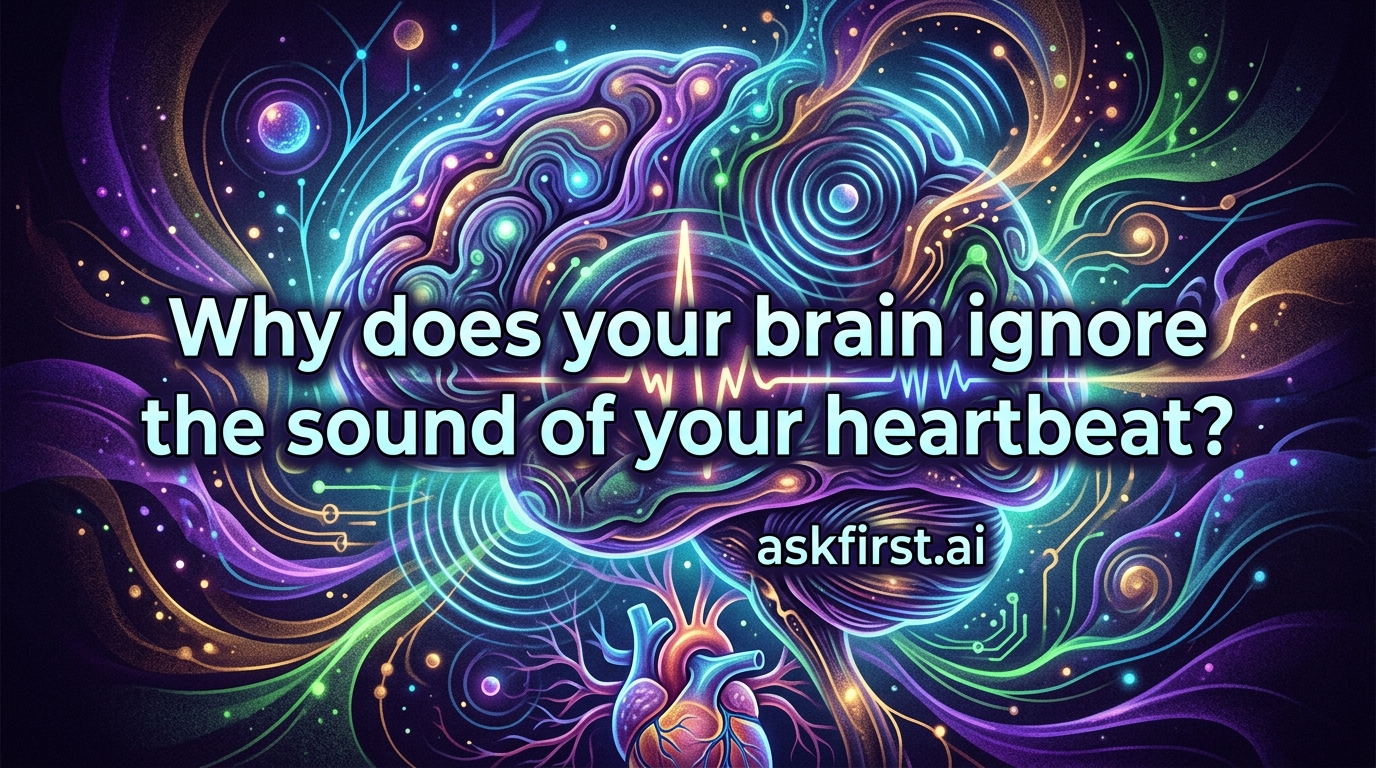
The human brain is a master of sensory prioritization. From the moment of birth, the auditory system is bombarded with a relentless stream of mechanical stimuli, including the rhythmic pumping of the heart. The phenomenon whereby the brain chooses to ignore this internal cacophony is known as sensory gating. This neurological process acts as a filter, distinguishing between relevant external information and repetitive, redundant internal noise. By suppressing constant, non-threatening background signals, the brain preserves precious cognitive resources for processing environmental changes that might indicate danger or opportunity.
The Role of Predictive Coding
At the core of this phenomenon lies the theory of predictive coding. The brain functions as a prediction machine, constantly generating internal models of the world. Because the heartbeat is periodic, predictable, and self-generated, the brain calculates its sensory consequences before they even occur. When the predicted sensory signal matches the actual incoming neural input, the brain effectively 'mutes' the signal. This is precisely why humans cannot tickle themselves; the brain predicts the sensation of the touch, allowing the nervous system to attenuate the response. Similarly, because the rhythm of the heart is mapped as an expected internal event, the thalamus—the brain's primary relay station—inhibits the transmission of these auditory impulses to the primary auditory cortex.
Neural Habituation and Synaptic Plasticity
Beyond predictive modeling, habituation plays a critical role. Habituation is a fundamental form of non-associative learning where an organism decreases its response to a repeated, harmless stimulus. Neural circuits responsible for auditory processing show a marked decline in synaptic response after prolonged, constant exposure to a single frequency or rhythm. This is a survival mechanism: if a human were hyper-aware of the constant "thump-thump" of their heart, they would be less capable of detecting the faint rustle of leaves or a distant voice. Over time, the neuronal pathways dedicated to detecting cardiac sound become less sensitive, effectively rendering the heartbeat 'invisible' to conscious perception.
Psychological and Physiological Implications
- Cognitive Efficiency: By filtering out internal noise, the brain remains available for higher-level cognitive tasks, such as problem-solving, creative synthesis, and complex social interaction.
- The Contrast Effect: Interestingly, when a person enters a state of extreme silence, such as an anechoic chamber, the brain may briefly struggle to suppress the signal, making the heartbeat suddenly audible. This is not because the heart has changed, but because the lack of external "masking" noise forces the brain to readjust its filters.
- Autonomic Regulation: The suppression of heart sound prevents sensory overload, which is vital for maintaining the homeostasis of the autonomic nervous system. A constant, audible heartbeat would trigger an unnecessary state of heightened arousal, leading to chronic stress markers.
When the Filter Fails: Clinical Observations
While the inhibition of the heartbeat is standard in healthy neurotypical individuals, variations exist. Conditions such as pulsatile tinnitus occur when the brain loses the ability to filter out the sound of blood flow or cardiac motion. In such instances, individuals perceive an audible pulsing sound, often synchronized with their pulse. This highlights that the "silence" of the heart is not an absence of sound, but an active, energy-consuming process of neural suppression. When this active suppression system malfunctions, the individual becomes acutely aware of their internal physiological machinery.
The Evolutionary Advantage
From an evolutionary standpoint, ignoring the internal body sound is a significant advantage. The biological imperative is to focus outward. Prehistoric humans needed to detect predators or communicate with peers, not focus on the steady maintenance of their own vascular systems. By relegated these background physiological processes to the subconscious, the human architecture ensures that the focus remains on environmental adaptation. The brain's ability to selectively ignore the pulse is a testament to the sophistication of the human nervous system, showcasing an incredible capacity for internal environmental management and signal processing optimization.