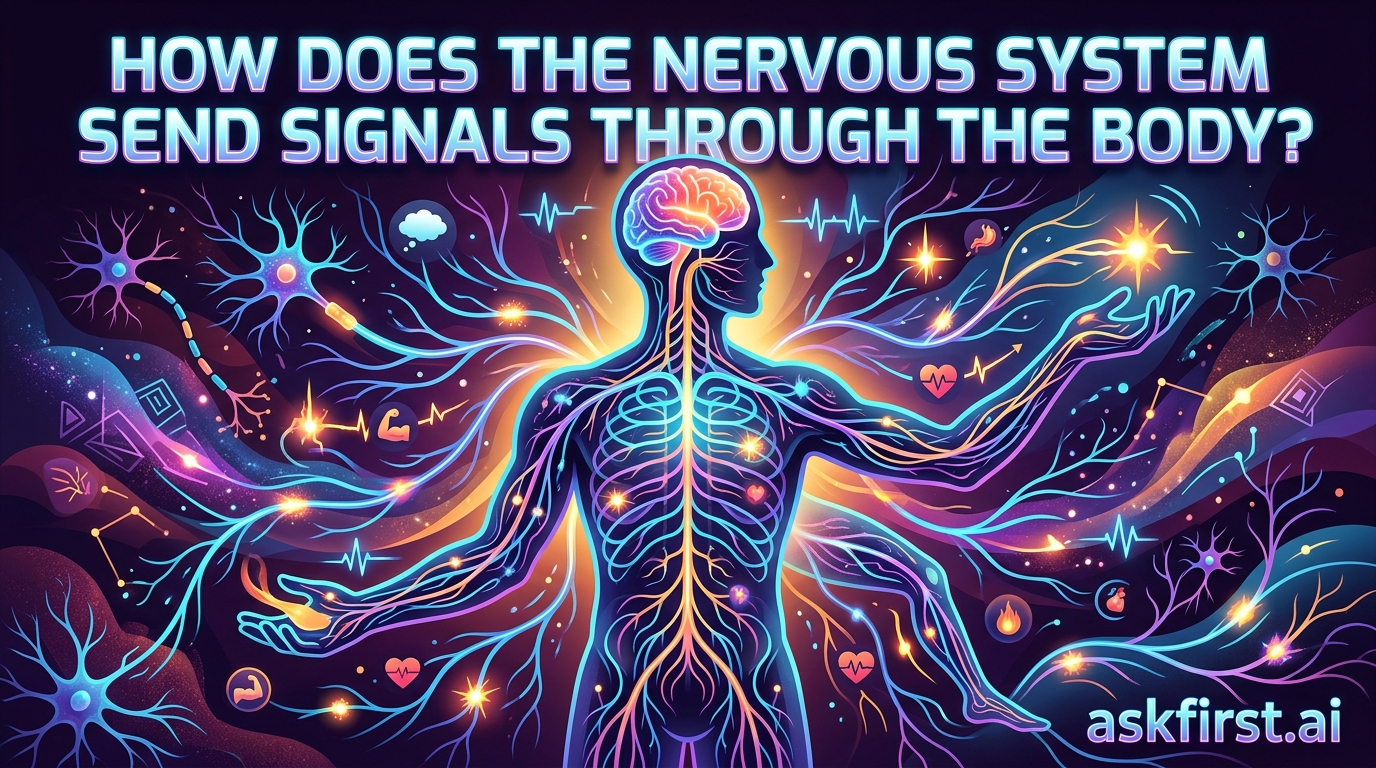
The human nervous system is an extraordinary feat of biological engineering, acting as the body’s primary command center, communication network, and engineering hub. It coordinates everything from the involuntary beating of your heart to the complex cognitive processes required to solve a mathematical equation. At its core, the system operates through a sophisticated electrochemical signaling process that allows information to travel across vast distances within the body in milliseconds.
The Anatomy of the Signal: The Neuron
The fundamental unit of the nervous system is the neuron. Unlike standard cells, neurons are specialized to transmit electrical impulses. A typical neuron consists of three main components: the dendrites (which receive incoming signals), the cell body (or soma, which processes the information), and the axon (the long, cable-like projection that sends the signal to other cells).
According to Eric Kandel’s seminal work, Principles of Neural Science, the transmission of signals relies on a phenomenon known as the action potential. This is a rapid, temporary change in the electrical membrane potential of the cell. When a neuron is at rest, it maintains a negative charge internally relative to the outside environment, thanks to a high concentration of potassium ions inside and sodium ions outside. When a stimulus reaches a threshold, ion channels in the membrane open, allowing sodium to rush into the cell. This depolarization triggers a chain reaction down the length of the axon, effectively "firing" the signal.
The Role of Myelin: The Biological Insulator
If you have ever wondered how a signal can travel from your brain to your toes in less than a blink of an eye, the secret lies in myelin. Myelin is a fatty, insulating sheath that wraps around the axons of many neurons. Produced by glial cells (oligodendrocytes in the central nervous system and Schwann cells in the peripheral nervous system), myelin acts like the plastic coating on an electrical wire.
In a process called saltatory conduction, the electrical impulse "jumps" between the gaps in the myelin sheath, known as the Nodes of Ranvier. This jumping mechanism significantly increases the speed of signal transmission. Without myelin, our reaction times would be catastrophically slow, and complex coordination would be biologically impossible. Conditions like Multiple Sclerosis (MS) illustrate this importance; when myelin is damaged, the signal becomes degraded or blocked, leading to the motor and sensory deficits characteristic of the disease.
Crossing the Gap: Chemical Synaptic Transmission
The most fascinating stage of signaling occurs at the synapse—the microscopic gap between the axon terminal of one neuron and the dendrite of the next. Since electrical signals cannot "jump" across this physical space, the system must switch to a chemical medium.
When the action potential reaches the end of the axon, it triggers the release of neurotransmitters. These are chemical messengers stored in small vesicles. Once released into the synaptic cleft, these molecules diffuse across the gap and bind to specific receptors on the post-synaptic neuron. Examples of common neurotransmitters include:
- Acetylcholine: Essential for muscle contraction and memory.
- Dopamine: Central to the brain’s reward and motivation pathways.
- Serotonin: A key regulator of mood, sleep, and appetite.
Once these neurotransmitters bind to the receptors, they can either excite the next neuron (making it more likely to fire) or inhibit it (making it less likely to fire). This complex "summation" of excitatory and inhibitory signals is what allows the brain to make nuanced decisions rather than simply reacting to every stimulus indiscriminately.
Integration and Feedback Loops
The nervous system does not function in a vacuum. It operates through constant feedback loops. For instance, the reflex arc is a classic example of rapid, automatic signaling. When you touch a hot stove, sensory neurons in your fingertips send a signal to the spinal cord. Instead of waiting for the brain to process the pain, the spinal cord immediately triggers a motor response, causing you to pull your hand away. This is detailed extensively in The Human Nervous System by George Paxinos, which maps the intricate pathways that allow for these lightning-fast protective mechanisms.
Furthermore, the Autonomic Nervous System (ANS) manages involuntary functions. It is divided into the sympathetic division (the "fight or flight" response) and the parasympathetic division (the "rest and digest" system). By modulating the chemical signals sent to organs like the heart, lungs, and stomach, the nervous system maintains homeostasis, ensuring that your internal environment remains stable despite external changes.
Conclusion
The nervous system’s ability to send signals through the body is a masterclass in electrochemical efficiency. By combining the rapid, long-distance speed of electrical action potentials with the nuanced, regulatory control of chemical synapses, the body creates a seamless flow of data. From the protective reflex arcs in our spinal cords to the billions of synaptic connections in our cerebral cortex, this network ensures that we can perceive, interact with, and survive in our environment. Understanding this process is not merely a biological exercise; it is an exploration of the fundamental mechanism that enables human consciousness and physical existence.